

Summary Points
-
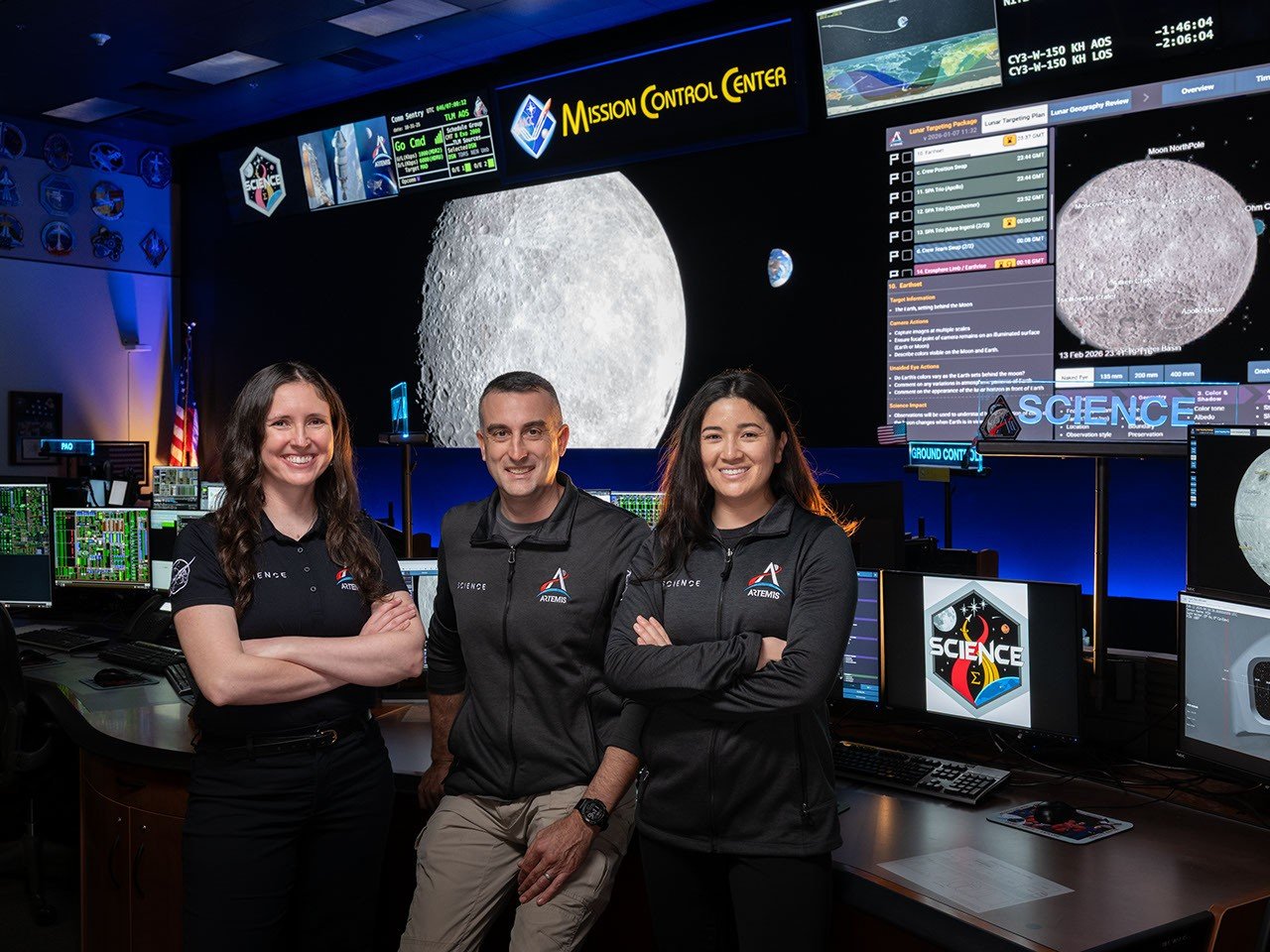
Pioneering Role: Kelsey Young, Trevor Graff, and Angela Garcia are NASA’s first Artemis II science officers, blending expertise in both scientific research and flight operations for lunar missions.
-
Mission Control Integration: The Artemis program introduces a dedicated science officer role in Mission Control to ensure seamless integration of lunar science objectives into mission execution.
-
Astronaut Training: The astronauts have undergone extensive geology training and simulations, preparing them to observe and document the Moon during the mission’s lunar flyby.
-
Real-time Collaboration: As observations are made in-flight, data will be analyzed in real-time by experts in dedicated back rooms, refining science mission operations for future Artemis missions.
NASA Introduces Artemis II Science Officers to Enhance Lunar Missions
NASA recently announced the appointment of its first Artemis II science officers: Kelsey Young, Trevor Graff, and Angela Garcia. These professionals are equipped with diverse backgrounds, combining experience in both scientific research and space operations. Transitioning from hiking gear and rock hammers in Iceland to business attire and headsets, they are ready to oversee critical lunar science objectives during the upcoming Artemis II mission.
The role of science officers is an essential addition to NASA’s Mission Control. This evolution builds on the legacy of the Apollo program, integrating scientific expertise directly into mission operations. Young, who leads the lunar science team, described the officer’s duties. “The science officer ensures that our lunar science objectives are seamlessly included in flight operations,” she said.
In Mission Control, dedicated workstations support various mission systems. Flight controllers, including the new science officers, will monitor essential functions. These positions rely on collaboration with experts from various back rooms at NASA’s Johnson Space Center. The team completed rigorous training and simulations, including geology training with Artemis II astronauts.
Graff highlighted the excitement of realistic mission simulations. “Testing our skills in these scenarios has been both challenging and rewarding,” he stated. These simulations prepare the crew for the lunar flyby, scheduled for April 6. During this phase, astronauts will document the Moon through photographs and audio observations, representing a vital link between lunar scientists on Earth and the celestial body.
Young expressed her eagerness for the astronaut’s first real-time descriptions of the Moon. “Hearing their scientific observations will be a remarkable moment,” she noted. The astronauts have diligently prepared, enhancing their observational skills through extensive training in lunar geography.
Though Artemis II will not land on the Moon, its observational approach will contribute significantly to lunar science. Garcia emphasized the power of observation as a cornerstone of scientific inquiry. This mission will gather valuable data, advancing our understanding of the Moon and preparing for future explorations.
As the astronauts send data back to two specialized science rooms, real-time analysis will enhance the mission’s effectiveness. Young characterized this collaboration as a crucial step for refining science operations in space. The integration of science into human spaceflight reflects a long history, with lessons from previous missions informing the current approach.
Garcia shared her gratitude for being part of this groundbreaking team. “The Moon is a universal symbol,” she said, encouraging people worldwide to connect with this mission. Young added that she hopes the endeavor inspires a sense of wonder about our closest celestial neighbor and the wealth of knowledge still to be discovered.
Expand Your Tech Knowledge
Explore the future of technology with our detailed insights on Artificial Intelligence.
Discover archived knowledge and digital history on the Internet Archive.
SciV1
