

Top Highlights
-
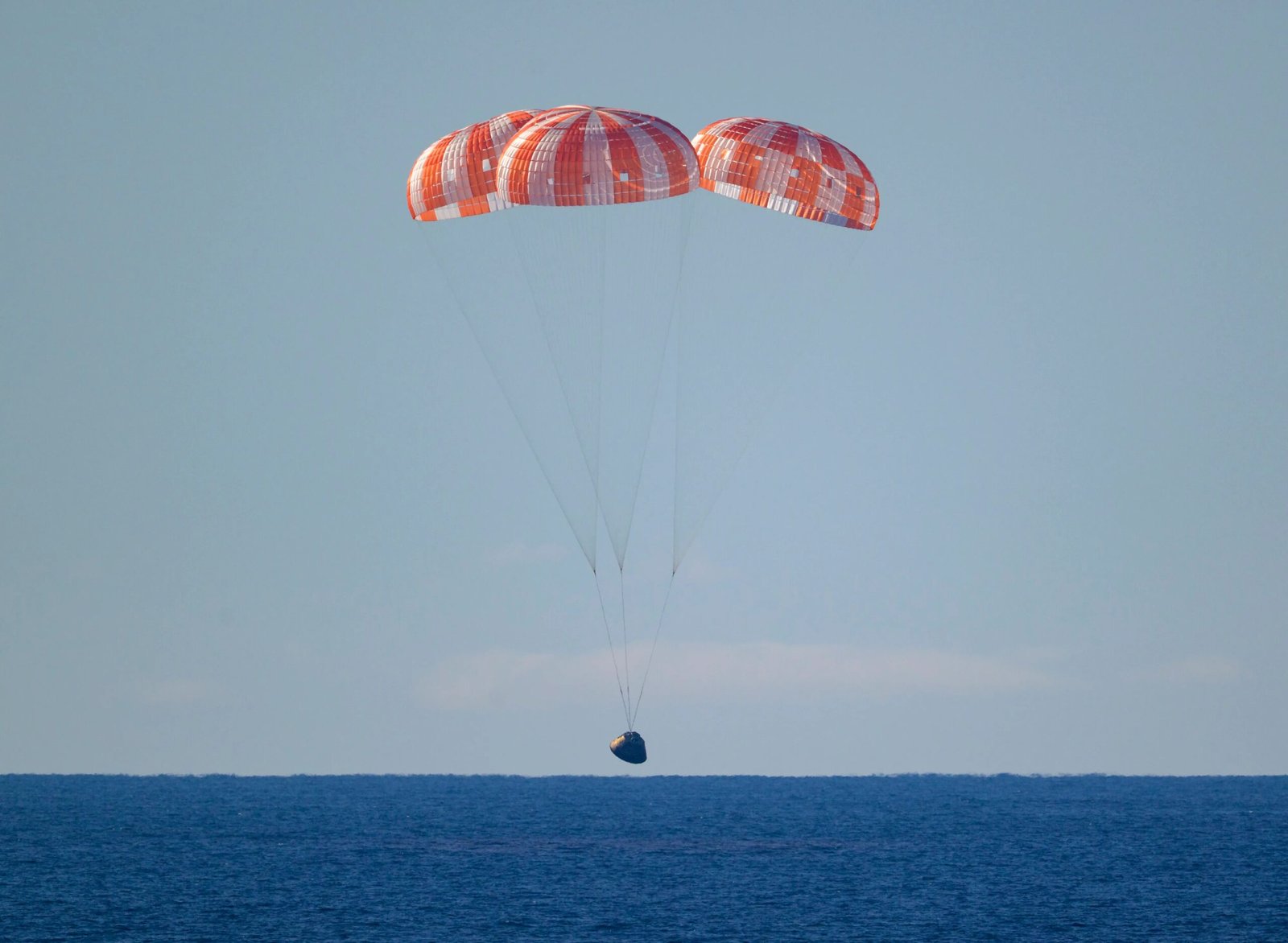
Successful Splashdown: NASA’s Orion spacecraft, carrying astronauts from the Artemis II mission, successfully splashed down in the Pacific Ocean on April 10, 2026, at 7:07 p.m. EDT.
-
Crew Members: The mission included NASA astronauts Reid Wiseman (commander), Victor Glover (pilot), and Christina Koch (mission specialist), along with CSA astronaut Jeremy Hansen.
-
Mission Overview: Artemis II marked a 10-day journey that took the crew around the Moon and back to Earth, demonstrating significant advancements in space exploration.
-
Recovery Operations: Post-splashdown, recovery teams from NASA, the U.S. Navy, and the U.S. Air Force worked to retrieve the astronauts and the Orion spacecraft aboard the USS John P. Murtha.
NASA’s Artemis II Mission Returns With Success
NASA’s Artemis II mission achieved a significant milestone on April 10, 2026. The Orion spacecraft splashed down in the Pacific Ocean after a remarkable 10-day journey around the Moon. The mission marked a key step in returning humans to lunar exploration.
Following the splashdown at 7:07 p.m. EDT, recovery teams quickly mobilized. NASA, along with the U.S. Navy and U.S. Air Force, worked to retrieve both the crew and the spacecraft aboard the USS John P. Murtha. This collaboration highlights the effectiveness of teamwork in complex operations.
The crew included four astronauts: the commander, pilot, and two mission specialists. Their successful journey demonstrated advanced technology and precise execution. Such missions pave the way for future lunar and Martian explorations.
In addition, Artemis II emphasizes the importance of international partnerships in space exploration. The inclusion of a Canadian astronaut showcases a global approach. This teamwork enriches scientific understanding and strengthens diplomatic ties.
Technological advancements from Artemis II will have real-world applications. Innovations in spacecraft design, safety protocols, and navigation systems can lead to improvements in various industries. They enhance not only space exploration but also everyday technologies.
As humanity looks to the stars, Artemis II serves as a beacon of progress and inspiration. The mission bolsters public interest in science and space, motivating future generations to pursue careers in STEM fields. By pushing the boundaries of exploration, NASA continues to improve quality of life on Earth.
Stay Ahead with the Latest Tech Trends
Explore the future of technology with our detailed insights on Artificial Intelligence.
Discover archived knowledge and digital history on the Internet Archive.
SciV1
