

Top Highlights
-
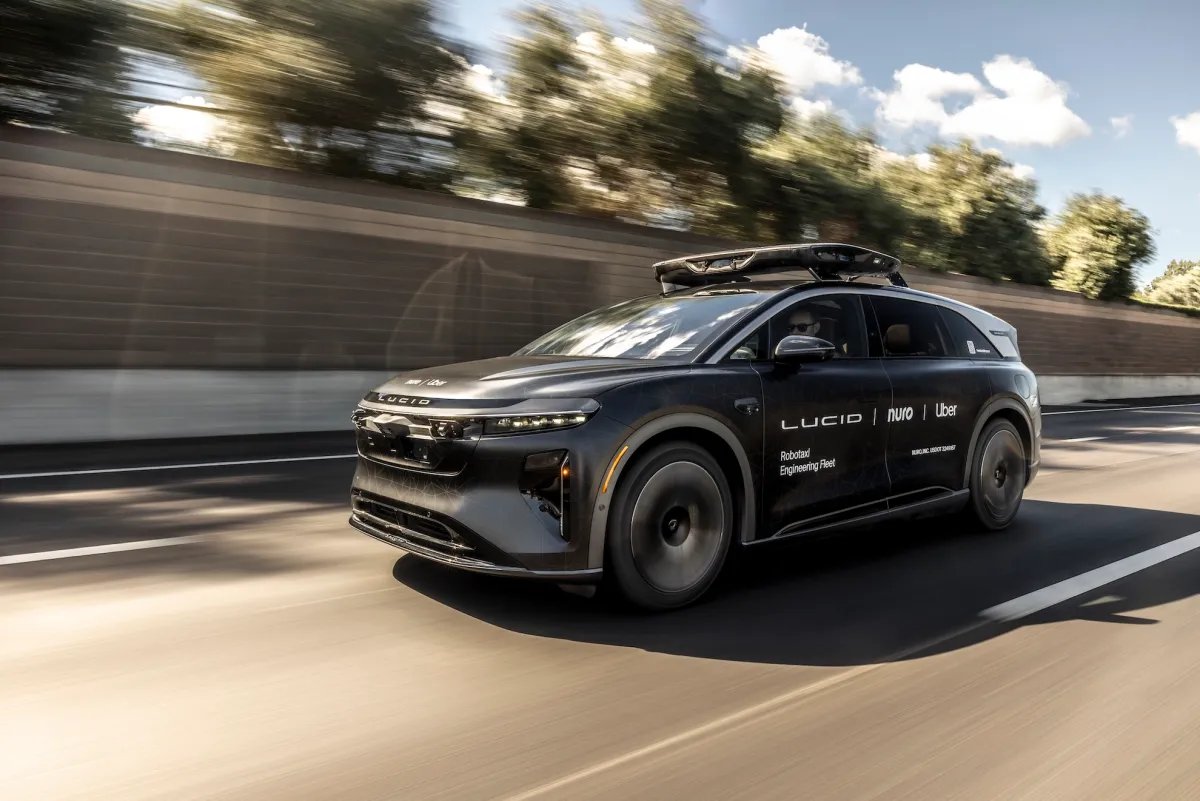
Uber is testing a Lucid Gravity SUV with a self-driving system developed by Nuro, allowing select employees to request rides via the Uber app as they prepare for a public launch later this year.
-
Uber has invested $300 million in Lucid and committed to purchase at least 20,000 Lucid Gravity SUVs over six years, while also investing a multi-hundred-million dollar sum in Nuro.
-
The Lucid Gravity robotaxi features advanced tech including cameras, lidar sensors, and radars, powered by Nvidia’s Drive AGX Thor computer for improved environmental perception.
-
Nuro’s testing phase includes 100 modified SUVs to gather real-world data and assess the performance of the autonomous ride-hailing system, focusing on efficient rider pickups and drop-offs.
The Road to Premium Robotaxis
Uber and Nuro have begun testing a premium robotaxi service in San Francisco. This initiative represents a significant milestone in the evolution of transportation. Select Uber employees can now use the Uber app to request rides in Lucid Gravity SUVs outfitted with Nuro’s self-driving technology. While the service remains in a testing phase, the presence of these high-tech vehicles on the streets showcases the companies’ commitment to innovation.
Through a multimillion-dollar partnership, Uber invested heavily in Lucid and Nuro. Specifically, Uber has committed $300 million to Lucid and agreed to purchase at least 20,000 of its Gravity SUVs over the next six years. These electric vehicles come equipped with a suite of advanced sensors and AI technology, enabling them to navigate real-world environments. Moreover, human safety operators will be present during this testing phase to monitor the vehicles’ performance, ensuring safety as they operate autonomously.
Potential for Widespread Adoption
The testing of robotaxis opens up intriguing possibilities for the future of urban mobility. This service could potentially ease congestion and reduce carbon emissions by utilizing electric vehicles. Additionally, Nuro’s rigorous testing of its autonomous fleet will help refine the technology, making the riding experience safer and more efficient.
However, widespread adoption relies on overcoming practical challenges. Autonomous pick-ups and drop-offs present a unique set of hurdles, particularly in densely populated areas. The feedback gathered during this testing phase will be essential in addressing these issues. As these companies advance their technology, they may transform the way we think about personal transportation.
Ultimately, Uber’s and Nuro’s efforts signify an exciting moment in the journey toward autonomous mobility. While the public launch may still be on the horizon, the steps taken today could pave the way for a more sustainable and convenient future in transportation.
Expand Your Tech Knowledge
Learn how the Internet of Things (IoT) is transforming everyday life.
Access comprehensive resources on technology by visiting Wikipedia.
TechV1
