

Top Highlights
- MIT researchers developed a classical physics-based method, using the principle of least action, to accurately describe quantum phenomena like the double-slit experiment and tunneling, creating a strong bridge between classical and quantum physics.
- By incorporating “density” into the Hamilton-Jacobi equation, they reduced the calculation of infinite quantum paths to just a few classical paths, matching the predictions of the Schrödinger equation.
- Their approach demonstrates that quantum behavior can be computed using simple classical tools, challenging the perception that quantum mechanics is inherently nonclassical and mysterious.
- This new framework has potential applications in quantum computing, understanding quantum systems, and reconciling quantum mechanics with relativity, simplifying complex quantum predictions.
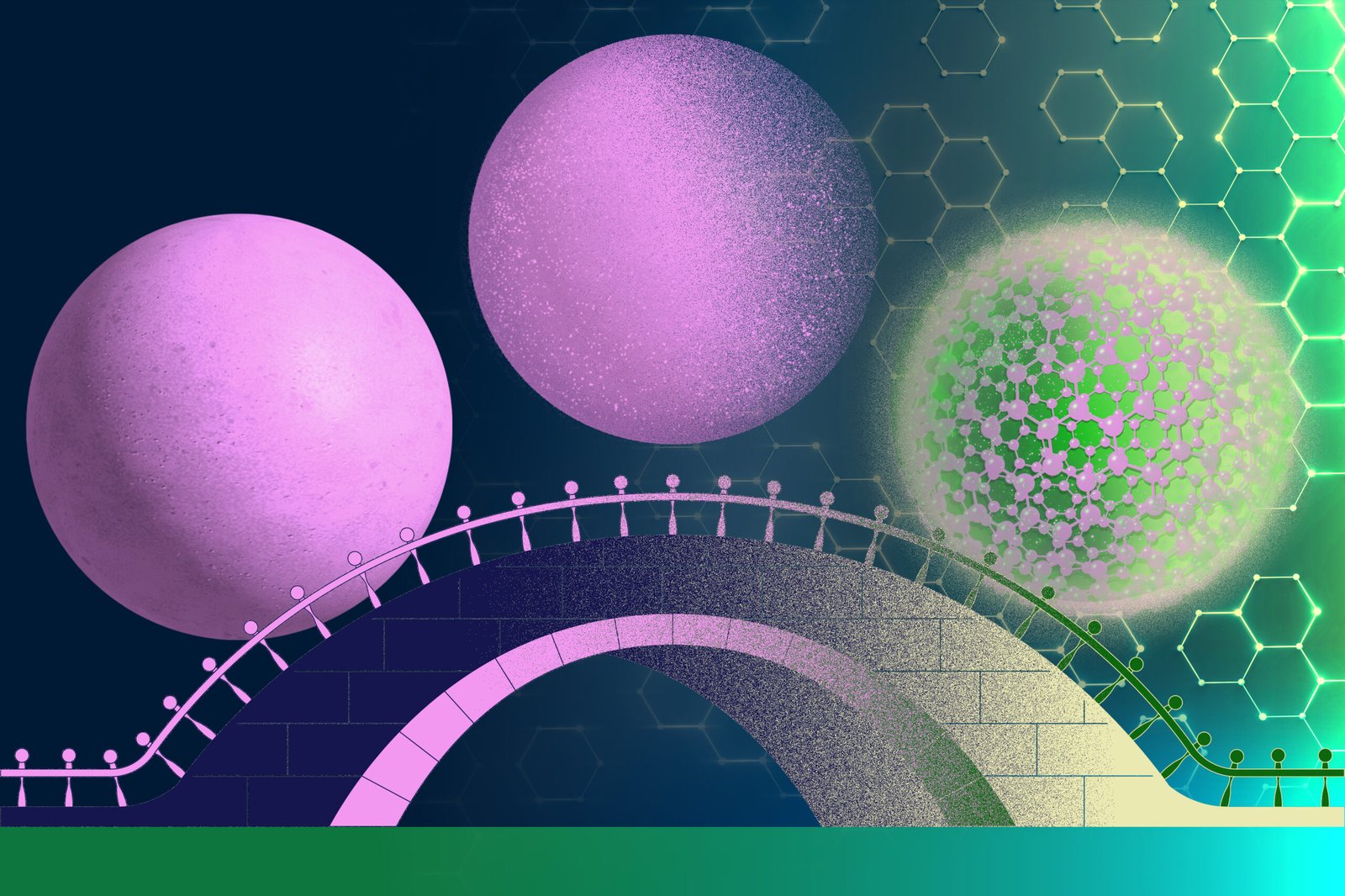
MIT scientists have made a breakthrough in understanding the connection between classical and quantum physics.
They used familiar ideas from everyday physics, like “least action,” to explain some of the most puzzling quantum phenomena.
This new approach creates a “bridge” that links the two fields more strongly than before.
The team showed their method can accurately predict behaviors such as the double-slit experiment and quantum tunneling.
These phenomena, once thought to be impossible to explain with classical physics, can now be understood using simple, classical tools.
This discovery could have a big impact on future technology.
For example, it might improve quantum computing by making predictions easier and more precise.
Additionally, it offers a new way to explore how quantum physics interacts with relativity, which could lead to smarter, faster devices.
Overall, this research opens the door to many potential advancements in science and technology, making the strange world of quantum physics more accessible and practical.
Discover More Technology Insights
Explore the future of technology with our detailed insights on Artificial Intelligence.
Stay inspired by the vast knowledge available on Wikipedia.
QuantumV1
