

Top Highlights
-
AI Code Leak & Ethical Concerns: Sigrid Jin discovered a significant leak of Anthropic’s AI code and shared a rewritten version online to raise ethical questions about copyright in an era where AI can rapidly reproduce creative work.
-
Copyright Challenges: The leak highlights the struggle in enforcing copyright for software and creative works, as AI’s ability to imitate and transform content complicates existing legal frameworks and diminishes the value of original creations.
-
Human Involvement in AI: The U.S. Copyright Office has decided that works solely created by AI lack copyright protection, yet courts have yet to clarify the level of human input required for copyright eligibility, leaving artists concerned about their rights.
-
Future of Creativity: Jin posits that reliance on AI for creative tasks raises questions about the originality of ideas, suggesting that in a world flooded with AI-generated content, true novelty is increasingly elusive.
The Copyright Conundrum in the A.I. Age
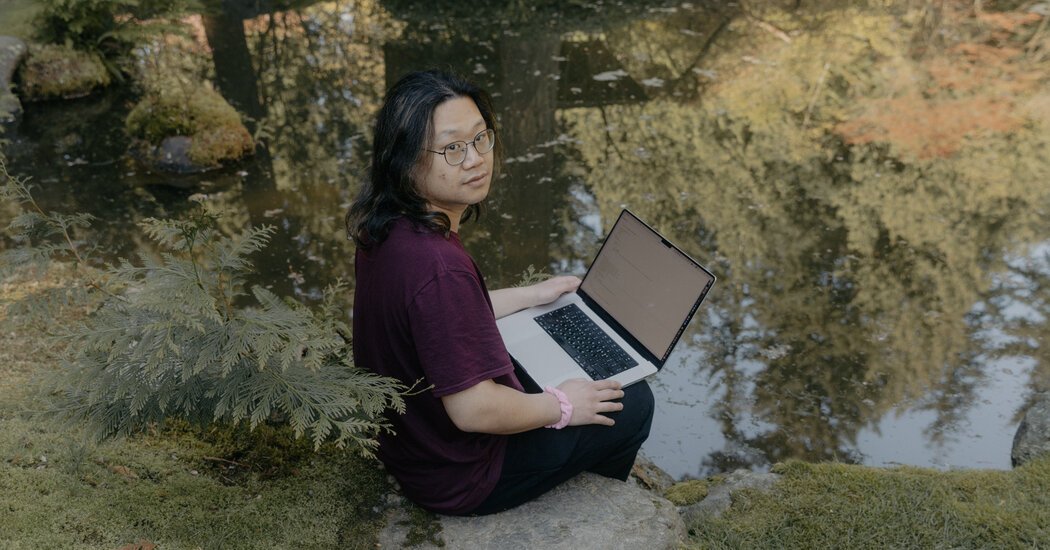
The recent leak of Anthropic’s source code for Claude Code highlights urgency in copyright discussions. Amid this chaos, an undergraduate student posted a rewritten version online, provoking many ethical questions. He believed his transformation of the code into another language meant he had created something new. This belief reflects a broader truth; A.I. can replicate any creative work in moments. Traditional copyright offers protection, yet technology evolves faster than the law can adapt.
The situation raises concerns beyond software. Artists and musicians risk losing value as A.I.-generated works flood the market. When A.I. can produce substitutes at little cost, original creations’ worth diminishes. The rapid pace of A.I. development disrupts how we define and protect creative expression. Copyright laws historically assumed that copying takes time. Yet, with A.I. agents rewriting code before we even finish our coffee, this assumption collapses under the weight of modern technology.
An Evolving Landscape of Creativity
This incident serves as a preview of what the future holds across all creative domains. While some A.I. firms pursue transparency, others guard their algorithms closely. As A.I. tools become integral to daily tasks, they also ease imitation on a massive scale. The challenge lies not merely in direct copying but in the overarching impact on creative markets. If imitation becomes ubiquitous, the very essence of creativity may shift.
Current U.S. copyright rules state that fully A.I.-created works lack protection. However, courts have yet to clarify the necessary human involvement in creative processes. This murky terrain does not comfort those invested in their artistic integrity. The landscape demands fresh legal frameworks to address the unprecedented capabilities of A.I. As we navigate this new era, one thing is clear: the definition of originality and ownership in the digital age requires urgent reexamination.
Continue Your Tech Journey
Dive deeper into the world of Cryptocurrency and its impact on global finance.
Access comprehensive resources on technology by visiting Wikipedia.
TechV1
