

Top Highlights
- Laser flashes can ionize matter, creating extremely hot plasma from electrons.
- Researchers achieved detailed ionization observation using advanced laser systems combined.
- Intense laser pulses enabled near real-time tracking of plasma evolution.
- Findings enhance understanding of laser interactions, improving future laser fusion research.
Unveiling the Mysteries of Plasma Formation
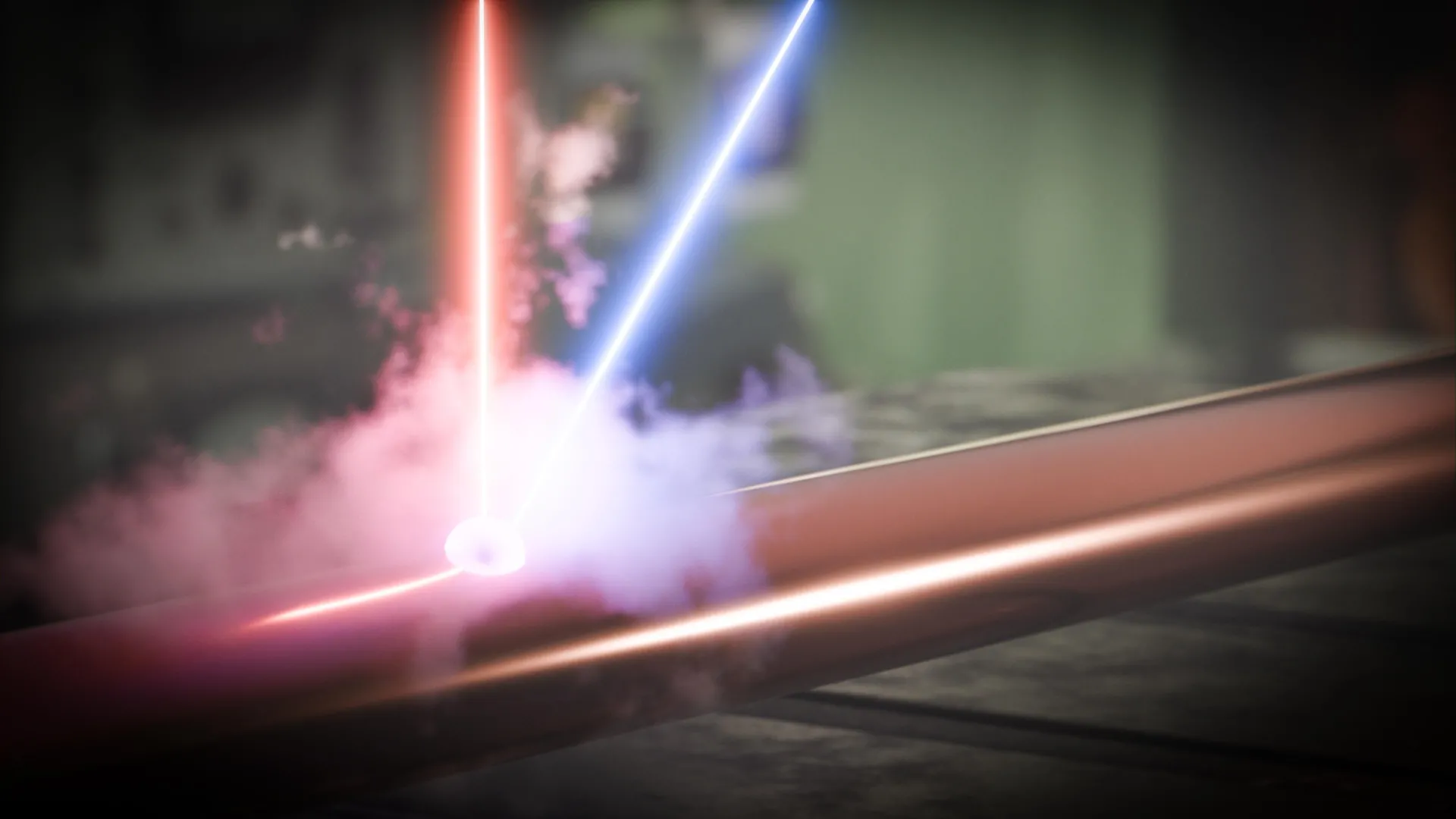
Researchers at Helmholtz-Zentrum Dresden-Rossendorf have taken a groundbreaking step in physics by precisely capturing how high-energy lasers create plasma. When intense laser flashes hit matter, they knock electrons out of their positions around atomic nuclei, generating plasma—a state filled with charged particles. This process, which unfolds in a mere trillionths of a second, shows how lasers can turn ordinary copper wire into superhot plasma in an instant.
This remarkable experiment utilized two sophisticated lasers: an X-ray free-electron laser and the high-intensity optical laser ReLaX. Located at the European XFEL in Schenefeld, Germany, these lasers provided unprecedented detail on ionization processes. The first laser pulse delivered an immense 250 trillion megawatts per square centimeter to a thin copper wire, vaporizing it and creating plasma with temperatures soaring to millions of degrees. Such conditions resemble those near neutron stars or during gamma-ray bursts, pushing the boundaries of our understanding of matter.
The team employed a second laser pulse to probe the plasma. This setup allowed them to track the dynamics of plasma formation and evolution in real time. They measured the presence of highly charged copper ions, specifically Cu²²⁺ ions, capturing their lifecycle as they formed and recombined. The researchers observed a rapid rise in ionization, peaking within two and a half picoseconds, followed by a swift decline.
Implications for Future Fusion Technologies
The findings hold significant implications for laser fusion research. As scientists work to develop laser fusion facilities, understanding plasma behavior under extreme conditions becomes critical. The experiment highlights the power of lasers and their potential application in creating efficient nuclear fusion reactions. Essentially, the insights gained from tracking ionization processes can refine simulations necessary for designing reliable fusion reactors.
The experiment also underscores an essential characteristic of modern science—the interplay of advanced technology and practical application. By comprehensively studying high-energy interactions, researchers can translate their findings into real-world advancements. As the field of laser fusion continues to evolve, the potential for solving energy crises grows.
The research showcases not only the capability of state-of-the-art technology but also the resolve of scientists to unlock the mysteries of the universe. Further exploration will undoubtedly continue to reveal new applications and improve our harnessing of energy through innovative means. Understanding plasma formation sets the stage for the next generation of energy solutions.
Stay Ahead with the Latest Tech Trends
Dive deeper into the world of Cryptocurrency and its impact on global finance.
Discover archived knowledge and digital history on the Internet Archive.
TechV1
