

Summary Points
- Researchers at Mizzou are engineering algae to remove microplastics from water.
- Modified algae capture pollutants and can recycle them into bioplastics.
- Microplastics evade current water treatment, polluting ecosystems and drinking water.
- Future plans aim to integrate algae technology into existing treatment plants.
Innovative Approach to a Widespread Problem
Microplastics pervade our environment. They litter our oceans, infiltrate our waterways, and now threaten our drinking water. Scientists at the University of Missouri have taken a bold step toward addressing this challenge. They have created a modified strain of algae specifically engineered to capture microplastic pollutants from contaminated water. This innovation stems from the work of researchers like Susie Dai, who aims not only to clean our waterways but also to recycle these plastics into safer bioplastic materials.
Current wastewater treatment plants struggle to filter out microplastics. These tiny particles slip through existing systems, contributing to pollution and potentially harming ecosystems. Dai’s engineered algae show promise in changing that reality. By producing limonene, a natural oil that repels water, the algae attract microplastics—also water-repellent—forming clumps that are easier to collect. This breakthrough introduces a multi-faceted solution to water pollution: removing microplastics, cleaning wastewater, and creating reusable materials.
Scaling Up for Real-World Impact
Dai’s research, still in its early stages, has significant potential. She envisions systems that integrate into existing wastewater treatment plants. By doing so, cities can enhance their water quality while reducing environmental harm. The algae thrive in wastewater, absorbing harmful nutrients in the process, which could lead to cleaner ecosystems as well.
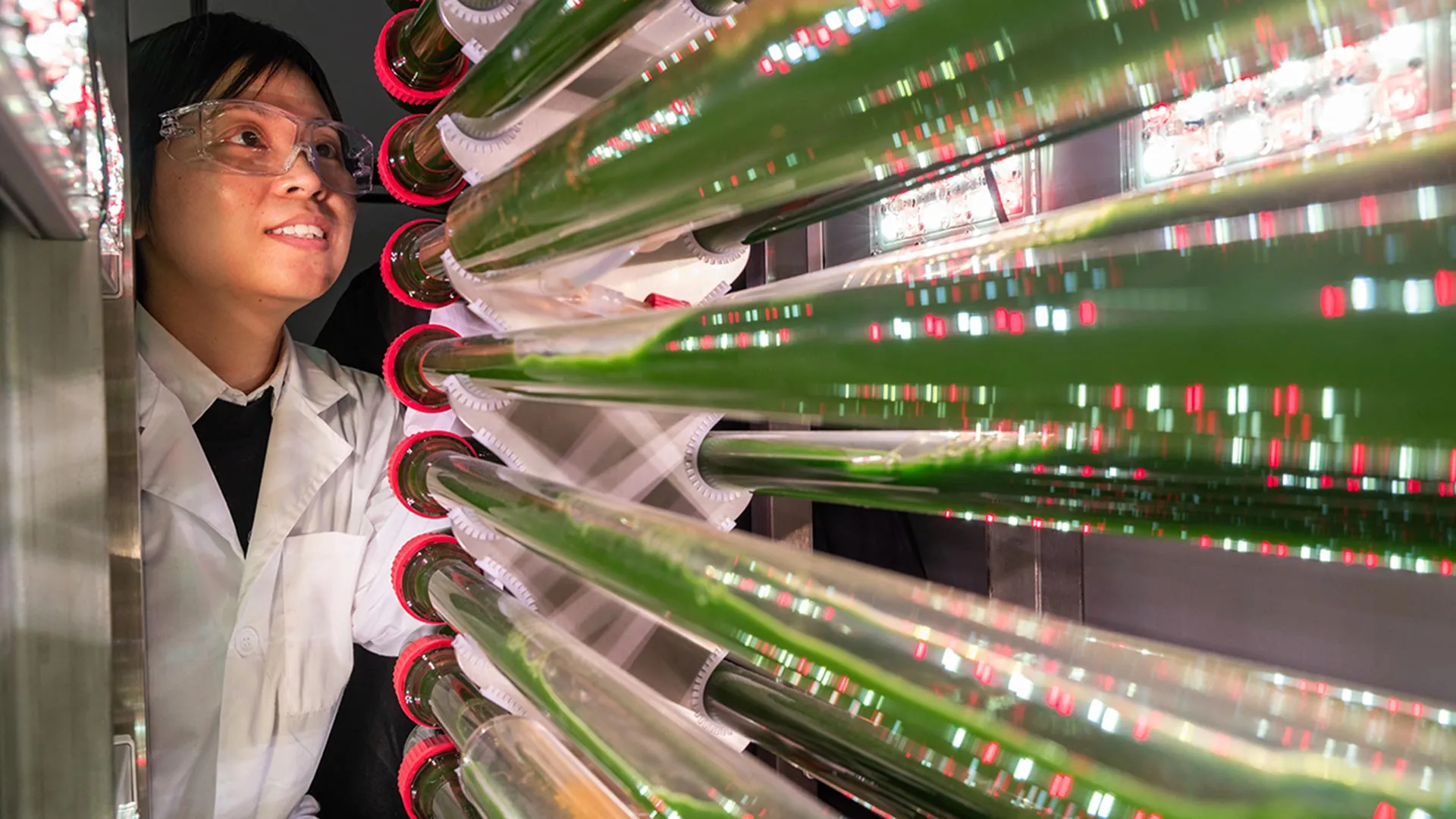
The lab already employs a large tank bioreactor to grow algae. Future plans call for expanding this system to tackle larger-scale wastewater treatment challenges. However, several factors need consideration before widespread adoption. The practicality of retrofitting existing infrastructure, the cost of developing and maintaining new equipment, and the effectiveness of the technology in various real-world conditions all come into play.
Dai’s algae project represents a pioneering effort in the fight against plastic pollution. The journey from laboratory success to practical implementation remains complex. Yet, it holds the potential to reshape how we approach water purification and plastic waste management. This research could become a vital part of a comprehensive strategy for tackling one of the pressing environmental issues of our time.
Stay Ahead with the Latest Tech Trends
Explore the future of technology with our detailed insights on Artificial Intelligence.
Access comprehensive resources on technology by visiting Wikipedia.
TechV1
