

Summary Points
- Look east pre-dawn on May 14 for a cosmic triangle.
- The crescent moon, Saturn, and Mars will be visible together.
- Neptune lies nearby but is too dim for the naked eye.
- Use caution with telescopes near the sun to avoid eye damage.
A Rare Celestial Event
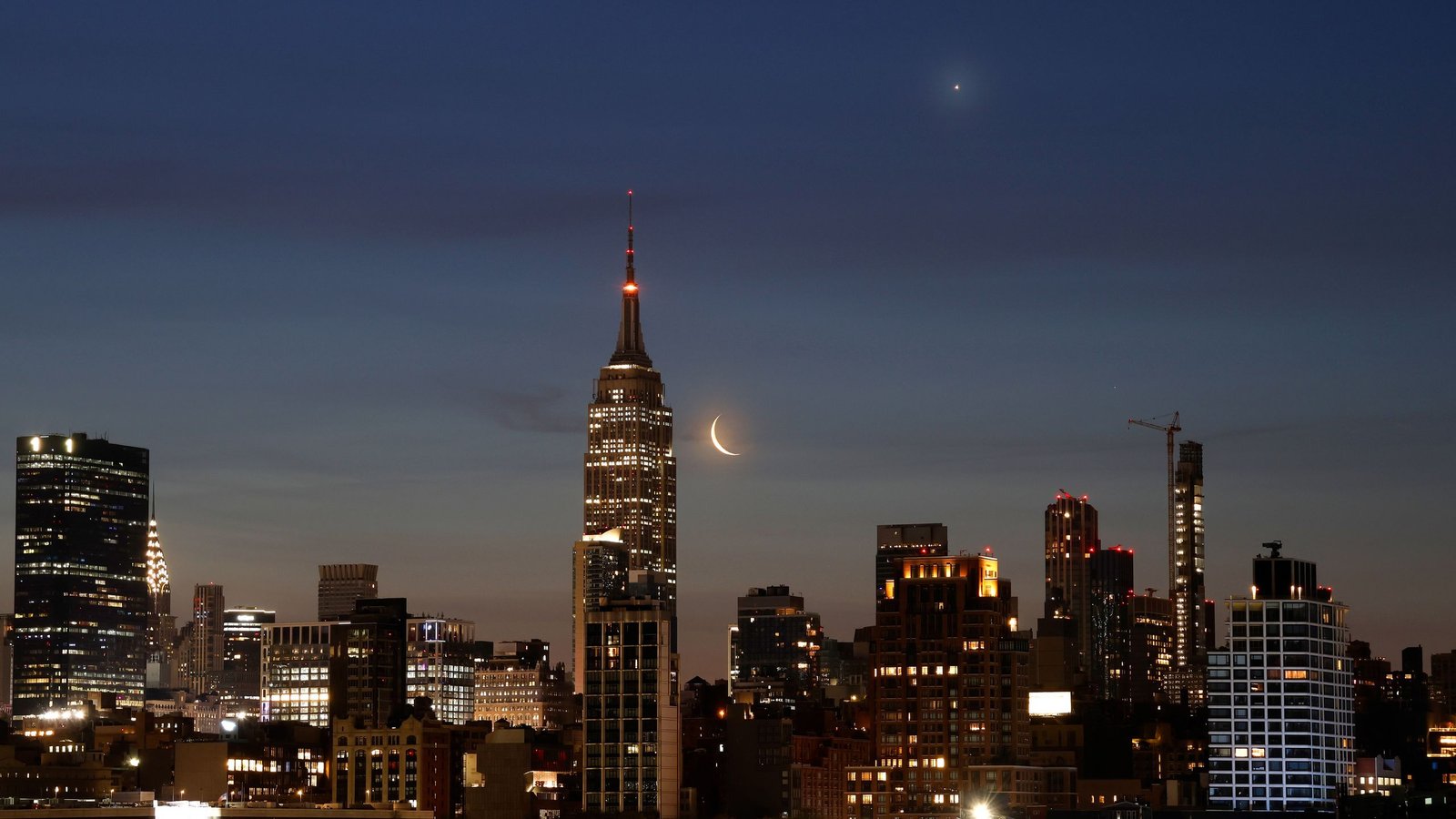
Look to the eastern sky in the hour leading up to dawn on May 14. A cosmic triangle will appear as the waning crescent moon, Saturn, and Mars align. The scene will unfold just before sunrise, making it a unique opportunity for stargazers. The crescent moon will glow at only 8% illumination, resting low on the eastern horizon as daylight creeps into the sky.
Saturn will shine brightly, resembling a star to the lower right of the moon. Mars, with its distinct reddish hue, will sit to the left. Both planets will be less than 20 degrees above the horizon, so an unobstructed view is essential. Look for a location with a clear vantage point to fully appreciate this celestial arrangement before the light of dawn washes it away.
Neptune will also be present, approximately 10 degrees to the right of the moon. Although this ice giant belongs to the same cosmic scene, it will be too dim to see without specialized equipment. Observing Neptune adds a layer of intrigue to the spectacle, even if it remains unseen.
Viewing Tips and Safety Precautions
While the cosmic triangle will offer a breathtaking view, do not use telescopes or binoculars to observe it at dawn. The rising sun poses a serious risk. Pointing any optical device toward the sun can lead to permanent eye damage. Stick with your naked eye for this event.
As the moon transitions to its new phase on May 16, it will gradually disappear from the early morning sky. Meanwhile, Mars and Saturn will subtly drift apart against the backdrop of the constellation Pisces. This ongoing dance of the planets creates an ever-changing tapestry of the night sky.
Photographers aiming to capture this celestial moment should prepare well. The right camera and lens can make all the difference for astrophotography. Consider techniques outlined in beginner guides to effectively image the cosmos. These tools will enhance your ability to document future planetary gatherings and other astronomical phenomena.
Don’t miss this rare opportunity to witness the beauty of our solar system. Set your alarm, find your spot, and enjoy the splendor of Mars, Saturn, and the moon forming a cosmic triangle before dawn on May 14.
Stay Ahead with the Latest Tech Trends
Explore the future of technology with our detailed insights on Artificial Intelligence.
Access comprehensive resources on technology by visiting Wikipedia.
Space
