

Essential Insights
- Apple directs suppliers to create new OLED technology for future iPhones.
- Company seeks advanced IZO cathodes for four-sided bending displays.
- LG invests $770 million; Samsung evaluates commitment for new manufacturing lines.
- IZO technology aims to reduce optical distortion in new displays, ensuring quality.
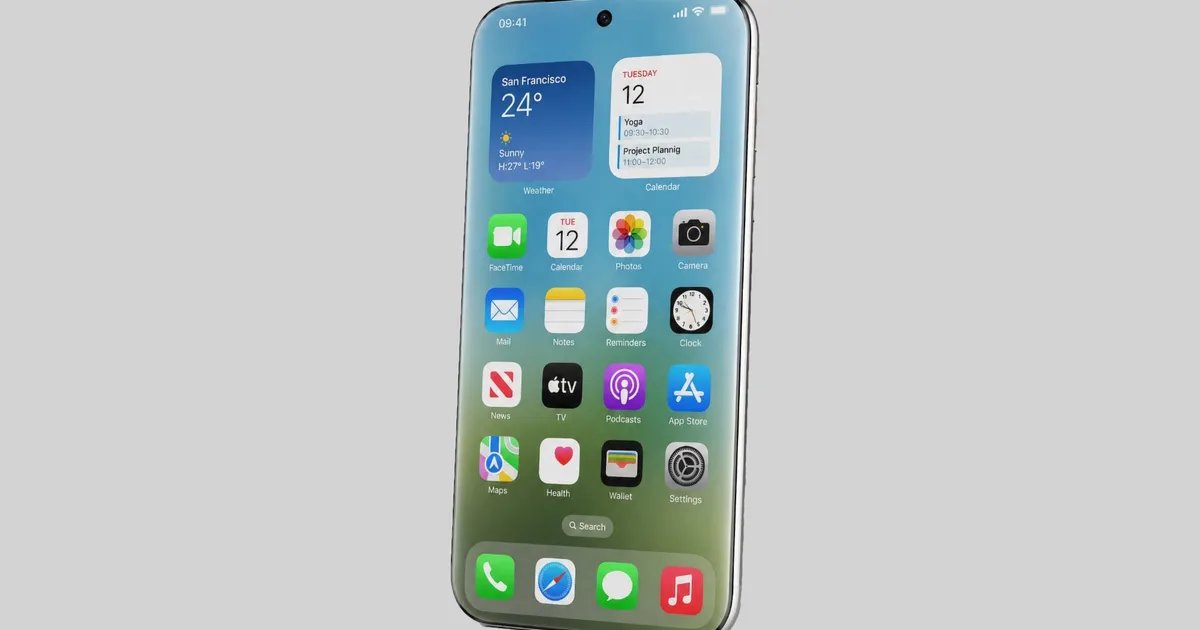
Apple doesn’t ask its suppliers to build things. It tells them to, hands them a deadline, and watches billions of dollars move on product lines and supply chains. As rumors swirl about the 2028 iPhone, the tech world watches closely. The company aims for a revolutionary four-sided bending display, pushing both Samsung and LG to innovate. The stakes are high, as Apple seeks to redefine smartphones.
Revolutionary Technology on the Horizon
The proposed display hinges on a new OLED cathode material known as IZO (Indium Zinc Oxide). This technology promises to reduce optical distortion, particularly at curved edges. Traditional displays suffer from this issue, leading to a less satisfying user experience. Apple wants an “all-screen” design, a shift that aligns with its minimalist aesthetic.
However, achieving this goal isn’t straightforward. IZO offers transparency and efficiency, but creating it requires specialized manufacturing processes. Current production lines lack the necessary equipment, presenting a significant barrier to entry. LG has already announced a $770 million investment in new infrastructure, indicating its commitment. Samsung remains on the fence but knows the urgency Apple imposes.
The Challenge of Timing
Interestingly, Apple appears to press forward with a complicated timeline. Reports suggest that while a four-sided bending display is in development, the benefits of IZO may not be ready in time for the 2027 anniversary model. This raises questions. Will the 20th anniversary iPhone ship without the flawless display that Apple envisions? The answer seems likely, as Apple prioritizes quality over speed.
While other manufacturers sell curved displays, Apple’s approach diverges from the competition. It doesn’t want a product that merely meets current market standards; it aims for perfection. This attitude has served Apple well in the past, but it may lead to delays if crucial technologies are not available.
The outcome of this technological race remains uncertain. Samsung and LG face high pressures to deliver, while Apple maintains its high standards. The quest for the perfect display showcases Apple’s commitment to innovation, but it also highlights the challenges that come with cutting-edge technology. Ultimately, the balance between ambition and practicality will dictate the future of smartphones.
Expand Your Tech Knowledge
Explore the future of technology with our detailed insights on Artificial Intelligence.
Stay inspired by the vast knowledge available on Wikipedia.
TechV1
