

Quick Takeaways
- Lake Agassiz once covered southeastern Manitoba, larger than all Great Lakes combined.
- It drained around 12,000 years ago, enriching the region’s agricultural landscape.
- The Dominion Land Survey created a grid system still defining land use today.
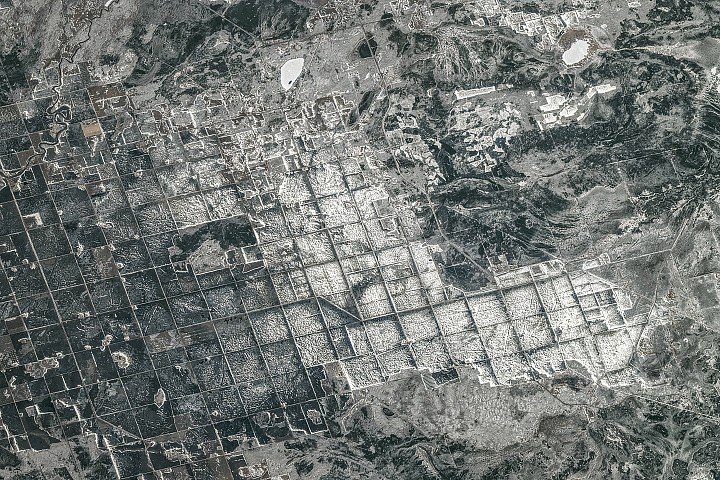
- Recent astronaut photos reveal snow-covered farmlands and diverse ecosystems in the area.
Farming in Ancient Lake Agassiz
Lake Agassiz was a colossal body of water that existed about 15,000 years ago in what is now southeastern Manitoba. Stretching over an area larger than all the Great Lakes combined, this ancient lake formed as the Laurentide Ice Sheet began to retreat. It created a rich, fertile land that influenced the agricultural practices in the region for millennia.
Today, the legacy of Lake Agassiz is evident in the landscapes now used for farming. The lake’s drainage, which began approximately 12,000 years ago, left behind a thick layer of nutrient-rich silt and clay. This soil is the cornerstone of modern agriculture in the area, allowing for the cultivation of crops such as wheat, barley, oats, and canola. Satellite images, like those captured from the International Space Station, reflect the transformation of this land. The bright, snow-covered fields seen in these photographs illustrate the vibrancy and value of the land that was once underwater.
The Impact of Glacial History on Modern Agriculture
The agricultural potential of this land can be traced back to the lake’s geological formation. The silt and clay deposited by Lake Agassiz have created some of Canada’s most productive farmland. This rich soil not only supports various crops but also contributes to the economy of the region, making agriculture one of its vital sectors.
In addition to the natural advantages, the grid-based land survey known as the Dominion Land Survey characterizes much of western Canada. This systematic division of land into one-square-mile sections has shaped the layout of fields, roads, and drainage channels. Such a structured approach to land use has facilitated more efficient farming practices and land management. The combination of fertile soil and organized land use has made this region a hub for agricultural activity.
As farming continues to thrive in areas once submerged by Lake Agassiz, the intersecting histories of ancient landscapes and modern agriculture reveal the dynamic relationship between environment and human endeavor. The remnants of an ancient lake have transformed into a network of farms that yield valuable crops, showcasing the resilience and adaptability of agriculture amidst changing landscapes.
Expand Your Tech Knowledge
Dive deeper into the world of Cryptocurrency and its impact on global finance.
Explore past and present digital transformations on the Internet Archive.
Space
