

Fast Facts
- Gödel’s theorems reveal mathematics is inherently incomplete and inconsistent.
- Formal axiomatic systems cannot prove all true mathematical statements.
- Physicists worry about undecidable questions affecting fundamental theories like space-time.
- Incompleteness highlights limitations in understanding the universe and human knowledge.
Understanding Gödel’s Incompleteness Theorems
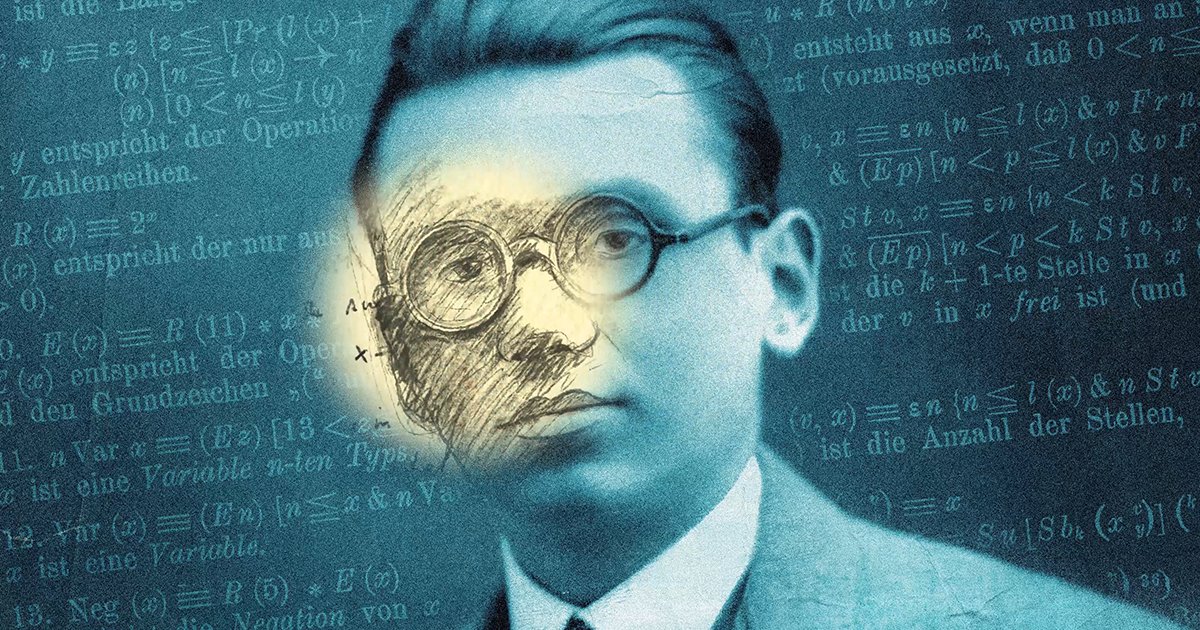
Kurt Gödel proved two important theorems in 1931 that changed how we see mathematics and truth. His theorems show that no formal system of math can be complete. This means there are always true statements that cannot be proven with the rules of that system. The theorems highlight the limits of formal logic and challenge the idea that math can be fully systematized from a small set of basic rules. They reveal that mathematical truths can be complex and sometimes beyond our reach, no matter how much we refine or expand the system. These results often suggest that progress in math may require new ideas beyond existing rules, and that some truths might always remain undecidable.
The Impact Beyond Mathematics
Gödel’s theorems not only affect pure math but also influence other fields, including physics. Because physical laws are expressed mathematically, the limitations of formal systems can create problems in understanding the universe. For example, the nature of space and time, which are modeled as continuous, might involve undecidable questions. Some scientists argue that a universe based on discrete units could avoid these undecidable issues. The theorems also suggest that certain questions about the properties of infinity and the structure of the universe may always be beyond full proof. This challenges the idea that technology alone can uncover all truths about nature, emphasizing the ongoing need for creativity and new theories in science and math.
Discover More Technology Insights
Dive deeper into the world of Cryptocurrency and its impact on global finance.
Explore past and present digital transformations on the Internet Archive.
QuantumV1
