

Top Highlights
- Scientists discovered a new blue octopus species in the Galápagos Islands.
- The tiny octopus, named Microeledone galapagensis, was first spotted in 2015.
- Advanced CT scans allowed non-destructive analysis of its internal structures.
- This discovery emphasizes the need to explore and protect ocean ecosystems.
Marvels of the Deep: Discovering Microeledone galapagensis
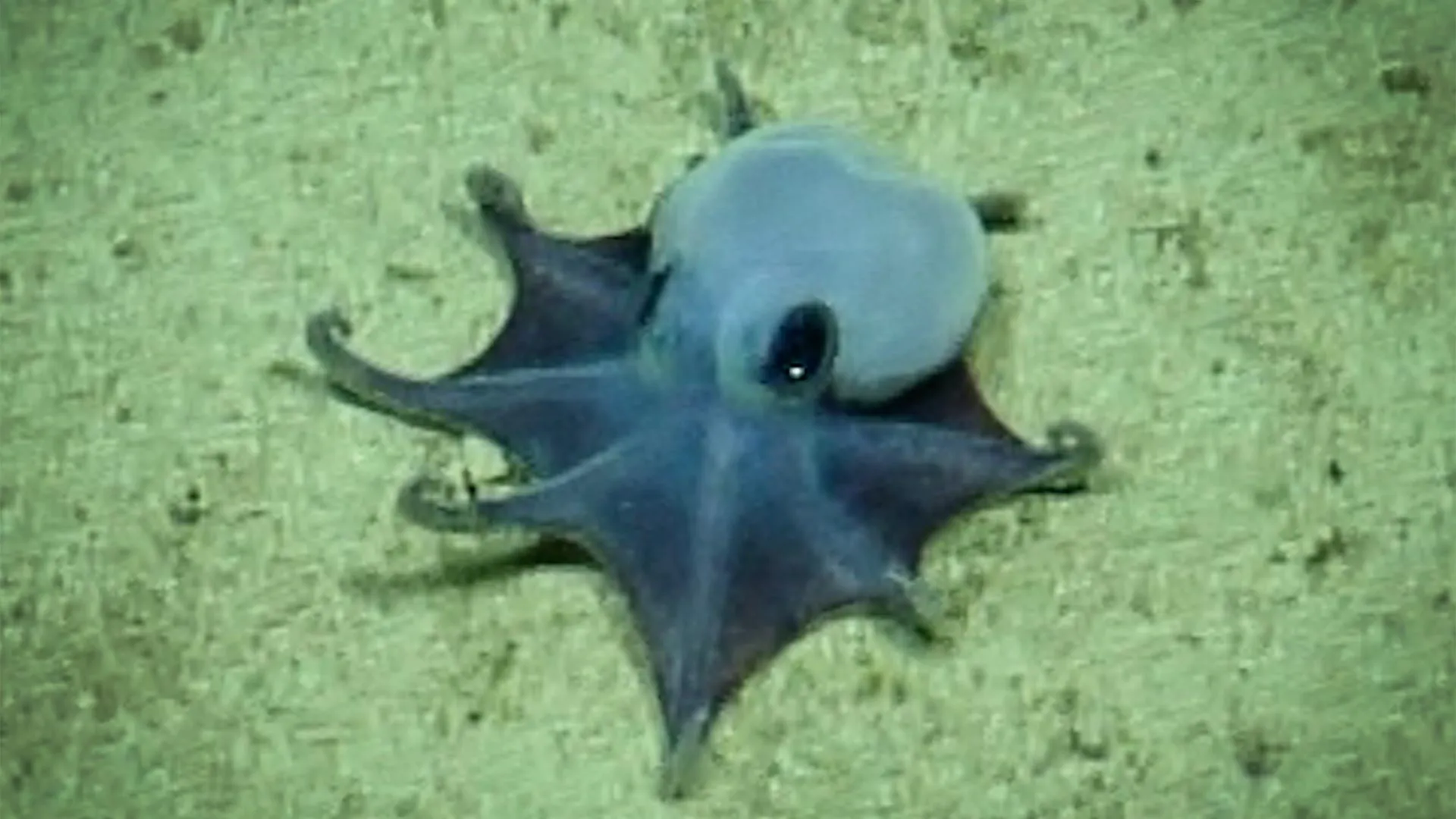
The Galápagos Islands, renowned for their unique wildlife, have welcomed a new member to their remarkable ecosystem: a tiny blue octopus known as Microeledone galapagensis. Discovered nearly 6,000 feet below the ocean’s surface, this octopus was first spotted during a deep-sea expedition in 2015 by the E/V Nautilus. Researchers collaborated with the Charles Darwin Foundation and the Galápagos National Park Directorate to explore the underwater landscapes near Darwin Island. Their use of a remotely operated vehicle allowed them to capture footage and collect specimens from a previously untouched environment.
What initially struck researchers was the vibrant blue color and diminutive size of the octopus, likened to that of a golf ball. The discovery was unexpected and highlighted the ongoing mysteries of deep-sea ecosystems. Scientists faced challenges in identifying the species, as they had only one confirmed specimen. Traditional methods of dissection were not feasible, given its uniqueness. Instead, researchers turned to advanced imaging technology, specifically micro CT scans, to explore its anatomy without causing harm. This non-invasive approach opened new pathways for understanding the octopus’s internal structure, further confirming it as a new species.
The Role of Technology in Ocean Exploration
The use of micro CT imaging marks a significant advancement in biological research. Researchers can now closely examine rare specimens without the need for physical dissection. This technology has applications beyond octopus research; it pushes the boundaries of what scientists can learn about unexplored ecosystems. With oceans covering more of our planet than land, many deep-sea organisms remain undocumented. Each discovery adds a piece to the puzzle of oceanic biodiversity and underscores the importance of conservation efforts.
Microeledone galapagensis serves as a reminder of the fragility of deep-sea ecosystems. Scholars stress that understanding these hidden habitats is crucial for their protection. As researchers explore the depths, they uncover not only new species but also the need for responsible stewardship of these environments. Protecting the oceans requires recognizing their vast potential for scientific discovery and ecological significance. Each new species represents a glimpse into a world many have yet to see, underscoring the urgency of preserving our oceans for future exploration and understanding.
Discover More Technology Insights
Explore the future of technology with our detailed insights on Artificial Intelligence.
Explore past and present digital transformations on the Internet Archive.
TechV1
