

Top Highlights
- Ginkgo Bioworks uses AI and robots to automate biotech lab tasks.
- Founders transitioned from ramen dinners to successful funding with AI’s rise.
- AI empowers robots to design experiments, reducing costs by 40%.
- Experts warn AI’s accessibility poses risks, like biosecurity threats.
The Transformation of the Science Lab Landscape
Ginkgo Bioworks is at the forefront of a new era in biotechnology. Traditionally, scientists performed labor-intensive tasks in the lab, such as mixing chemical cocktails and handling delicate petri dishes. However, robots are now taking on those roles, drastically increasing efficiency. Reshma Shetty, co-founder of Ginkgo, notes that using artificial intelligence has fundamentally changed how she practices science. The lab is shifting from a human-centric model to one where automated technologies handle repetitive tasks, freeing scientists to focus on analysis and design.
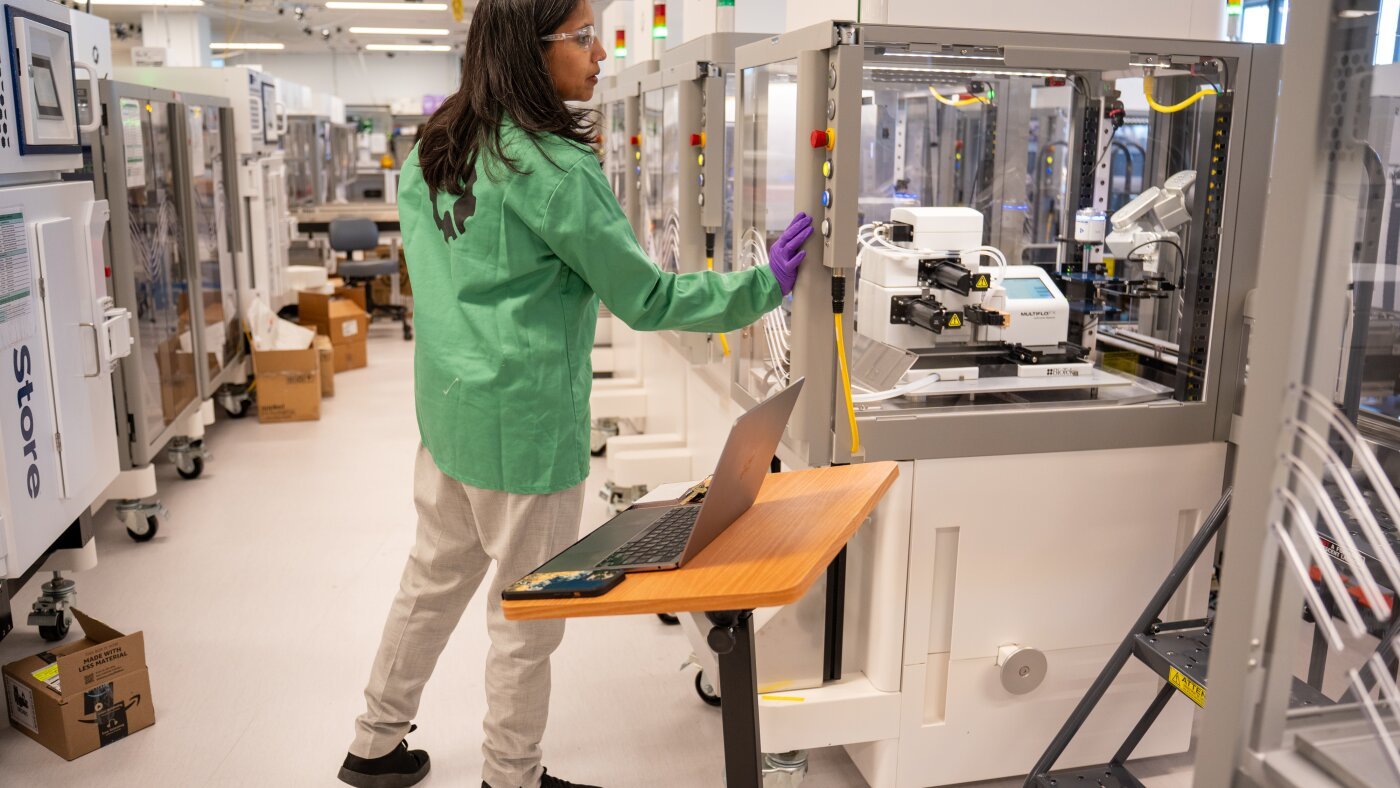
At Ginkgo’s autonomous lab, robots are not merely tools; they are transforming the entire experimental process. These robots operate independently, working on various projects that include pharmaceutical development and agricultural innovations. The robots, encased in glass, perform specialized functions such as pipetting and moving samples, resembling a futuristic assembly line. The lab’s setup includes a central scheduling system that organizes tasks for each robotic unit, allowing for a more streamlined workflow.
Automating scientific procedures has broadened the scope of possibilities. Researchers are now experimenting with empowering robots to act as scientists themselves. In a recent collaboration with OpenAI, Ginkgo’s team tasked an AI model with designing a protein. The results were impressive: the AI-generated design not only reduced costs by 40% compared to human efforts but also enabled the execution of over 30,000 experiments in just six months. This capability showcases the potential for AI to elevate efficiency and creativity in scientific research.
Challenges and Ethical Considerations
While the integration of AI and robotics in science opens new pathways, it comes with significant ethical considerations. Experts like Drew Endy highlight the risk of democratizing science through AI, which could allow untrained individuals to conduct potentially dangerous experiments. The capability to mass-produce harmful biological agents raises alarms about biosecurity and the need for stringent regulations.
The concern lies in the accessibility of advanced biotechnology. Endy notes that biology has historically been complex and difficult for outsiders to manipulate, but AI could shift that balance. As more people gain access to sophisticated tools without the necessary training, the risks increase. Society must prioritize regulatory frameworks to manage these advancements responsibly.
Despite the potential dangers, Jason Kelly anticipates a cultural shift in science. As everyday individuals can ask complex scientific questions, the landscape may become more inclusive. This democratization presents both challenges and opportunities, reshaping how knowledge is produced and shared in the scientific community. The balance between innovation, safety, and ethics will define the future of these automated science labs.
Continue Your Tech Journey
Dive deeper into the world of Cryptocurrency and its impact on global finance.
Access comprehensive resources on technology by visiting Wikipedia.
Space
