

Top Highlights
- A protoplanet, larger than the Moon, shattered over 4.5 billion years ago.
- Meteorite NWA 12774 reveals evidence of this long-lost planetary embryo.
- Angrites, rare and ancient rocks, offer clues about early planetary evolution.
- Findings suggest unique formation pathways differing from Earth and Mars origins.
Unveiling the Protoplanet Mystery
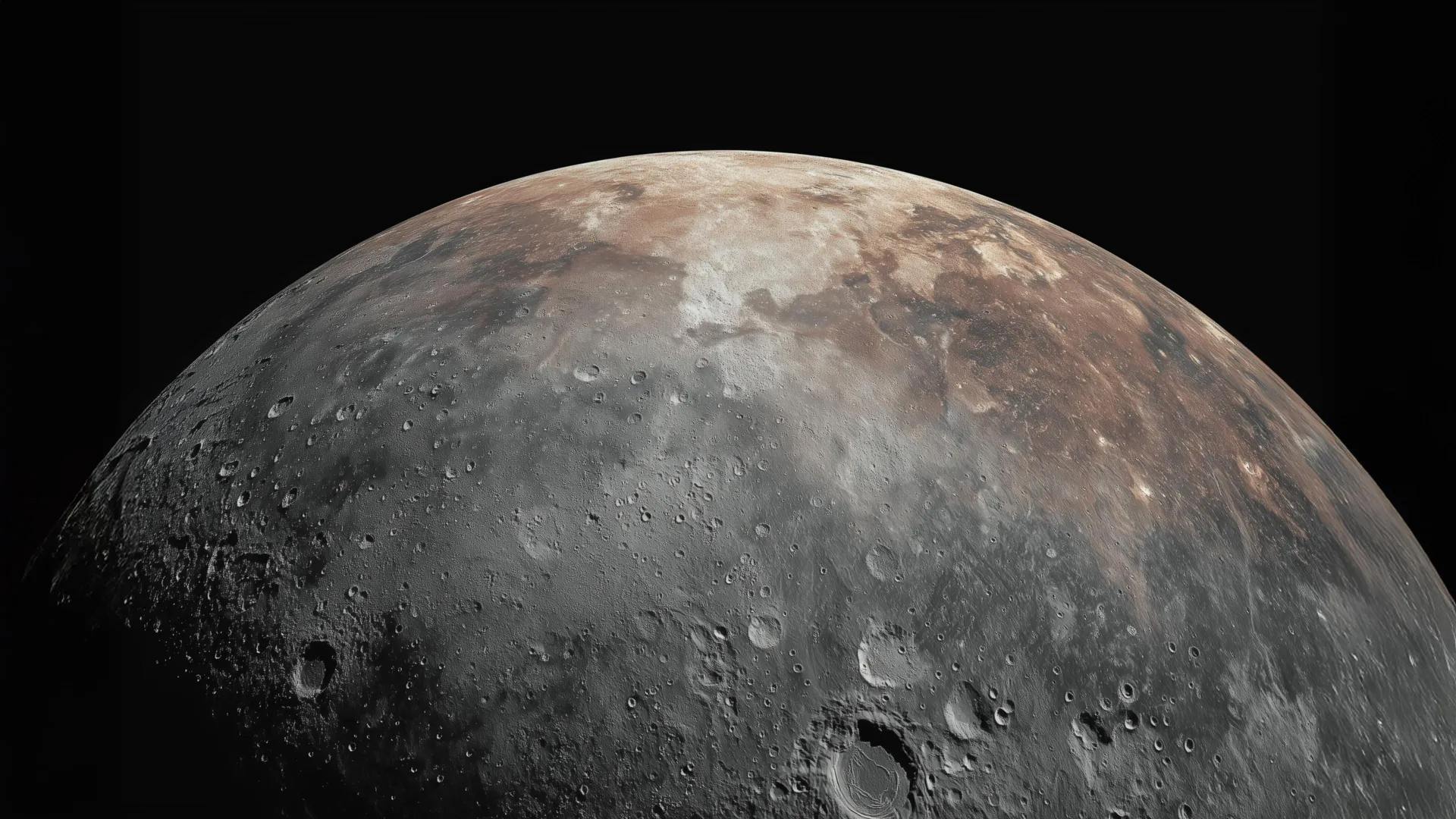
Only a few fragments remain from a massive world that once orbited our Sun. More than 4.5 billion years ago, this protoplanet, potentially as large as the Moon or even Mars, met a violent end. Newly discovered evidence from a meteorite called Northwest Africa (NWA) 12774 sheds light on this lost world. This discovery offers a window into an alternate pathway of planetary evolution that diverges from what scientists previously understood.
Researchers identified unique minerals in NWA 12774, an angrite meteorite. While previous studies linked angrites to small asteroids, this meteorite reveals something far more significant. The clinopyroxene within it contains high levels of aluminum, suggesting it formed under extreme pressure—conditions not found in small bodies. Scientists determined this mineral required at least 17.5 kilobars of pressure for formation, far exceeding what small asteroids could provide.
A Distinct Path of Planetary Formation
The implications of this discovery stretch beyond mere curiosity. Scientists believe the angrite parent body must have had a radius of at least 1,000 kilometers. Some estimates reach as high as 1,800 kilometers. Such a large size would place it alongside the Moon and possibly even Mars. This lost world hints at the diverse ingredients of our solar system. The materials that formed the angrite parent body differ fundamentally from those of Earth and Mars.
This difference raises questions about the chaotic early solar system and the fate of this protoplanet. One hypothesis suggests that a major collision shattered it into pieces. Fragments of this world might have contributed to the formation of other rocky planets. The findings suggest that further examination of existing meteorite collections could reveal even more undiscovered worlds, each with its own unique evolutionary story. The exploration of these ancient fragments opens a door to understanding the complex history of our solar system and its diverse planetary bodies.
Discover More Technology Insights
Explore the future of technology with our detailed insights on Artificial Intelligence.
Explore past and present digital transformations on the Internet Archive.
TechV1
