

Summary Points
- MIT researchers suggest creating non-Abelian anyons could improve quantum computers.
- These exotic particles can “remember” their paths, aiding robust quantum calculations.
- Recent experiments show non-Abelian anyons may form in 2D moiré materials.
- Findings open pathways to more powerful, reliable quantum technologies in the future.
MIT Physicists Explore Exotic Matter for Quantum Computing
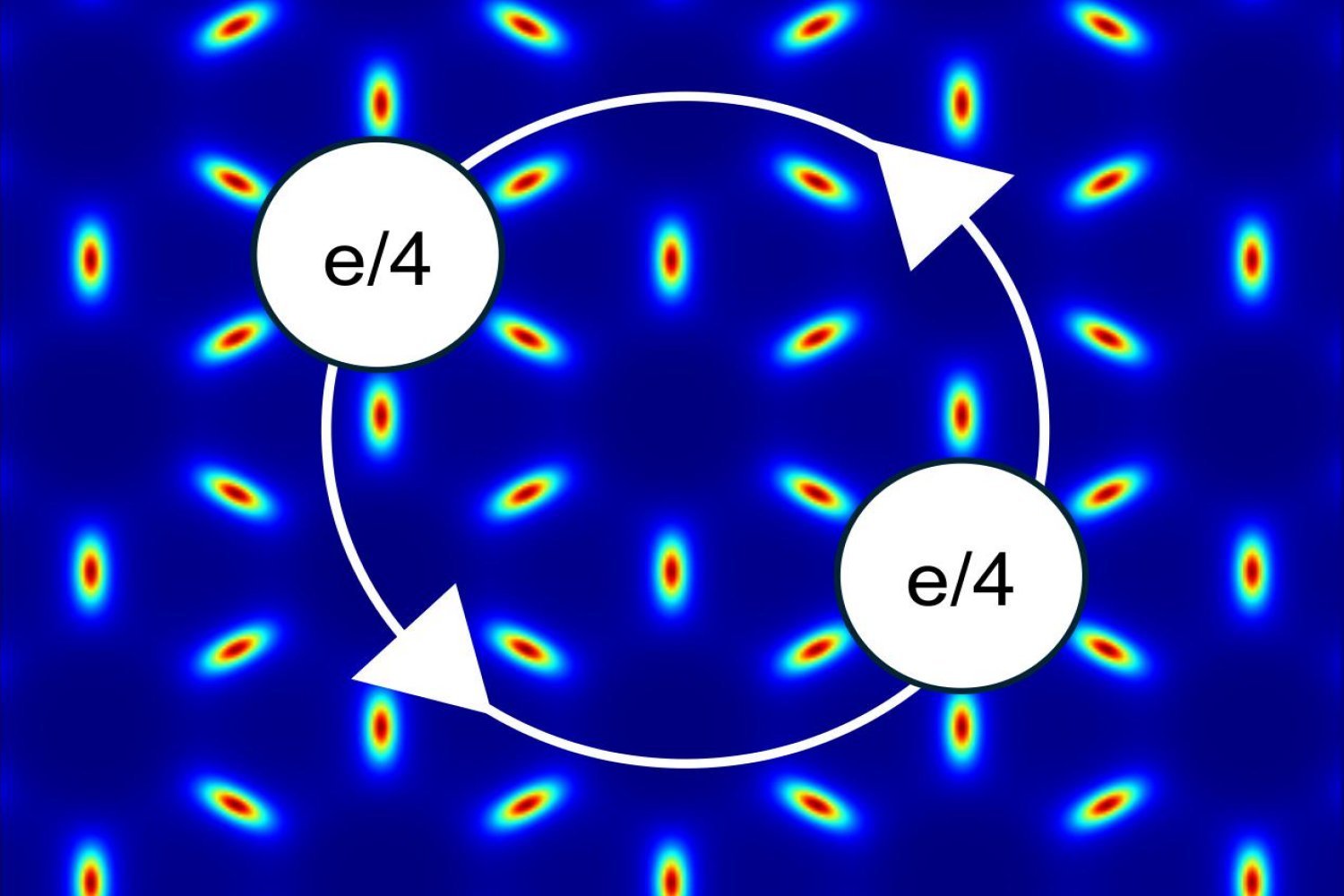
MIT physicists have identified a new way to create an unusual form of matter that could improve future quantum computers. This new material involves electrons that split into smaller parts called anyons. Unlike past discoveries, which needed a magnetic field to produce these particles, recent research shows it can happen without one. This breakthrough makes these materials more practical for research and real-world applications.
The team focused on a special kind of anyon known as non-Abelian anyons. These particles are unique because they can remember their paths over time. This memory makes non-Abelian anyons promising for building more reliable and powerful quantum computers. Such computers could perform tasks that are impossible for current technology.
The research was based on two-dimensional materials, which are only one or a few atoms thick. These materials can be stacked and twisted to create different structures with new properties. In this case, scientists used molybdenum ditelluride layers to form a moiré material. Their findings suggest that adding electrons at specific densities causes them to organize into states that host non-Abelian anyons. If confirmed in experiments, this work could lead to quantum computers that are more durable and capable of solving complex problems.
This discovery opens new pathways in the field of quantum research and highlights how manipulating ultra-thin materials can unlock extraordinary quantum states. Such advancements could one day revolutionize computing technology by making it more accessible and powerful.
Expand Your Tech Knowledge
Stay informed on the revolutionary breakthroughs in Quantum Computing research.
Access comprehensive resources on technology by visiting Wikipedia.
QuantumV1
