

Summary Points
- MIT and UCPH partner to develop fault-tolerant quantum computing hardware.
- Labs will be established in Copenhagen and Cambridge for shared research.
- $2.55 million funding supports joint experiments on quantum hardware and algorithms.
- Collaboration aims to accelerate practical quantum computing applications for life sciences.
Advancing Quantum Computing Hardware through Collaboration
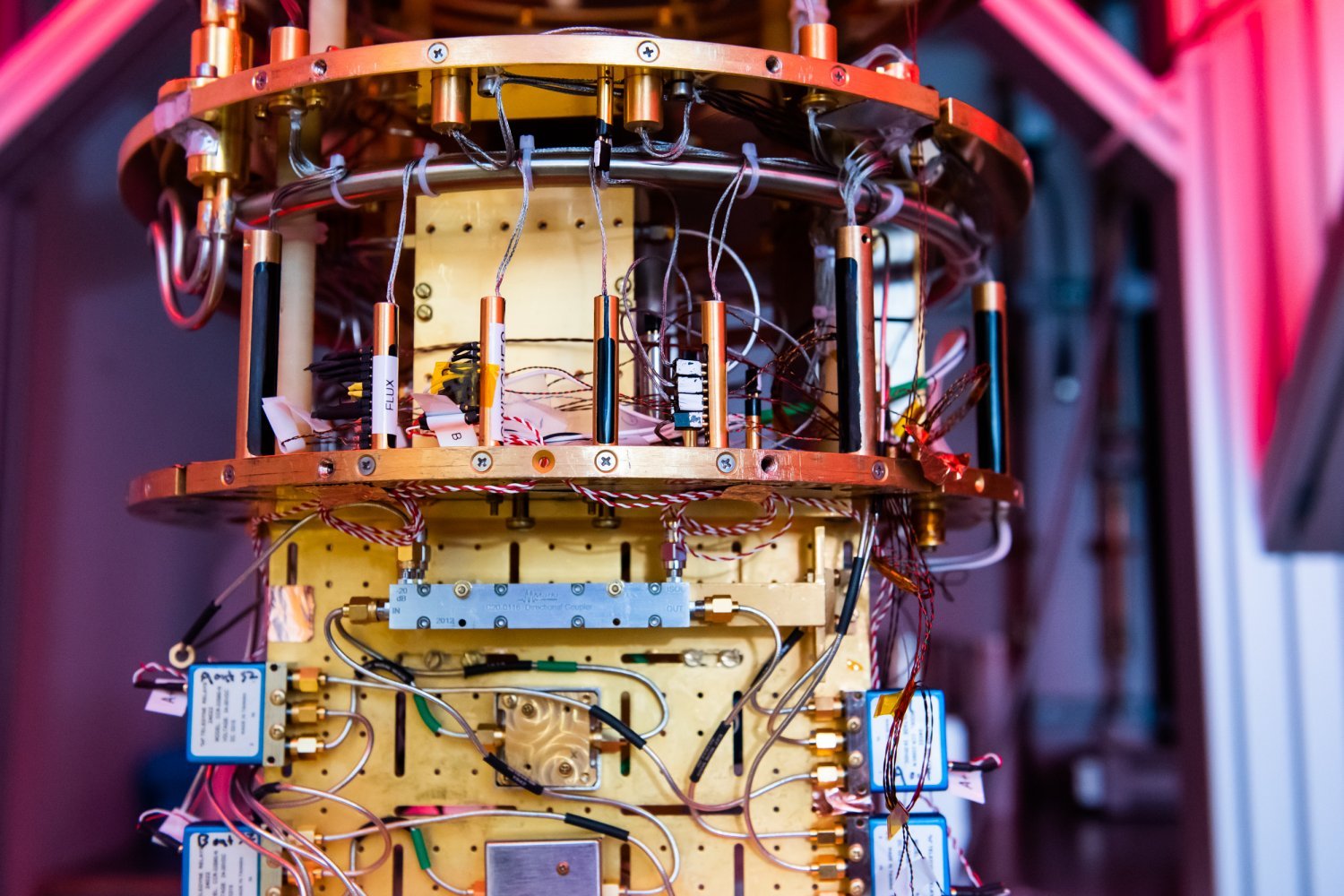
Researchers at MIT have entered a new four-year partnership with the Novo Nordisk Foundation Quantum Computing Programme at the Niels Bohr Institute, University of Copenhagen. The goal is to speed up quantum computing research by sharing facilities and knowledge. Both institutions will create identical labs, one in Copenhagen and one in Cambridge, Massachusetts. This setup allows scientists to run simultaneous experiments, exchange ideas, and compare results more easily. The partnership aims to develop quantum hardware that is reliable, scalable, and capable of solving complex biological and chemical problems. MIT will receive about $2.55 million to support this work, led by Professor William Oliver. Their focus is on fault-tolerant hardware and algorithms for practical, real-world applications.
Impact and Future of Quantum Research
The collaboration reflects a shared belief that improved hardware is essential for quantum computing to become useful. MIT and Danish researchers hope their work will lead to systems that operate consistently and efficiently. Experts see this partnership as a step toward practical quantum devices. It also emphasizes the importance of international teamwork in pushing the boundaries of science. While quantum computing promises significant advances, it remains challenging to build systems that are both powerful and dependable. This project demonstrates the ongoing efforts to bridge that gap. Support from organizations like the Novo Nordisk Foundation helps accelerate progress and brings high-level expertise to the field.
Expand Your Tech Knowledge
Explore the future of technology with our detailed insights on Artificial Intelligence.
Access comprehensive resources on technology by visiting Wikipedia.
QuantumV1
