
Close Menu
    Facebook X (Twitter) Instagram
    Thursday, August 20
    Top Stories:
    • China’s Robotics Boom: Navigating a Critical Scale and Growth Turning Point
    • Boosting Cancer Immunity with Delayed Activation of Exogenous STING
    • Nokia to Exit Mainland China, Closes Most Sites by Year-End
    Facebook X (Twitter) Instagram Pinterest Vimeo
    IO Tribune
    • Home
    • AI
    • Tech
      • Gadgets
      • Fashion Tech
    • Crypto
    • Smart Cities
      • IOT
    • Science
      • Space
      • Quantum
    • OPED
    IO Tribune
    Home » Desert Trials: NASA’s Next-Gen Mars Rover Takes on Harsh Terrain!
    Space

    Desert Trials: NASA’s Next-Gen Mars Rover Takes on Harsh Terrain!

    Staff ReporterBy Staff ReporterJuly 6, 2026No Comments3 Mins Read
    Share Facebook Twitter Pinterest LinkedIn Tumblr Reddit Telegram Email
    Share
    Facebook Twitter LinkedIn Pinterest Email

    Essential Insights

    1. NASA’s ERNEST rover autonomously navigates extreme terrains like lunar and Martian landscapes.
    2. It completed a 16-mile desert trek largely without human intervention.
    3. ERNEST features adaptive AI and advanced wheels for obstacle navigation.
    4. Future rovers could leverage this technology for faster, farther exploration missions.

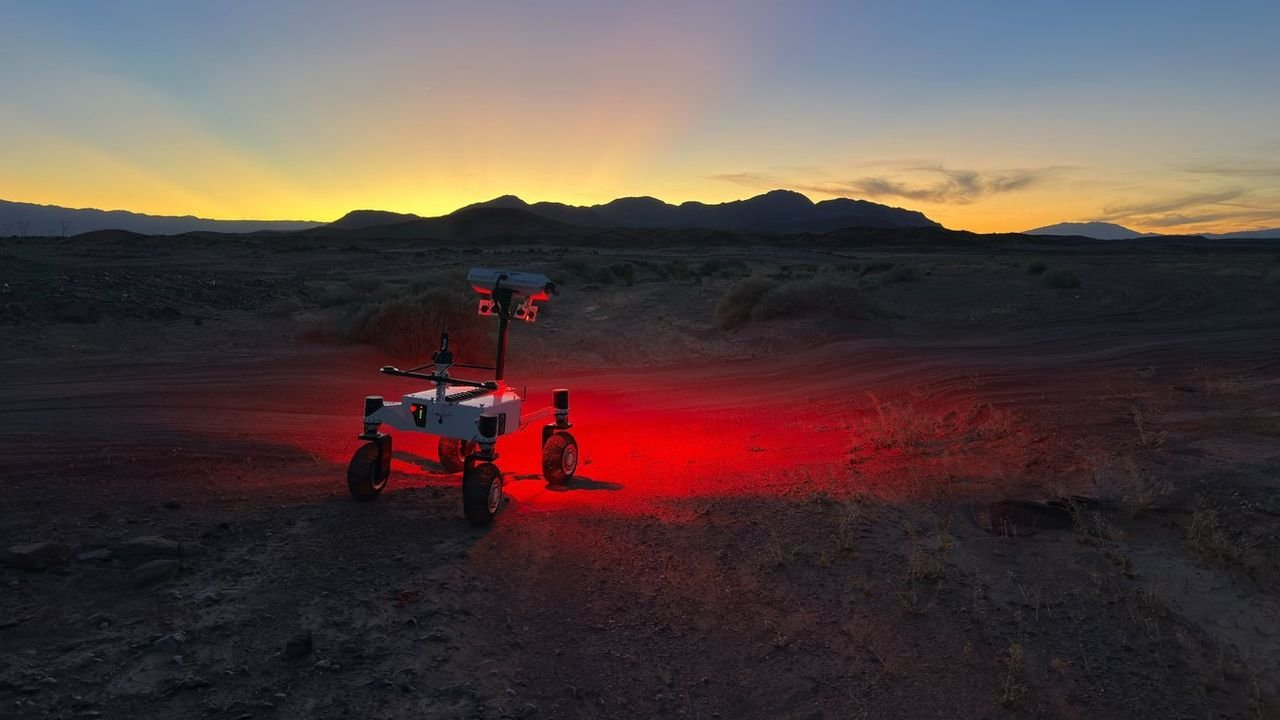
    NASA recently tested a groundbreaking new rover prototype named the Exploration Rover for Navigating Extreme Sloped Terrain (ERNEST) in the California desert. This advanced rover aims to enhance the way robots explore extraterrestrial landscapes, making them more autonomous and efficient. The project, developed at NASA’s Jet Propulsion Laboratory (JPL), demonstrates significant advancements in robotic technology.

    ### Autonomous Navigation and Adaptive Technology

    ERNEST successfully completed a 16-mile trek in Southern California, taking over 37 hours to navigate diverse terrains with minimal human intervention. This autonomous operation marks a departure from traditional methods. NASA envisions future rovers equipped with similar technology could explore the Moon and Mars more effectively. As Issa Nesnas, a JPL principal technologist, noted, the testing is instrumental in refining mobility and software to tackle extreme environments.

    What sets ERNEST apart from previous rovers are its sophisticated wheels and active suspension system. These features, combined with advanced artificial intelligence, enable the rover to identify and maneuver around obstacles. This capability is particularly crucial for navigating rough terrains where prior models might struggle. By employing reinforcement learning in simulated environments, ERNEST has gathered extensive data, enhancing its decision-making processes.

    ### Lessons from Past Rovers

    Past missions, like those involving the Perseverance and Opportunity rovers, utilized a “rocker-bogie” system to traverse Martian landscapes. While successful, this system has limitations. ERNEST employs a new design that uses gimbaled joints to alter its gait, mimicking movements like “squirming” or “wheel-walking.” This innovation allows for greater agility, giving engineers hope that ERNEST will pave the way for larger, faster rovers capable of exploring more challenging terrains.

    During testing, ERNEST also faced low-light and nighttime conditions. This capability suggests that future missions could occur under varied environmental conditions, increasing flexibility in exploration. Measuring 4 feet long, the rover reached speeds of up to 0.6 mph, significantly faster than current rovers on the Moon and Mars. Engineers believe these advancements could lead to even more capable rovers, able to travel greater distances in less time.

    NASA’s continued investment in rover technology indicates a commitment to pushing the boundaries of space exploration. The lessons learned from ERNEST could reshape the future of robotic exploration on the Moon and beyond, fostering a new era of autonomously operated rovers.

    Continue Your Tech Journey

    Stay informed on the revolutionary breakthroughs in Quantum Computing research.

    Discover archived knowledge and digital history on the Internet Archive.

    Space

    Cosmos Mars NASA Space VT1
    Share. Facebook Twitter Pinterest LinkedIn Tumblr Email
    Previous ArticleChallenging Spooky Action at a Distance
    Next Article 3 Questions: Rethinking Data-Driven Design at MIT
    Avatar photo
    Staff Reporter
    • Website

    John Marcelli is a staff writer for IO Tribune, with a passion for exploring and writing about the ever-evolving world of technology. From emerging trends to in-depth reviews of the latest gadgets, John stays at the forefront of innovation, delivering engaging content that informs and inspires readers. When he's not writing, he enjoys experimenting with new tech tools and diving into the digital landscape.

    Related Posts

    AI

    Why Silicon Valley Doesn’t Understand Your AI Concerns

    August 20, 2026
    Space

    SmallSat 2026: Pioneering the Future of Space Science

    August 20, 2026
    Gadgets

    Bilibili Goes Global: Connecting Creators Worldwide

    August 20, 2026
    Add A Comment

    Comments are closed.

    Must Read

    Why Silicon Valley Doesn’t Understand Your AI Concerns

    August 20, 2026

    SmallSat 2026: Pioneering the Future of Space Science

    August 20, 2026

    Bilibili Goes Global: Connecting Creators Worldwide

    August 20, 2026

    Master Aligning Intent with Claude Code Effectively

    August 20, 2026

    Unveiling Megalodon’s Size: Fossil Finds and Final Answer

    August 20, 2026
    Categories
    • AI
    • Crypto
    • Fashion Tech
    • Gadgets
    • IOT
    • OPED
    • Quantum
    • Science
    • Smart Cities
    • Space
    • Tech
    Most Popular

    Exciting Updates: Pi Network’s Big News & Whales Go Wild for Ethereum and Cardano – August 22 Recap!

    August 22, 2025

    Top Picks: 12 Tested Nintendo Switch 2 Cases Revealed!

    June 25, 2025

    Empowering Young Makers: The Kid-Safe Table Saw Revolution

    September 30, 2025
    Our Picks

    Reviving the Sector: A New Dawn?

    June 1, 2025

    Beat the Heat: Essential Tips to Stay Cool at Home

    June 25, 2025

    Bluesky Blocks Mississippi Over New Age Verification Law

    August 24, 2025
    Categories
    • AI
    • Crypto
    • Fashion Tech
    • Gadgets
    • IOT
    • OPED
    • Quantum
    • Science
    • Smart Cities
    • Space
    • Tech
    • Privacy Policy
    • Disclaimer
    • Terms and Conditions
    • About Us
    • Contact us
    Copyright © 2025 Iotribune.comAll Rights Reserved.

    Type above and press Enter to search. Press Esc to cancel.