

Essential Insights
- Canada’s 2026 fire season intensified by late June amid warm, dry conditions.
- Nearly 850 wildfires were active by mid-July, primarily in Ontario.
- Smoke from fires severely affected air quality, notably in Toronto.
- Fires burned 1.9 million hectares this year, below extreme years 2023 and 2025.
Ontario Wildfire Smoke Moves East
After a slow start to Canada’s 2026 fire season, wildfire activity surged by the end of June. Dry and warm conditions contributed to this uptick, bringing fire activity closer to the 25-year average. By mid-July, nearly 850 fires were reported across the country, with over 180 of those burning in Ontario. This increased activity has significant implications for air quality and public health.
Impact of Wildfire Smoke on Air Quality
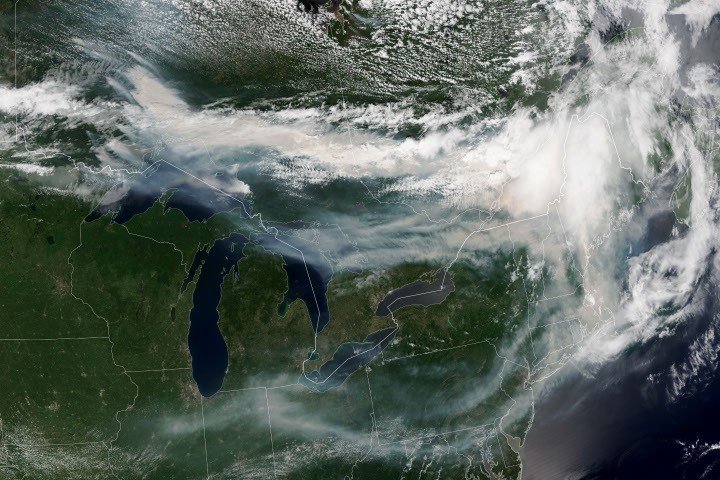
On July 14, satellite images from NOAA-21 captured the dramatic scene of smoke billowing from Ontario’s fires. Winds carried this smoke southeast, affecting southern Ontario, parts of Quebec, and areas in the U.S. Midwest and Northeast. In many regions, the sky took on shades of gray and yellow, while the Sun appeared orange due to the thick smoke.
The smoke’s impact on air quality varied greatly. In areas where smoke rose high into the atmosphere, air quality remained relatively unaffected. Conversely, places where smoke settled closer to the ground experienced substantial degradation in air quality. For example, Toronto reported unhealthy air quality levels, according to AirNow. To complicate matters, southern Ontario was also grappling with a heat wave, exacerbating health risks for residents.
Much of the smoke originated from fires in Northwestern Ontario. During July 13 and 14, eight significant blazes saw rapid growth, prompting evacuation orders for several communities. The situation underscores the urgent need for effective fire management and public safety protocols.
Current Status and Outlook
As of mid-July 2026, fires across Canada have burned an estimated 1.9 million hectares (4.7 million acres) since the start of the year. While this total is still below levels from the extreme fire years of 2023 and 2025, the remainder of the season remains uncertain. Experts from the U.S., Canada, and Mexico have compiled a seasonal fire outlook to assess the likelihood of continued wildfires through July, August, and September.
Efforts to monitor and manage fire conditions are crucial. Authorities and experts must continue to evaluate the effectiveness of technology-driven solutions—such as satellite monitoring and real-time air quality reporting. These measures can improve responsiveness to wildfires and better protect public health.
References
- AirNow (2026, July 15) Wildfires. Accessed July 15, 2026.
- CBC (2026, July 15) Heat, wildfire smoke combine to create dangerous conditions across southwestern Ontario. Accessed July 15, 2026.
- Ministry of Natural Resources, Ontario (2026, July 14) Forest fires. Accessed July 15, 2026.
- National Interagency Fire Center, Natural Resources Canada, and Servicio Meteorológico Nacional (2026, July 14) North American Seasonal Fire Assessment and Outlook. Accessed July 15, 2026.
- The New York Times (2026, July 15) Toronto Under an Orange Sky as Wildfire Smoke Pours Into the U.S. Northeast. Accessed July 15, 2026.
- Reuters (2026, July 15) Canadian wildfire smoke chokes Toronto, threatens US cities. Accessed July 15, 2026.
Continue Your Tech Journey
Dive deeper into the world of Cryptocurrency and its impact on global finance.
Discover archived knowledge and digital history on the Internet Archive.
Space
