
Close Menu
    Facebook X (Twitter) Instagram
    Thursday, July 16
    Top Stories:
    • BP Closes Corporate Venture Arm After Two Decades
    • Tesla Driver Overrode FSD in Fatal Texas Crash: Investigators Reveal Accelerator Usage
    • Pioneer of Genetic Innovation: Mary-Dell Chilton, 87, Passes Away
    Facebook X (Twitter) Instagram Pinterest Vimeo
    IO Tribune
    • Home
    • AI
    • Tech
      • Gadgets
      • Fashion Tech
    • Crypto
    • Smart Cities
      • IOT
    • Science
      • Space
      • Quantum
    • OPED
    IO Tribune
    Home » Asteroid or Comet? NASA’s Stunning Discovery Revealed!
    Space

    Asteroid or Comet? NASA’s Stunning Discovery Revealed!

    Staff ReporterBy Staff ReporterJuly 16, 2026No Comments3 Mins Read
    Share Facebook Twitter Pinterest LinkedIn Tumblr Reddit Telegram Email
    Share
    Facebook Twitter LinkedIn Pinterest Email

    Essential Insights

    1. NASA researchers identified asteroid 1998 SH2 as a comet based on its motion.
    2. Observations revealed irregular trajectory, indicating possible gas venting causing deviations.
    3. Telescopes confirmed cometary activity, showing a weak tail from 1998 SH2.
    4. Findings suggest more asteroids may be comets; tracking enhances planetary defense efforts.

    NASA Study Finds Near-Earth Asteroid Is Actually Comet

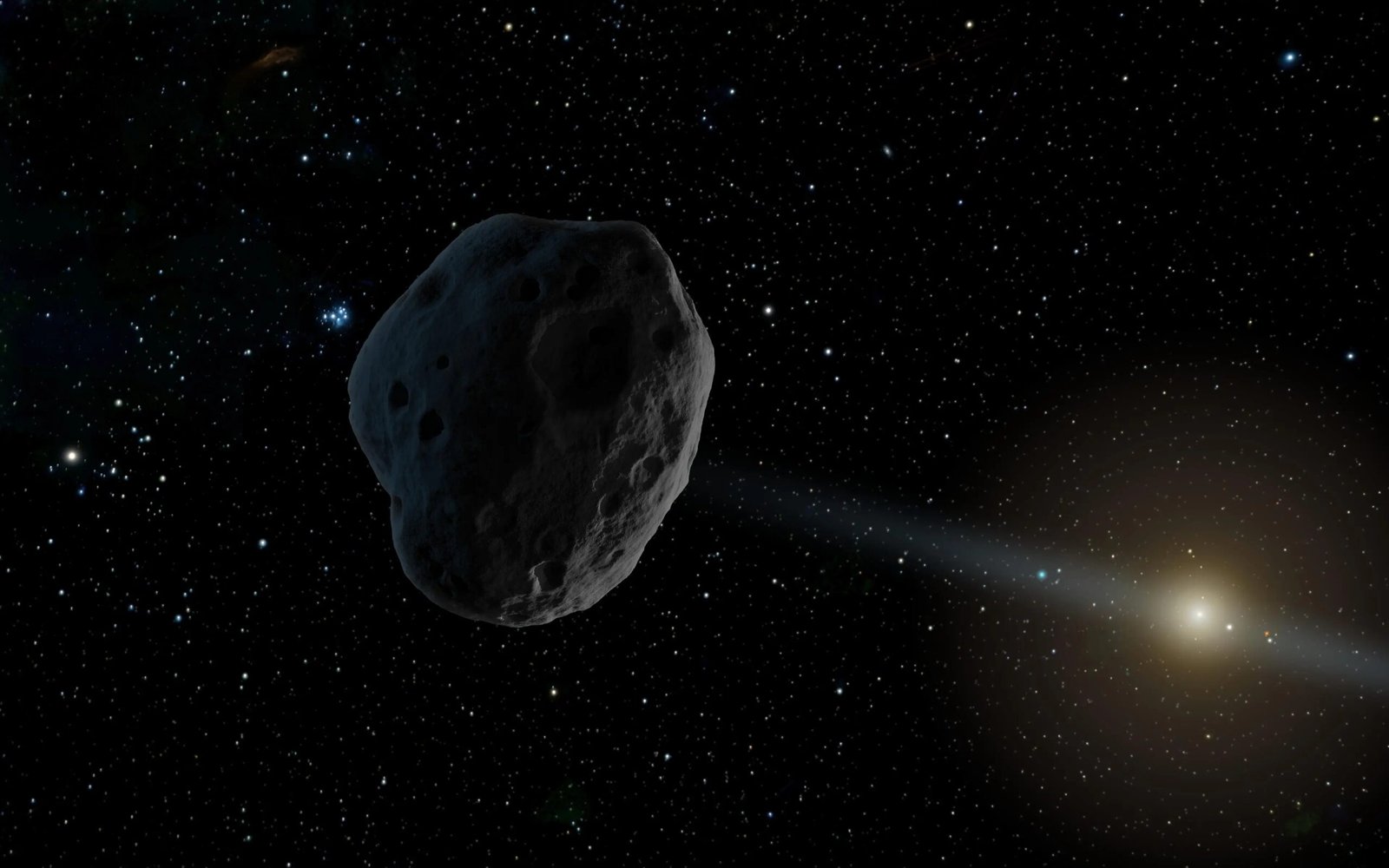
    New research from NASA’s Jet Propulsion Laboratory (JPL) has revealed that a near-Earth object, initially thought to be an asteroid, is actually a comet. The findings were published in the journal Nature Astronomy. This discovery highlights the complexities of celestial bodies and their classifications.

    The Mystery of 1998 SH2

    The object, provisionally named asteroid 1998 SH2, passed within 2 million miles of Earth in August 2025 during its 4½-year orbit around the Sun. Scientists at JPL used radar from NASA’s Deep Space Network (DSN) to track its position. When 1998 SH2 did not appear where expected, researchers knew something unusual was influencing its path.

    By analyzing the object’s motion and conducting optical astrometry, scientists identified irregular movements consistent with cometary behavior. Typically, asteroids have predictable trajectories, while comets often exhibit irregularities due to outgassing. The analysis indicated that 1998 SH2 might be venting gas as it approaches the Sun, altering its motion just enough to be detected.

    The process occurs when solar heat turns ice mixed with rocky material into gas. This gas can create a faint outflow that might not be visible through ordinary telescopes. Observations from powerful telescopes in Hawaii and Chile confirmed the presence of a weak tail, providing evidence that 1998 SH2 is indeed a comet. This revelation adds a new identifier to its classification: it will receive an additional provisional designation as P/1998 SH2.

    Implications for Astronomy and Planetary Defense

    The research raises intriguing questions about other celestial bodies. A class known as “dark comets” shows similar irregularities but lacks visible signs of comet activity like tails or comas. These dark comets may go unnoticed with traditional observational methods. It is possible that many objects categorized as asteroids could turn out to be comets with the right observational conditions.

    Careful tracking of near-Earth objects is vital. The subtle movements of comets, caused by outgassing, can significantly differ from the more stable orbits of asteroids. Understanding these distinctions is critical for planetary defense, as it aids in assessing which objects pose potential risks to Earth.

    NASA’s upcoming Near-Earth Object Surveyor mission aims to advance this understanding by identifying hidden objects like dark asteroids and comets that are difficult to detect. The surveillance capability of NEO Surveyor will enhance our comprehension of these celestial bodies and their potential threats.

    Continuous observation and precise tracking of near-Earth objects not only advance astronomical research but also play a pivotal role in safeguarding our planet. As technology improves, scientists expect to uncover more discoveries that challenge existing classifications and improve our understanding of these fascinating objects in our solar system.

    Continue Your Tech Journey

    Dive deeper into the world of Cryptocurrency and its impact on global finance.

    Access comprehensive resources on technology by visiting Wikipedia.

    Space

    Asteroids Comets Cosmos Jet Propulsion Laboratory NASA Planetary Defense Planetary Defense Coordination Office Planetary Science Research Space The Sun & Solar Physics VT1
    Share. Facebook Twitter Pinterest LinkedIn Tumblr Email
    Previous ArticleTesla Driver Overrode FSD in Fatal Texas Crash: Investigators Reveal Accelerator Usage
    Next Article BP Closes Corporate Venture Arm After Two Decades
    Avatar photo
    Staff Reporter
    • Website

    John Marcelli is a staff writer for IO Tribune, with a passion for exploring and writing about the ever-evolving world of technology. From emerging trends to in-depth reviews of the latest gadgets, John stays at the forefront of innovation, delivering engaging content that informs and inspires readers. When he's not writing, he enjoys experimenting with new tech tools and diving into the digital landscape.

    Related Posts

    Tech

    BP Closes Corporate Venture Arm After Two Decades

    July 16, 2026
    Tech

    Tesla Driver Overrode FSD in Fatal Texas Crash: Investigators Reveal Accelerator Usage

    July 16, 2026
    AI

    Prepare These 5 Assets Before AI Overloads

    July 16, 2026
    Add A Comment

    Comments are closed.

    Must Read

    BP Closes Corporate Venture Arm After Two Decades

    July 16, 2026

    Asteroid or Comet? NASA’s Stunning Discovery Revealed!

    July 16, 2026

    Tesla Driver Overrode FSD in Fatal Texas Crash: Investigators Reveal Accelerator Usage

    July 16, 2026

    Prepare These 5 Assets Before AI Overloads

    July 16, 2026

    Sonos Enhances App with Tab Navigation & Speaker Sorting

    July 16, 2026
    Categories
    • AI
    • Crypto
    • Fashion Tech
    • Gadgets
    • IOT
    • OPED
    • Quantum
    • Science
    • Smart Cities
    • Space
    • Tech
    Most Popular

    Download iOS 26 Beta Today! Check Compatible Apple Devices Here!

    August 2, 2025

    Pi2Day is Here: What Pioneers Must Know

    June 29, 2026

    Did a Comet Obliterate the Mammoths?

    January 2, 2026
    Our Picks

    Are We on the Brink of a Mega Rally?

    September 9, 2025

    Did a Whale Just Hint at a PEPE Bull Run? On-Chain Data Says Yes!

    September 14, 2025

    Spark Innovation: MIT and Mass General Brigham Team Up to Supercharge Health Breakthroughs!

    June 27, 2025
    Categories
    • AI
    • Crypto
    • Fashion Tech
    • Gadgets
    • IOT
    • OPED
    • Quantum
    • Science
    • Smart Cities
    • Space
    • Tech
    • Privacy Policy
    • Disclaimer
    • Terms and Conditions
    • About Us
    • Contact us
    Copyright © 2025 Iotribune.comAll Rights Reserved.

    Type above and press Enter to search. Press Esc to cancel.