

Summary Points
- NASA’s REAL instrument measures high-energy particles in near-Earth space with miniaturized sensors.
- It enhances understanding of radiation belts that threaten satellites, especially GPS.
- REAL distinguishes electron loss mechanisms, helping predict space weather events.
- Compact design allows complex measurements previously achievable only by larger missions.
A New Compact Instrument Enables High-Fidelity Measurements of Energetic Particles on CubeSats
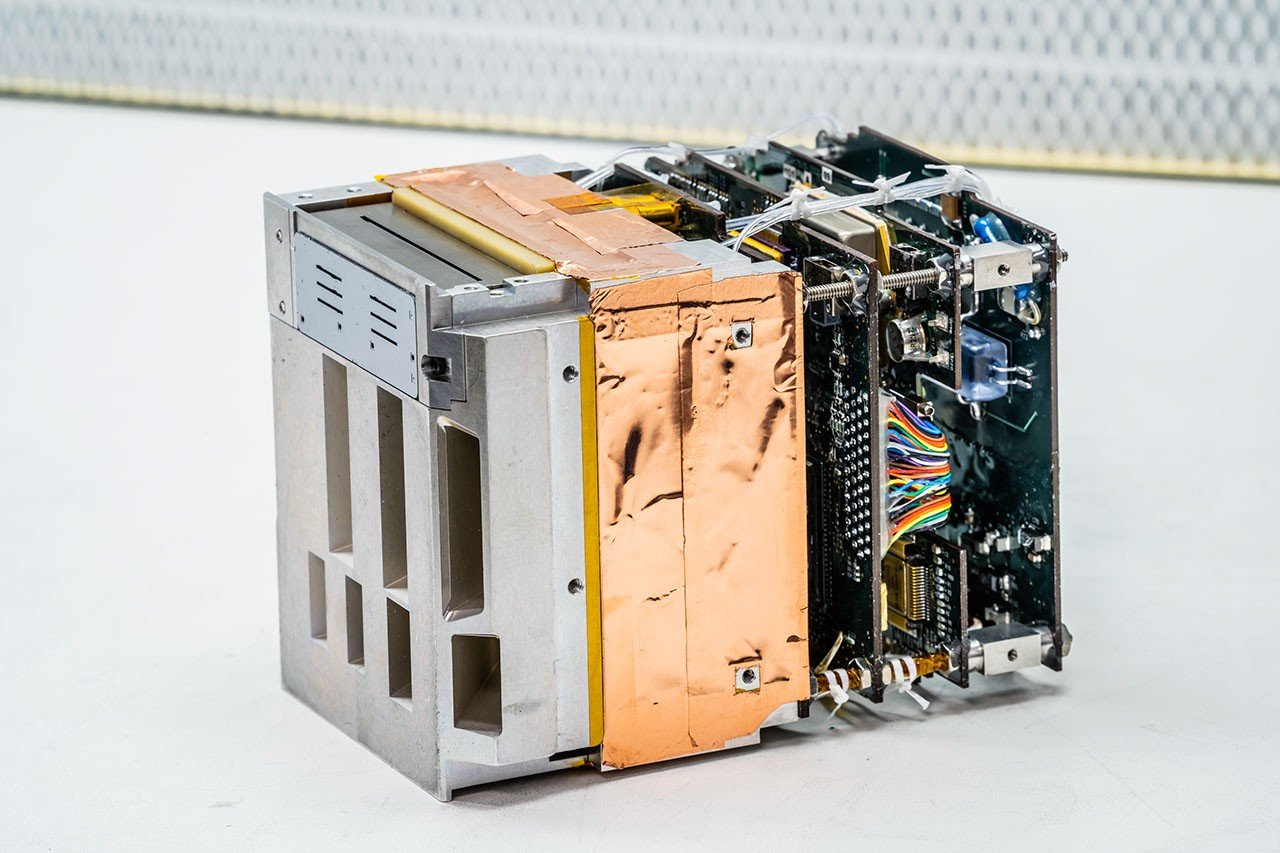
A team of NASA-sponsored scientists and engineers has made significant strides in measuring high-energy particles in near-Earth space. They have developed a compact, multi-view particle detection instrument for NASA’s Relativistic Electron Atmospheric Loss (REAL) CubeSat mission. This novel instrument is not only unique but enables a deeper understanding of energetic particles, opening pathways for enhanced space weather prediction.
The instrument’s primary aim is to provide comprehensive measurements of how energetic particles are transported and lost in Earth’s radiation environment. It holds promise for improving our understanding of space weather effects in low Earth orbit (LEO). More importantly, this technology makes advanced observations achievable for future low-cost spacecraft.
Understanding the Van Allen Radiation Belts
The Earth is surrounded by doughnut-shaped regions called the Van Allen radiation belts. These belts contain billions of high-energy charged particles, including two distinct zones: an inner belt dominated by high-energy protons and an outer belt, primarily composed of energetic electrons. The outer belt is of particular concern due to the presence of “killer electrons.” These particles can penetrate satellite shielding and cause significant damage, affecting systems we rely on for GPS, telecommunications, and more.
Scientists have been studying these radiation belts for decades, but their dynamic nature complicates understanding. Energetic electrons can build up and then rapidly diminish in the outer belt. Events known as energetic electron precipitation (EEP) describe the loss of electrons, which may occur in short bursts or longer processes. Understanding these loss events is crucial for determining how radiation belts behave and for predicting their potential impact on our technology.
Advancements with the REAL Instrument
Launched on July 23, 2025, the REAL instrument is a game-changer. It can distinguish between different loss mechanisms for electrons, allowing researchers to investigate what drives these events. Understanding whether electron scattering is gradual or more abrupt is critical for comprehending the underlying physics.
This innovative instrument includes three sensor heads that measure low-, medium-, and high-energy particles from multiple directions simultaneously. Each head has a different structure and objective. The low-energy head, for example, utilizes an electrostatic analyzer to capture lower-energy electrons, while the high-energy head uses an aluminum collimator for more energetic particles. This design enables the REAL instrument to capture data at resolutions as fine as 20 milliseconds, providing unprecedented insights into electron behavior in the radiation belts.
One key advantage of the REAL instrument is its compact size. Traditional instruments needed extensive resources and were usually deployed on large satellites. The development of this miniature instrument demonstrates that significant scientific advancements can occur using smaller, more cost-effective spacecraft. This shift has the potential to pave the way for CubeSat constellations, enabling continuous monitoring of Earth’s radiation environment. Such advancements could enhance predictions related to space weather, providing a new layer of protection for critical space-based systems.
As the REAL instrument continues to function optimally, the research team is already fine-tuning its capabilities to gather even more precise data. The integration of this technology signifies a substantial progress in studying energetic particles and a promising future for low-cost space missions.
Stay Ahead with the Latest Tech Trends
Learn how the Internet of Things (IoT) is transforming everyday life.
Access comprehensive resources on technology by visiting Wikipedia.
Space
