

Quick Takeaways
- Researchers at Northwestern have developed the Phantom Twist, a drone that employs rapid spinning and mechanical tricks to appear nearly invisible to the human eye, blending into backgrounds with minimal visibility.
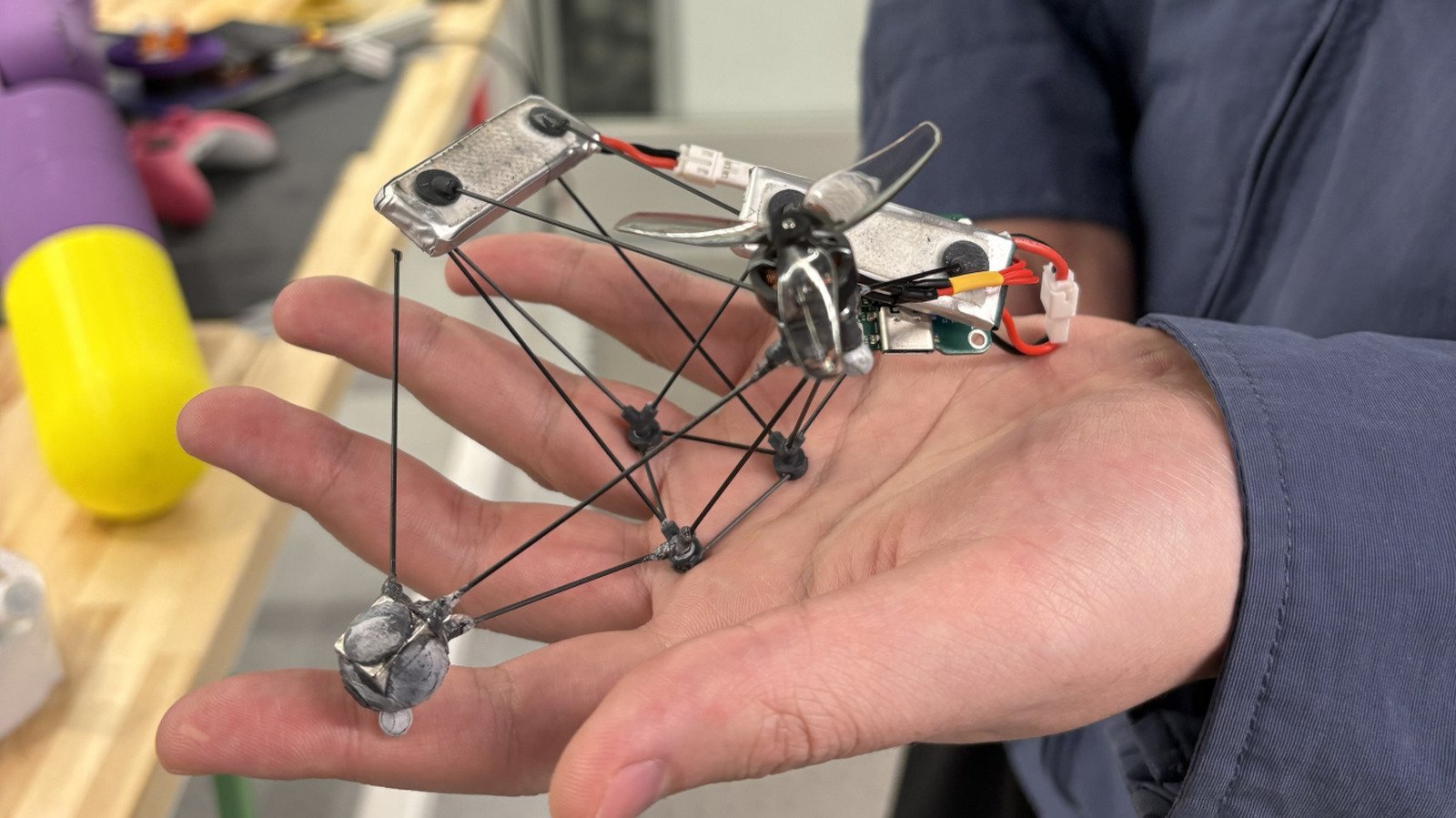
- The drone’s design manipulates human perception by spinning components in opposite directions and spacing parts strategically, resulting in a “ghostly smudge” effect inspired by fast-spinning propellers.
- Despite its stealth advantages, the Phantom Twist produces noise and still reveals wires and supports, limiting its current practicality; ongoing improvements aim to make it quieter and more transparent.
- While initially envisioned for civilian applications like wildlife monitoring and infrastructure inspection, this technology raises concerns over military and surveillance uses, given the rapid development and deployment potential of invisible drones.
Revolutionizing Drone Stealth with Speed
A team of researchers has created a new type of drone called the Phantom Twist. This drone spins so fast that our eyes can barely see it. It rotates up to 25 times every second. This rapid spinning tricks the human eye, making the drone almost invisible. Unlike regular drones, the Phantom Twist lacks fixed parts that stay still. Instead, its propeller and body spin in opposite directions. This clever design makes it about ten times less visible than normal quadcopters. While it doesn’t achieve full invisibility, it creates a ghostly effect, blending seamlessly into the background. This breakthrough shows how technology can manipulate perception through speed and design. As a result, the Phantom Twist could open a new chapter in stealth technology.
How the Phantom Twist Was Designed
Scientists started with a computer model that created 20,000 drone designs. Then, they used artificial intelligence to select the best ones. The program prioritized reducing visibility in various environments. After narrowing down the options, they simulated how humans see the drones flying over landscapes. The least visible designs then went through physical testing. When they finally built the Phantom Twist, the team focused on how humans perceive motion. They changed how the drone’s parts were arranged, placing components at different heights. During flight, the propeller spins opposite to the drone’s body. This prevents our eyes from fixating on any part. An expert explained that spinning very fast causes objects to blur, similar to how cameras capture motion. The result is a drone that appears hazy or ghost-like, making it harder to detect visually.
The Future and Limitations of Invisible Drones
Researchers see many possible uses for the Phantom Twist. They imagine it could help survey wildlife without disturbing animals. Today’s drones are often noisy and visible, which can scare or alter nature. Invisible drones could improve observation and data collection. They might also be useful for inspecting infrastructure discreetly. However, a fully invisible drone remains a long-term goal. The current model still makes noise and is partially visible through wires and support structures. Engineers plan to add transparent materials and quieter engines to enhance stealth.
At the same time, discussions about military and security use are unavoidable. Governments worldwide actively develop drones for defense and surveillance. These advancements can extend conflict capabilities, raising ethical questions. The rapid pace of drone innovation means new technology appears almost overnight. It is unclear exactly when or how invisible drones will enter military arsenals. Nonetheless, civilian research like this pushes the boundaries. It could lead to safer wildlife monitoring, more efficient infrastructure checks, and new ways of understanding the world—beneath the radar screen.
Continue Your Tech Journey
Explore the future of technology with our detailed insights on Artificial Intelligence.
Access comprehensive resources on technology by visiting Wikipedia.
CellphonesV1
