

Essential Insights
- The Buck Moon is July’s full moon, traditionally named for male deer.
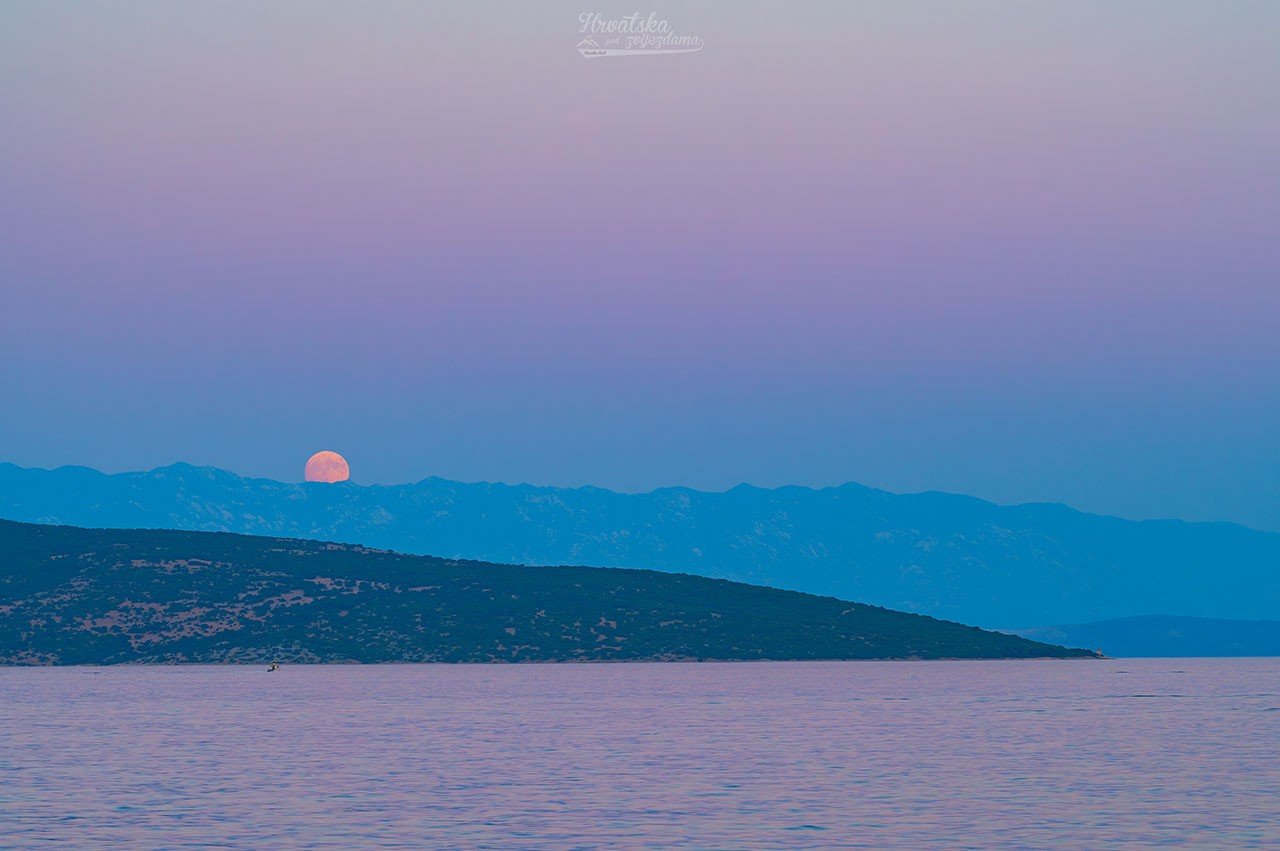
- A captivating scene from Krk Island features the Buck Moon rising.
- Earth’s shadow creates a gray band at twilight, above distant mountains.
- The upcoming New Moon on August 12 coincides with a solar eclipse.
Understanding the Buck Moon
Every July, a full moon known as the Buck Moon lights up the night sky. This name comes from the time of year when male deer, or bucks, shed their antlers and grow new ones. The Buck Moon is a vibrant reminder of nature’s cycles. Observers in various locations can appreciate its beauty, but few places rival the view captured on July 28 from Krk Island in Croatia.
In this stunning scene, the Buck Moon rises over distant mountains. As it does, it marks a transition. The full moon rises as the sun sets, creating a moment of twilight where Earth’s shadow stretches across the sky. This shadow appears as a diffuse gray band, sitting just above the southeastern horizon. The visual contrast between the moonlight and the shadow provides a breathtaking spectacle.
The Belt of Venus and Twilight Phenomena
Above Earth’s shadow, a soft pinkish glow emerges, known as the Belt of Venus. This phenomenon occurs due to the scattering of sunlight in the atmosphere. The Belt of Venus often follows into the night sky at dusk, blending beautifully with the rich colors of twilight. This atmospheric process enhances the beauty of the scene, setting the stage for the upcoming New Moon.
The New Moon on August 12 will bring more celestial excitement. Anticipation builds for the total solar eclipse that will cast its shadow across portions of Earth. As the Buck Moon and Belt of Venus fade into the night, astronomers and space enthusiasts eagerly await this next spectacle, carefully observing the intricate dance of astronomical events.
Stay Ahead with the Latest Tech Trends
Dive deeper into the world of Cryptocurrency and its impact on global finance.
Discover archived knowledge and digital history on the Internet Archive.
Space
