

Fast Facts
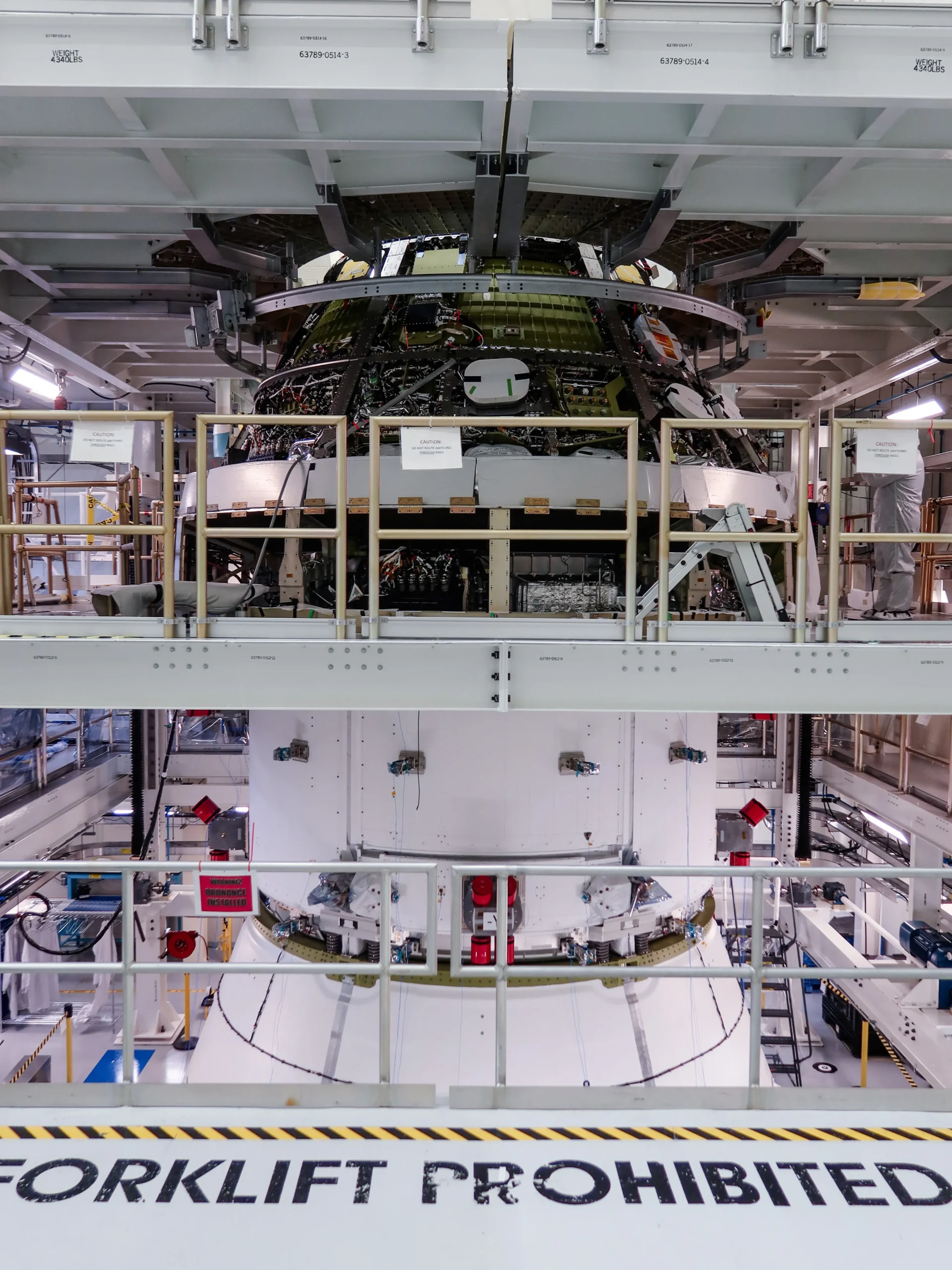
- Technicians assembled Orion crew and service modules at Kennedy Space Center.
- The crew module will carry four astronauts: Bresnik, Douglas, Rubio, and Parmitano.
- The service module will power and propel Orion for the upcoming mission.
- Orion will test docking with commercial human landing system prototypes from Blue Origin and SpaceX.
Artemis III Orion Crew and Service Models Joined
On July 30, 2026, technicians successfully joined the Orion crew and service modules inside the Neil Armstrong Operations and Checkout Building at NASA’s Kennedy Space Center in Florida. This is an important step in preparing for NASA’s Artemis III mission, which aims to return humans to the Moon.
The crew module is designed to carry four astronauts. It will host NASA astronauts Randy Bresnik, Andre Douglas, and Frank Rubio, along with European Space Agency (ESA) astronaut Luca Parmitano. The service module, on the other hand, will provide power and propulsion for the spacecraft. It ensures the Orion can maneuver and stay operational during the mission.
This milestone marks the final integration of the main components needed for launch. The joined modules are now ready for further testing and validation, bringing NASA closer to its lunar exploration goals.
Significance of the Joined Modules
The joining of the crew and service modules is a key technical achievement. It allows engineers to test the communication and compatibility between different parts of the spacecraft. The service module will support the crew during the mission while testing rendezvous and docking capabilities.
NASA plans to use test versions, or test articles, of commercial human landing systems from Blue Origin and SpaceX. The Orion spacecraft will demonstrate how well it can connect with these landers during the mission. These tests are part of the broader effort to establish sustainable lunar exploration and future missions beyond.
While the technology is impressive, some challenges remain. Engineers must ensure that the modules operate smoothly together in space. The systems must be reliable, safe, and practical for astronauts who will spend time on the Moon’s surface. The development reflects a careful balance between innovation and safety, with a focus on practicality for upcoming lunar missions.
This milestone represents a significant step towards the Artemis program’s goal to expand human spaceflight. It showcases the progress made in space technology and international collaboration, setting the stage for future exploration.
Discover More Technology Insights
Dive deeper into the world of Cryptocurrency and its impact on global finance.
Discover archived knowledge and digital history on the Internet Archive.
Space
