

Quick Takeaways
- New fossils from Canada’s Northwest Territories reveal early complex animals over 567 million years old.
- These findings push back the emergence of animal movement and sexual reproduction by 5-10 million years.
- The fossils include diverse organisms, some new to North America, showing early deep-water life.
- Stable deep-sea environments likely supported initial animal evolution before spreading to shallower waters.
Fossil Discoveries Challenge Our Understanding of Early Animal Life
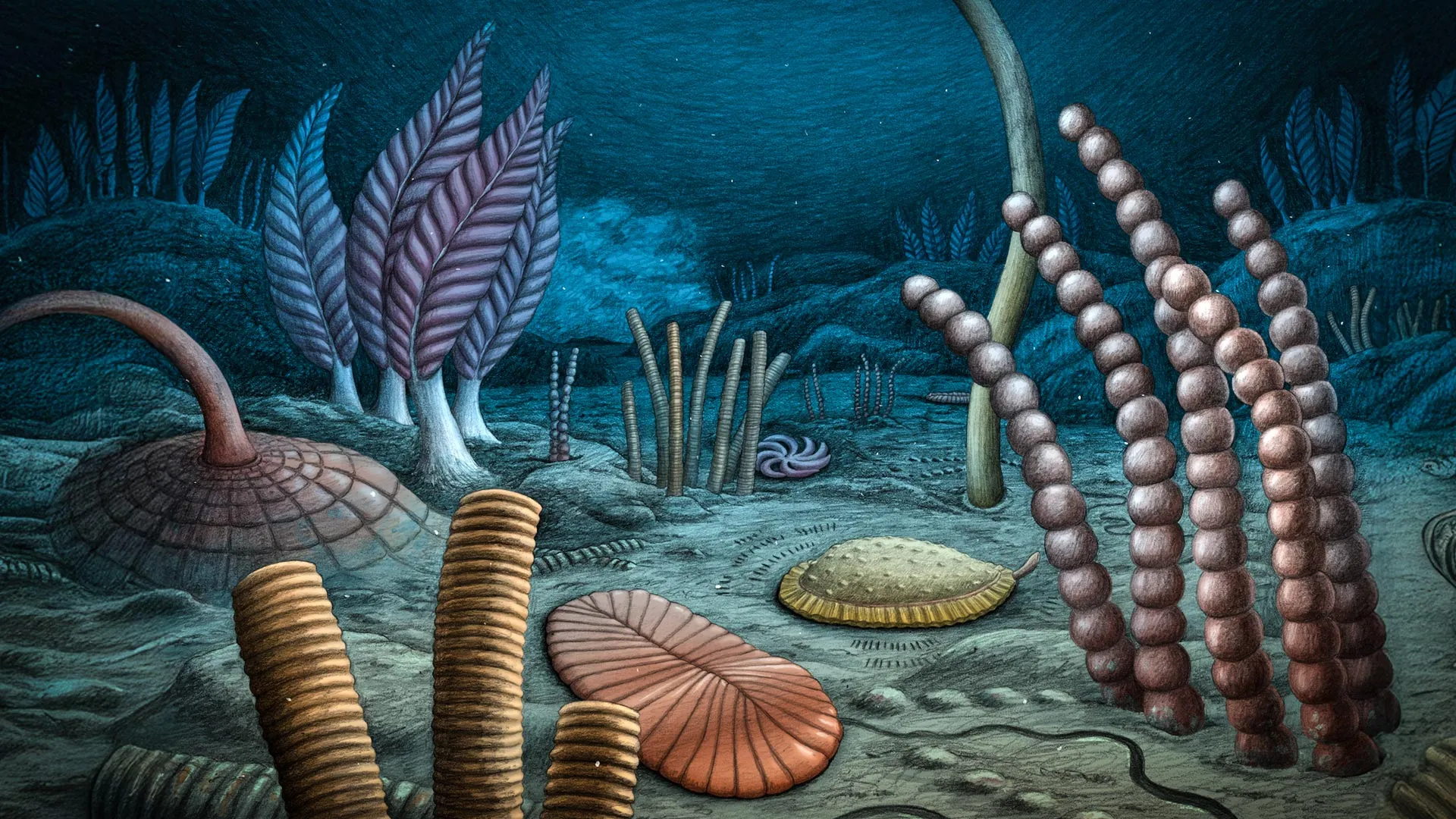
Researchers have uncovered a new, rich fossil site in remote Canada’s Northwest Territories, revealing crucial insights into the origins of animal life. The fossils belong to the Ediacaran biota, a group of soft-bodied organisms that lived over 500 million years ago. Some specimens are approximately 567 million years old, making them the earliest evidence of complex animals capable of movement and sexual reproduction. This discovery suggests that these key behaviors started 5-10 million years earlier than previously thought.
Finding such well-preserved fossils from this period helps fill gaps in our knowledge of early animal evolution. It pushes back the timeline for when animals first appeared and began to develop complex behaviors. Most earlier fossils from this era are rare, soft-bodied, and difficult to preserve. But this site provides a much-needed window into life on Earth during a critical turning point. It shows that animal life was more diverse and widespread in ancient oceans than scientists had believed, especially in deeper water environments.
Implications for the Evolution of Animal Life
These fossils include strange and unfamiliar creatures, like Dickinsonia, a pancake-shaped organism that absorbed nutrients through its lower surface, and Kimberella, which moved with a muscular foot. Kimberella may be the oldest bilaterian, animals with distinct front, back, and symmetrical sides. Other fossils, such as Funisia, show evidence of sexual reproduction, a feature seen in many modern animals.
The discovery also hints that early animals may have first developed in deep marine environments before migrating to shallower waters. This pattern is the opposite of what many scientists previously thought. Stable conditions in deep oceans, such as consistent temperature and oxygen levels, might have supported early animal growth better than turbulent shallow waters.
This site offers a rare look at a pivotal moment in Earth’s history. It challenges existing ideas about where and how animals first evolved. With additional layers of rock still unexplored, scientists expect to find even more fossils that could deepen our understanding of this complex period. The findings highlight the importance of continuous exploration and advanced technology to unlock the planet’s earliest chapters of life.
Discover More Technology Insights
Stay informed on the revolutionary breakthroughs in Quantum Computing research.
Discover archived knowledge and digital history on the Internet Archive.
TechV1
