

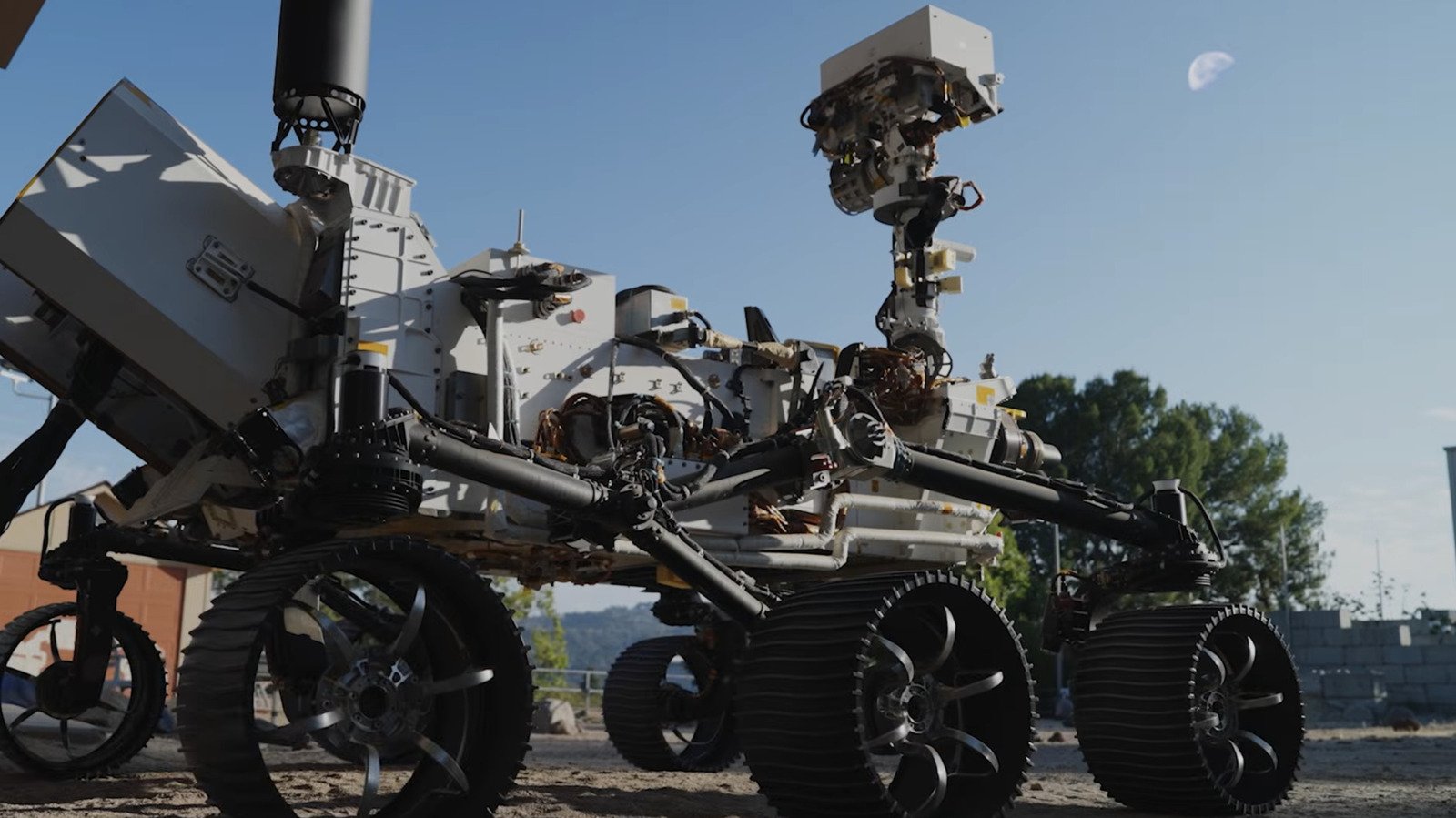
Quick Takeaways
- NASA plans to repurpose its Martian rover models, Perseverance and Curiosity, to create a hybrid lunar rover named PROMISE, aimed at exploring the Moon’s south pole.
- The PROMISE rover will be powered by a nuclear RTG, enabling it to operate independently of sunlight, overcoming lunar night challenges.
- Currently a concept, PROMISE requires extensive upgrades, including sensors, scientific instruments, communication systems, and dust resistance, before it can be deployed.
- The project is estimated to cost between $700 million and $1.3 billion, with a potential launch in the early 2030s.
An Adventurous Shift: From Mars to the Moon
NASA’s Mars rovers, like Perseverance and Curiosity, are marvels of exploration technology. They help scientists learn more about Mars and test new tools for space missions. Interestingly, these rovers aren’t just limited to Mars now. NASA is considering repurposing them for a new adventure—landing on the Moon. This plan is exciting because it shows how versatile and adaptable these vehicles can be. Instead of building new rovers from scratch, NASA might upgrade existing models to explore new frontiers. This approach saves money and time, making space exploration more efficient. The hope is to use these rovers to study the lunar south pole, an area rich in water ice and ideal for future bases. This shift highlights NASA’s innovative mindset, ready to explore wherever the mission takes it.
The Promise of PROMISE and Its Future Capabilities
NASA’s new lunar rover, called PROMISE, stands out as a key part of this plan. It is a hybrid of models from Perseverance and Curiosity. The rover’s full name is the Polar Rover for Observation, Mapping and In-Situ Exploration. Unlike previous rovers, PROMISE will carry a special power source—a nuclear generator called MMRTG. This allows it to operate without needing sunlight. Because of this, PROMISE can explore the Moon’s dark, cold regions, especially the lunar south pole. This area is crucial because of its water ice deposits, vital for future lunar colonies. Despite its promising features, PROMISE is still in the planning stage. It needs upgrades: sensors for temperature, scientific tools, communication systems, and dust-resistant parts. These enhancements will ensure it can withstand the Moon’s harsh environment and perform its mission successfully.
Challenges and Timeframes: What Lies Ahead
While the idea of sending a Mars rover to the Moon is exciting, several hurdles remain. Currently, PROMISE is only a concept. It needs many upgrades before it can become a reality. For example, its components aren’t yet suited to handle lunar dust or extreme temperatures. Also, the rover’s systems for controlling temperature, communicating with Earth, and conducting science experiments aren’t finished. These improvements are essential for a successful lunar mission. Experts estimate that developing and launching PROMISE could cost from $700 million to over $1 billion. Additionally, NASA might not launch the rover until the early 2030s. Despite these challenges, the project’s potential benefits inspire hope. If successful, PROMISE could unlock new understanding of the Moon and pave the way for future lunar bases. It’s an exciting step towards sustained human presence beyond Earth.
Continue Your Tech Journey
Stay informed on the revolutionary breakthroughs in Quantum Computing research.
Access comprehensive resources on technology by visiting Wikipedia.
CellphonesV1
