

Top Highlights
- MIT’s GeoPT improves physics simulation, training faster with less data.
- It learns from synthetic particle interactions, modeling real-world physical behavior.
- GeoPT excels in industrial tests, predicting vehicle, boat, and light responses accurately.
- The system could revolutionize physics-based modeling for engineering and environmental tasks.
Advances in Physics Simulation with AI
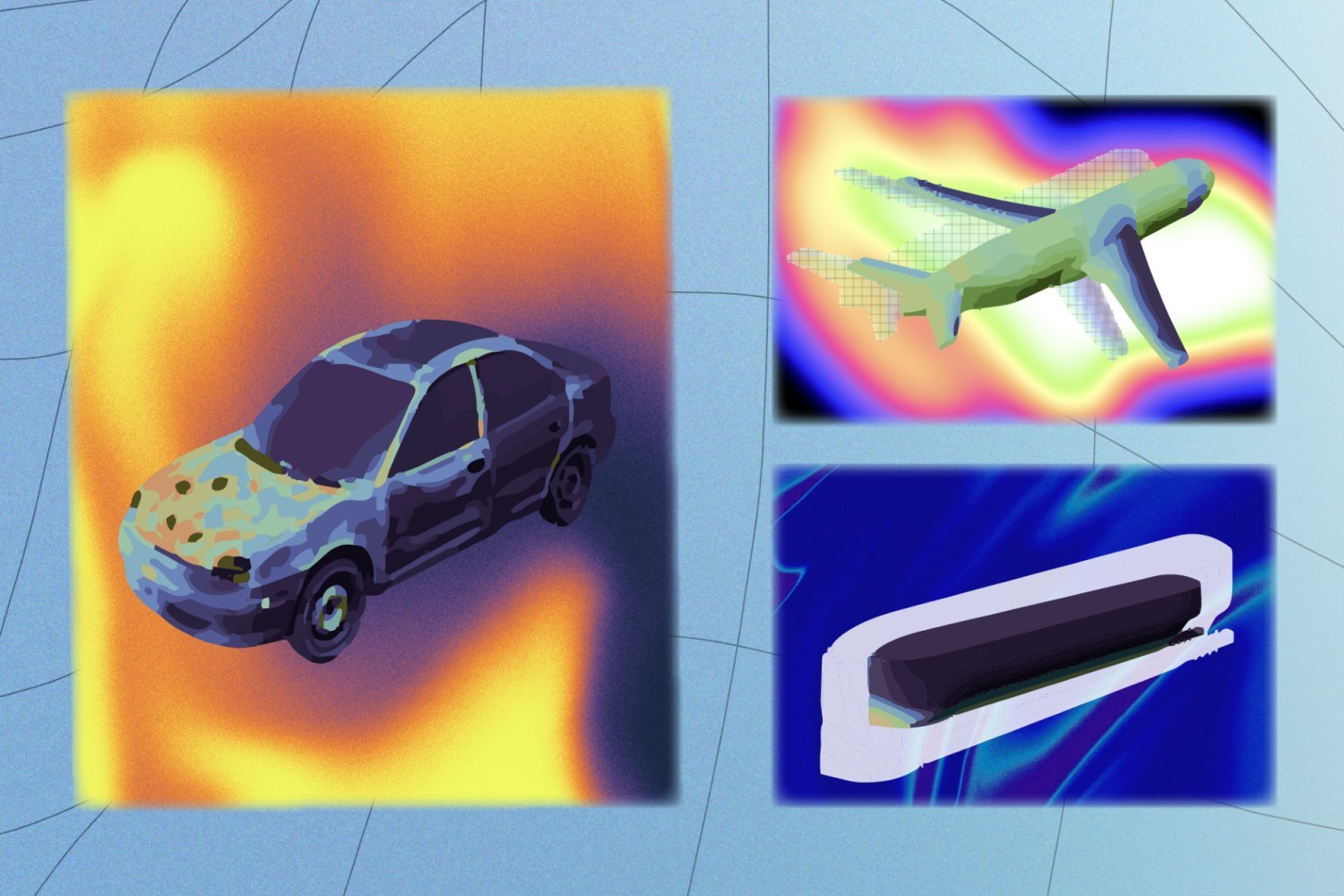
MIT researchers have developed a new AI method called GeoPT that improves how machines understand physics. Traditional models struggle to simulate real-world scenarios because they need a lot of data, which takes a lot of time to gather. GeoPT helps AI models learn physics faster and with less data. It does this by using synthetic dynamics, a technique that mimics how tiny particles interact with complex shapes. These simulated interactions teach the AI how objects behave when forces like wind, water, or collisions are applied. This helps the AI produce more accurate and realistic simulations of physical effects.
Impact and Future Applications
GeoPT performs well in testing different environments, such as vehicle crashes and wind responses, often using fewer resources than existing models. It can, for example, predict how a boat’s hull reacts to turbulence or how a car deforms after a collision with high accuracy and efficiency. The system could change how engineers test new designs by reducing the need for physical experiments. The team plans to expand GeoPT’s capabilities, aiming to include more complex phenomena like weather patterns and material testing. Overall, this innovation could lead to more realistic virtual testing tools and a foundation for physics-aware AI systems.
Expand Your Tech Knowledge
Dive deeper into the world of Cryptocurrency and its impact on global finance.
Explore past and present digital transformations on the Internet Archive.
QuantumV1
