
Close Menu
    Facebook X (Twitter) Instagram
    Wednesday, August 12
    Top Stories:
    • Volkswagen’s $17,000 Plug-In Hybrid Outshines America’s Cheapest EV
    • Electrifying Racing: Formula E Hits Disney+ for a Global Debut
    • Half a Million Toyota Camrys Recalled Over Faulty Digital Dashboards
    Facebook X (Twitter) Instagram Pinterest Vimeo
    IO Tribune
    • Home
    • AI
    • Tech
      • Gadgets
      • Fashion Tech
    • Crypto
    • Smart Cities
      • IOT
    • Science
      • Space
      • Quantum
    • OPED
    IO Tribune
    Home » AI Models Simulate Real-World Scenarios with Physics
    Quantum

    AI Models Simulate Real-World Scenarios with Physics

    Staff ReporterBy Staff ReporterAugust 12, 2026No Comments2 Mins Read
    Share Facebook Twitter Pinterest LinkedIn Tumblr Reddit Telegram Email
    Share
    Facebook Twitter LinkedIn Pinterest Email

    Top Highlights

    1. MIT’s GeoPT improves physics simulation, training faster with less data.
    2. It learns from synthetic particle interactions, modeling real-world physical behavior.
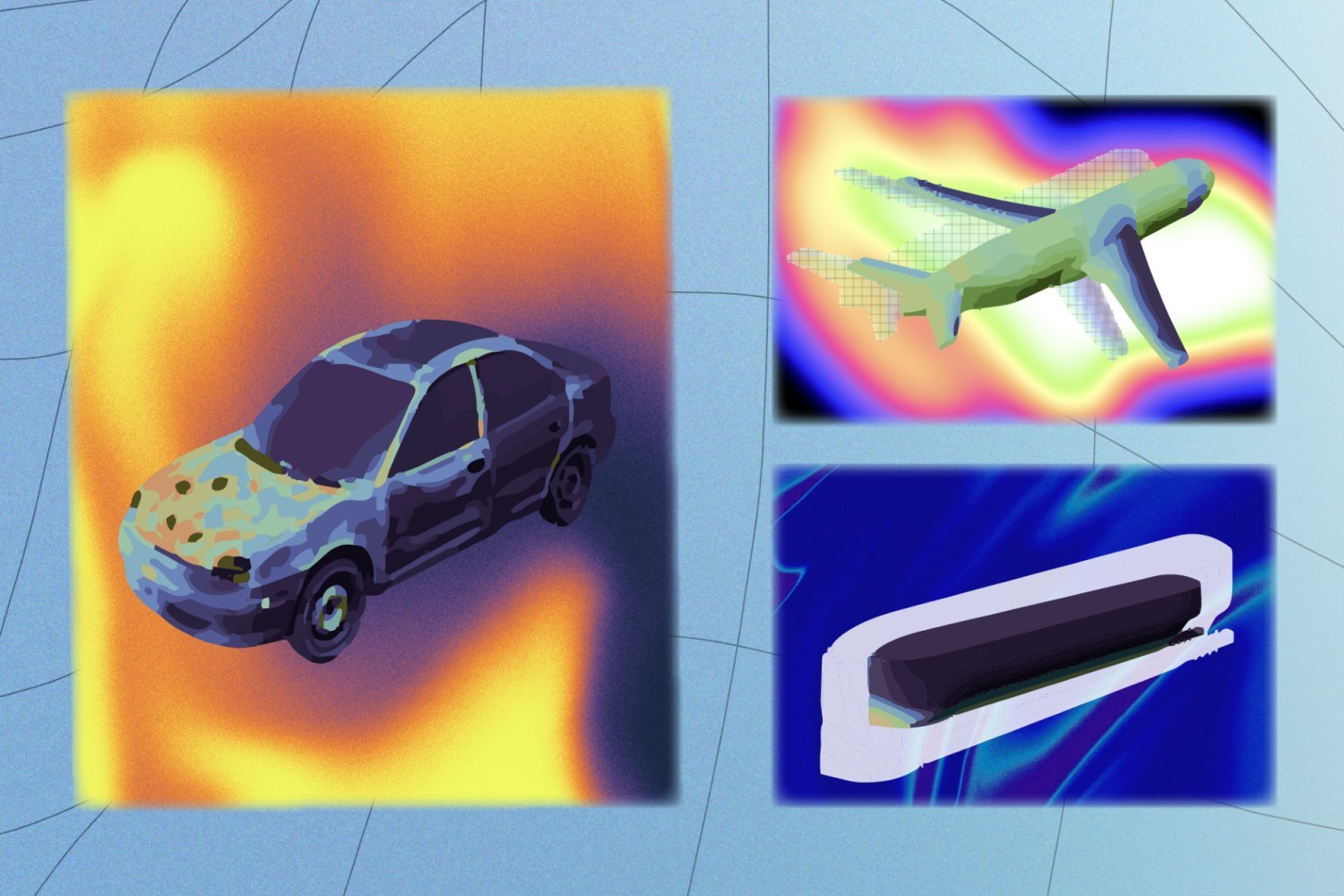
    3. GeoPT excels in industrial tests, predicting vehicle, boat, and light responses accurately.
    4. The system could revolutionize physics-based modeling for engineering and environmental tasks.

    Advances in Physics Simulation with AI

    MIT researchers have developed a new AI method called GeoPT that improves how machines understand physics. Traditional models struggle to simulate real-world scenarios because they need a lot of data, which takes a lot of time to gather. GeoPT helps AI models learn physics faster and with less data. It does this by using synthetic dynamics, a technique that mimics how tiny particles interact with complex shapes. These simulated interactions teach the AI how objects behave when forces like wind, water, or collisions are applied. This helps the AI produce more accurate and realistic simulations of physical effects.

    Impact and Future Applications

    GeoPT performs well in testing different environments, such as vehicle crashes and wind responses, often using fewer resources than existing models. It can, for example, predict how a boat’s hull reacts to turbulence or how a car deforms after a collision with high accuracy and efficiency. The system could change how engineers test new designs by reducing the need for physical experiments. The team plans to expand GeoPT’s capabilities, aiming to include more complex phenomena like weather patterns and material testing. Overall, this innovation could lead to more realistic virtual testing tools and a foundation for physics-aware AI systems.

    Expand Your Tech Knowledge

    Dive deeper into the world of Cryptocurrency and its impact on global finance.

    Explore past and present digital transformations on the Internet Archive.

    QuantumV1

    Computational Fluid Dynamics (CFD) Crash simulation Geometric pre-training GeoPT Haixu Wu HPC Kaiming He Minghao Guo MIT CSAIL MIT EECS Neural physics simulation Physics foundation models physics-aware AI Quantum Self-supervised learning Surrogate modeling synthetic dynamics Transformer-based simulators VT1 Wojciech Matusik
    Share. Facebook Twitter Pinterest LinkedIn Tumblr Email
    Previous ArticleElectrifying Racing: Formula E Hits Disney+ for a Global Debut
    Next Article Volkswagen’s $17,000 Plug-In Hybrid Outshines America’s Cheapest EV
    Avatar photo
    Staff Reporter
    • Website

    John Marcelli is a staff writer for IO Tribune, with a passion for exploring and writing about the ever-evolving world of technology. From emerging trends to in-depth reviews of the latest gadgets, John stays at the forefront of innovation, delivering engaging content that informs and inspires readers. When he's not writing, he enjoys experimenting with new tech tools and diving into the digital landscape.

    Related Posts

    AI

    Breaking Constraints: SPP-Net Paper Breakdown

    August 12, 2026
    Space

    Journey Through the Shadow: Stops Along the Path of Totality

    August 12, 2026
    Tech

    Volkswagen’s $17,000 Plug-In Hybrid Outshines America’s Cheapest EV

    August 12, 2026
    Add A Comment

    Comments are closed.

    Must Read

    Breaking Constraints: SPP-Net Paper Breakdown

    August 12, 2026

    Journey Through the Shadow: Stops Along the Path of Totality

    August 12, 2026

    Volkswagen’s $17,000 Plug-In Hybrid Outshines America’s Cheapest EV

    August 12, 2026

    AI Models Simulate Real-World Scenarios with Physics

    August 12, 2026

    Electrifying Racing: Formula E Hits Disney+ for a Global Debut

    August 12, 2026
    Categories
    • AI
    • Crypto
    • Fashion Tech
    • Gadgets
    • IOT
    • OPED
    • Quantum
    • Science
    • Smart Cities
    • Space
    • Tech
    Most Popular

    Derivatives Power 90% of Crypto Trading

    April 5, 2026

    Inference Scaling: How Reasoning Models Increase Costs

    May 3, 2026

    Transforming Glasses into Fitness Companions: Apple’s Next Big Health Bet

    August 2, 2026
    Our Picks

    Unlocking Nature’s Defense: The Gene that Shields Aussie Skinks from Snake Venom

    August 7, 2025

    Google and Apple Urge Visa Employees to Skip International Travel

    December 20, 2025

    Transform Your iPad: Discover the Flip Folio Case with Wireless Keyboard!

    June 11, 2025
    Categories
    • AI
    • Crypto
    • Fashion Tech
    • Gadgets
    • IOT
    • OPED
    • Quantum
    • Science
    • Smart Cities
    • Space
    • Tech
    • Privacy Policy
    • Disclaimer
    • Terms and Conditions
    • About Us
    • Contact us
    Copyright © 2025 Iotribune.comAll Rights Reserved.

    Type above and press Enter to search. Press Esc to cancel.