

Fast Facts
- Last October’s storm in Alaska uncovered ancient artifacts at Nunalleq site.
- Erosion threatens the preservation of invaluable cultural objects buried underground.
- Archaeologists conduct emergency digs to recover artifacts before further damage occurs.
- Climate change accelerates shoreline erosion, risking destruction of historical treasures.
Archaeologists Race Against Climate Change to Save Alaska’s Cultural Treasures
Recent events in Alaska highlight a race against time to preserve ancient artifacts and protect cultural heritage from the destructive forces of nature. As climate change accelerates erosion and flooding along Alaska’s coasts, archaeologists and local communities face urgent challenges to recover and safeguard priceless relics buried in the soil. These efforts are vital for understanding the history and resilience of Alaska Native cultures.
Climate Change Threatens Arctic Archaeological Sites
In October, Typhoon Halong struck western Alaska, unleashing floods that displaced over a thousand residents in remote villages. The storm hammered the coast, causing widespread destruction. In Quinhagak, a small coastal village, the storm reshaped the landscape, peeling back the tundra and exposing the ground beneath. During the aftermath, residents like Jenny Matthew found artifacts, such as a wooden bowl carved centuries ago, washed up on the beach. Such discoveries underline the risks surrounding archaeological sites vulnerable to erosion, especially as rising sea levels and melting permafrost accelerate land loss.
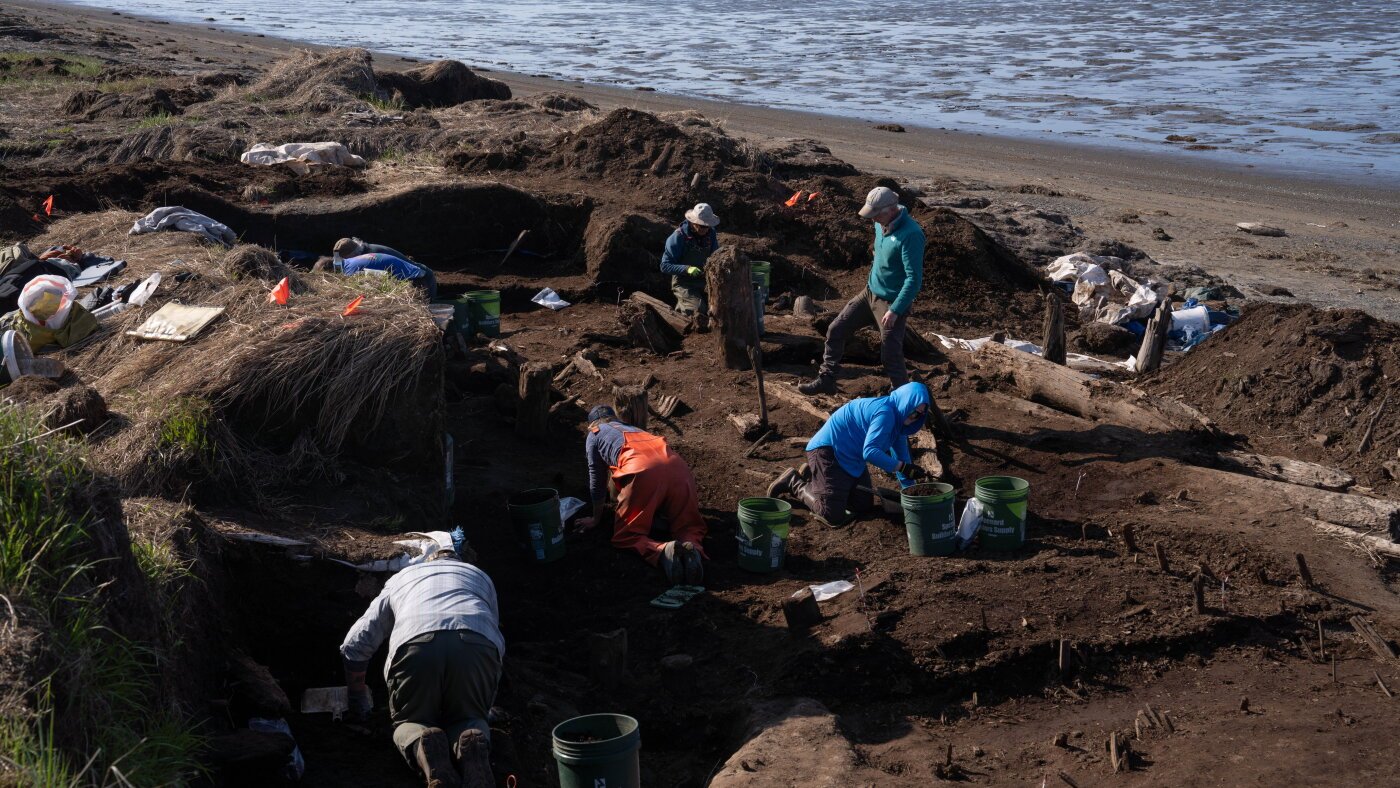
The Nunalleq site, a prime example of ancient Yup’ik culture, has been exposed to these dangers. Since 2009, archaeologists have excavated this site to uncover artifacts that date back 400 to 600 years. The site contains organic objects like carved animals, masks, and kayak parts, all preserved due to permafrost conditions. However, the shifting coastline makes the site increasingly vulnerable. Rising sea levels have caused the shore to inch closer to the relics, and efforts to recover artifacts have become a race against the ocean.
The unpredictable weather and rising seas add to the urgency. During last year’s storm, water covered parts of the site, washing away valuable objects. The archaeologists’ work is hampered by the landscape, which now often resembles working in front of bulldozers. They are racing to retrieve what remains before future storms and erosion reclaim the land.
Community Efforts and the Future of Preservation
Since the initial discoveries, local communities and archaeologists have worked together to preserve these cultural relics. The Nunalleq Archaeology Center serves as a hub for both research and cultural education, connecting descendants and the public with their history. The artifacts found at Nunalleq include tools, clothing, and art that tell stories of resilience and adaptation.
The effort to save these artifacts involves volunteers and limited funding from organizations like the Pacific Northwest Archaeological Society and the Daughters of the American Revolution. With only a small area of excavation remaining—roughly the size of a backyard pool—time is of the essence. The team aims to return to the site next summer, raising funds through campaigns like GoFundMe and community organizations. Their goal is to collect and conserve as many artifacts as possible before the next big storm.
The community’s relationship with these relics emphasizes their cultural importance. For local residents and descendants, the artifacts are not just objects; they are symbols of resilience, identity, and continuity. The destruction of these artifacts by erosion and storms weighs heavily on the community, fueling their resolve to protect what they can.
Surveying the broader context, experts acknowledge that technology plays a role in preservation but must be balanced with practicality. Techniques such as chemical preservation and digital documentation can extend the life of artifacts, but physical recovery remains critical. The ongoing efforts reflect a broader understanding of environmental change’s impact on cultural preservation, highlighting the need for adaptive strategies and community collaboration in facing climate challenges.
Expand Your Tech Knowledge
Learn how the Internet of Things (IoT) is transforming everyday life.
Access comprehensive resources on technology by visiting Wikipedia.
Space
