

Essential Insights
NASA develops digital taxi and safety tech to improve airport efficiency.
Sensors and automation reduce pilot workload and enhance runway safety.
Real-time flight data sharing decreases delays and minimizes holding patterns.
NASA’s innovations aim to make commercial flying safer, smoother, and more reliable.
NASA Modernizes Commercial Airline Systems
NASA’s researchers understand that when you settle into your seat on a commercial flight, you expect a smooth takeoff, scenic views, a steady descent, and a timely arrival. However, delays can quickly turn your experience from comfortable to stressful. When planes are held up on the tarmac or in holding patterns instead of landing on time, your plans—and patience—might suffer. Large airports, some of the busiest in the world, are especially complex. They involve aircraft, ground crews, and service vehicles sharing crowded taxiways and runways. To improve safety and efficiency, NASA’s Ames Research Center in California’s Silicon Valley has teamed up with Boeing. Their recent work involves advanced field tests that could transform how airports operate.
Innovative Airport Tactics: Digital Guidance and Safety Sensors
Researchers at NASA conducted three key types of tests: digital taxi information, safe taxiway, and safe runways. During the digital taxi tests, pilots received guidance directly through cockpit displays or tablets instead of relying solely on verbal instructions from air traffic controllers. This digital guidance allowed aircraft to follow precise routes automatically. Researchers used sensors on the ground and in aircraft to monitor any vehicles or other aircraft that might block the taxi path. These systems made sure planes moved safely and smoothly. They also reduced pilots’ workload and lowered the chance of mistakes from miscommunication.
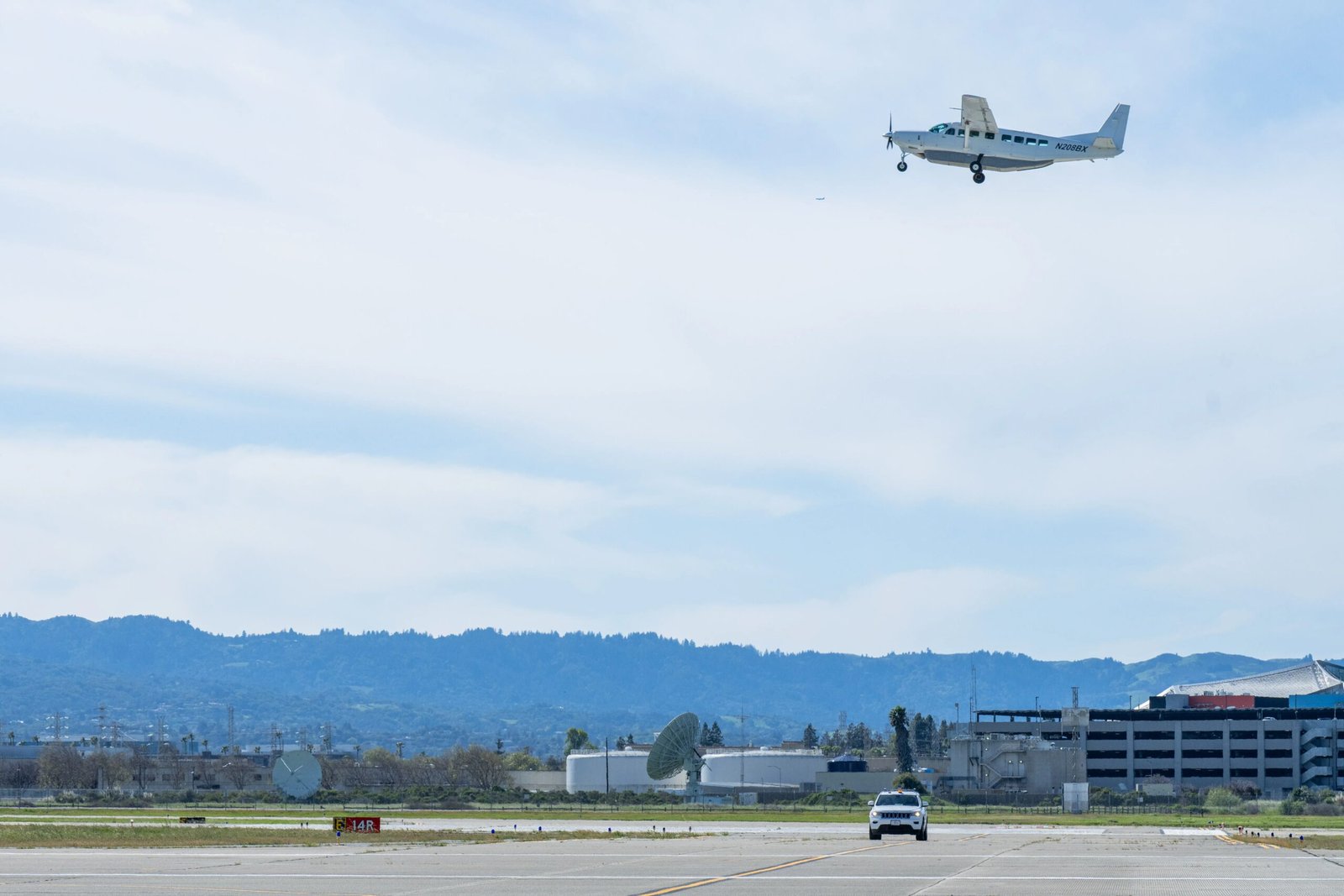
In the safe runway tests, sensors helped improve a pilot’s awareness of nearby objects and potential hazards. For example, when a Boeing aircraft was preparing to land, sensors detected a vehicle on the runway. This advanced alert gave pilots better information and helped prevent possible collisions. NASA aims to integrate these sensor and digital taxi systems into a simulated air traffic environment soon. This will help evaluate how these systems can improve overall airport traffic management and make flying safer. The goal is to reduce confusion, lighten pilots’ workload, and keep airport traffic flowing efficiently.
Enhancing Flight Planning and Reducing Delays
NASA’s work extends beyond the ground and taxiways. The agency has developed new tools to make airline operations more precise, especially during the critical moments before and after takeoff. Through collaborations with Boeing, United Airlines, and international partners, NASA studied how real-time flight data sharing can improve predictions of arrival times. During tests in 2025, a United Airlines Boeing 737 regularly sent flight updates to control centers and airline operations. These updates helped controllers create more accurate schedules and reduce the need for holding patterns. As a result, passengers can experience fewer delays and enjoy more direct, fuel-efficient routes.
In addition, NASA created technology that allows dispatchers and controllers to see the same digital picture of flights before departure. When a better route becomes available, controllers can communicate changes digitally instead of relying on verbal instructions. This process helps prevent delays, cut fuel use, and make operations more predictable. NASA has shared this routing technology with the Federal Aviation Administration (FAA), and airlines continue to test it. These advances build on decades of NASA’s contributions to modernizing the air traffic system. By working closely with industry and international partners, NASA is helping to make air travel safer, more reliable, and better prepared for the future.
Stay Ahead with the Latest Tech Trends
Explore the future of technology with our detailed insights on Artificial Intelligence.
Stay inspired by the vast knowledge available on Wikipedia.
Space
