
Close Menu
    Facebook X (Twitter) Instagram
    Saturday, November 28
    Top Stories:
    • How Jensen Huang’s Saga Resets the US-China Tech Rivalry
    • Alpha-Gal Allergy: How Tick Bites Make Red Meat Dangerous
    • Congo Ebola Outbreak Tops 12,000 Cases as Responders Flee
    Facebook X (Twitter) Instagram Pinterest Vimeo
    IO Tribune
    • Home
    • AI
    • Tech
      • Gadgets
      • Fashion Tech
    • Crypto
    • Smart Cities
      • IOT
    • Science
      • Space
      • Quantum
    • OPED
    IO Tribune
    Home » NASA Unveils Breakthroughs in Martian Moons Mission
    Space

    NASA Unveils Breakthroughs in Martian Moons Mission

    Staff ReporterBy Staff ReporterOctober 8, 2026No Comments3 Mins Read
    Share Facebook Twitter Pinterest LinkedIn Tumblr Reddit Telegram Email
    Share
    Facebook Twitter LinkedIn Pinterest Email

    Summary Points

    1. NASA hosts teleconference to preview Japan’s MMX mission launching October 19.
    2. MMX aims to explore Mars’ moons Phobos and Deimos, arriving in 2027.
    3. NASA contributes instruments, surface samplers, communication support, and science funding.
    4. Mission will sample Phobos and return surface material to Earth by 2031.

    NASA Hosts Briefing to Highlight Contributions to Martian Moons Mission

    NASA will hold a media teleconference on October 15 at 4 p.m. EDT to share details about its role in Japan’s upcoming Martian Moons eXploration (MMX) mission. Media outlets are encouraged to join and learn about NASA’s contributions to this international effort. The teleconference will be streamed live on NASA’s website at https://www.nasa.gov/live.

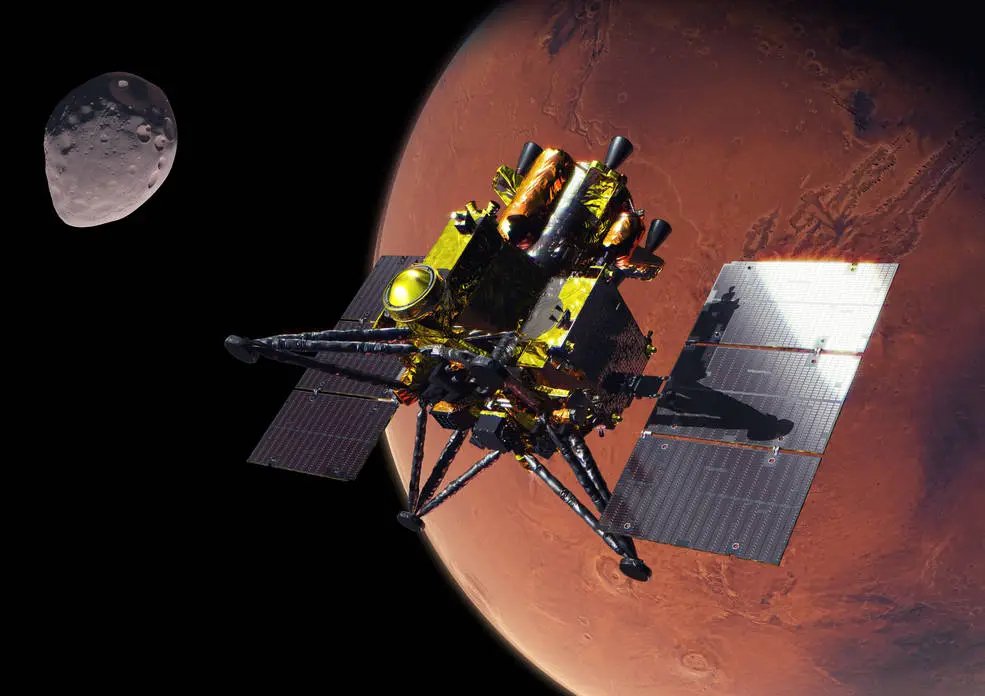
    The MMX mission, led by the Japan Aerospace Exploration Agency (JAXA), is set to launch from JAXA’s Tanegashima Space Center in Japan on October 19 (EDT), or October 20 (Japan Standard Time). Once launched, the spacecraft will journey to Mars, aiming to arrive in August 2027. Its main goal is to study and collect samples from Mars’s two moons, Phobos and Deimos. The mission will give scientists a better understanding of these small moons and their origins.

    NASA’s role in this international project includes providing key scientific instruments, support for communications and navigation, and allowing U.S. scientists to participate in the research. The agency’s contributions feature the MEGANE gamma-ray and neutron spectrometer, a surface sampling mechanism, and help with mission navigation through NASA’s Deep Space Network. The government’s investment supports scientific collaboration and helps expand knowledge about Mars and its moons.

    ### NASA’s Key Contributions to the MMX Mission

    NASA’s nearly $40 million investment funds the development of the MEGANE instrument, created at the Johns Hopkins Applied Physics Laboratory. This gamma-ray and neutron spectrometer will analyze the materials on Phobos’s surface to reveal its composition. Additionally, Honeybee Robotics, a Blue Origin company, developed the spacecraft’s pneumatic surface sampler, which will collect rock and dust samples from the moon’s surface. These samples will be returned to Earth around 2031 for detailed study.

    The Deep Space Network, a fleet of large antennas operated by NASA, will support communication and navigation for the MMX spacecraft. This infrastructure ensures the spacecraft remains on course and can transmit critical data back to mission teams. NASA’s involvement also includes funding U.S. scientists who will participate in analyzing the collected data, adding to the global effort to better understand the Martian environment and its moons.

    This mission is part of NASA’s Discovery Program, which funds focused planetary science projects with frequent flight opportunities. Managed by NASA’s Marshall Space Flight Center in Alabama, the program emphasizes cutting-edge research that expands our understanding of the solar system.

    For additional information about the MMX mission, visit https://science.nasa.gov/mission/mmx/. Media interested in participating in the teleconference must RSVP to Molly Wasser at molly.l.wasser@nasa.gov at least two hours before the event.

    Stay Ahead with the Latest Tech Trends

    Explore the future of technology with our detailed insights on Artificial Intelligence.

    Discover archived knowledge and digital history on the Internet Archive.

    Space

    Cosmos Mars Martian Moon Exploration (MMX) NASA Planetary Science Division Research Science Mission Directorate Space VT1
    Share. Facebook Twitter Pinterest LinkedIn Tumblr Email
    Previous ArticleTop Fan-Favorite Dining Spots You Can’t Miss!
    Next Article Designer of Meta’s AI Logo Faces Backlash
    Avatar photo
    Staff Reporter
    • Website

    John Marcelli is a staff writer for IO Tribune, with a passion for exploring and writing about the ever-evolving world of technology. From emerging trends to in-depth reviews of the latest gadgets, John stays at the forefront of innovation, delivering engaging content that informs and inspires readers. When he's not writing, he enjoys experimenting with new tech tools and diving into the digital landscape.

    Related Posts

    Science

    E-Cigarettes May Help You Quit Smoking—If You Consider This Factor

    November 28, 2026
    Gadgets

    How to Access Apple TV’s Hidden Developer Menu

    November 28, 2026
    AI

    Test LLM State Tracking with Deployment Logs

    November 28, 2026
    Add A Comment

    Comments are closed.

    Must Read

    E-Cigarettes May Help You Quit Smoking—If You Consider This Factor

    November 28, 2026

    How to Access Apple TV’s Hidden Developer Menu

    November 28, 2026

    Test LLM State Tracking with Deployment Logs

    November 28, 2026

    Apollo 17’s VIP Site Revealed in 3D

    November 28, 2026

    USGS Earthquake Data Analysis: 2015–2025

    November 28, 2026
    Categories
    • AI
    • Crypto
    • Fashion Tech
    • Gadgets
    • IOT
    • OPED
    • Quantum
    • Science
    • Smart Cities
    • Space
    • Tech
    Most Popular

    Unlock Your Backstage Pass: Experience TechCrunch Disrupt 2026!

    July 23, 2026

    The Great Chip Leap: China’s Semiconductor Self-Reliance Surges

    January 10, 2026

    Primordial Black Hole Winks at Us!

    June 1, 2026
    Our Picks

    Unveiling the Hidden Simplicity of Powerful ML — Part 2

    July 2, 2026

    China’s Chip Expansion Could Disrupt Global AI Memory Market

    May 19, 2026

    Can the Pi Network Reach $1 by 2025? 3 AIs Weigh In!

    September 24, 2025
    Categories
    • AI
    • Crypto
    • Fashion Tech
    • Gadgets
    • IOT
    • OPED
    • Quantum
    • Science
    • Smart Cities
    • Space
    • Tech
    • Privacy Policy
    • Disclaimer
    • Terms and Conditions
    • About Us
    • Contact us
    Copyright © 2025 Iotribune.comAll Rights Reserved.

    Type above and press Enter to search. Press Esc to cancel.