

Summary Points
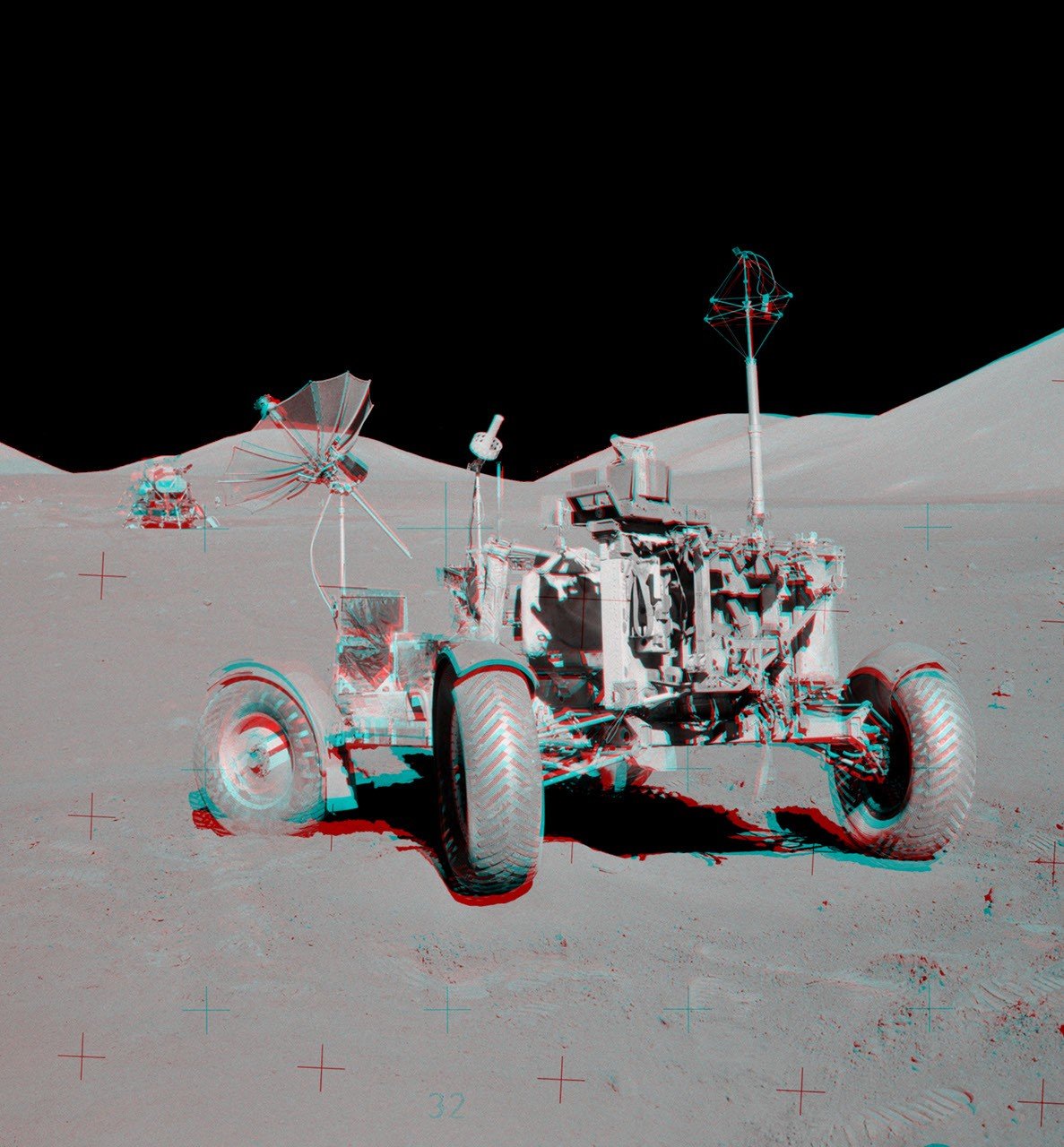
Apollo 17’s 3D stereo view shows the rover, Lunar Module, and hills.
The site, nicknamed VIP Site, broadcast Lunar Module ascent via rover camera.
In December 1972, Cernan and Schmitt spent 75 hours exploring the Moon.
They returned 110 kilograms of samples and remain humanity’s last lunar walkers.
APOD: 2026 November 28 – Apollo 17 VIP Site Anaglyph
A lunar landscape with depth
Put on red-and-blue glasses, and the Moon’s Taurus-Littrow valley takes on a striking third dimension. This anaglyph combines two slightly different views. Each eye sees a separate color image, and the brain blends them into a sense of depth.
The Lunar Roving Vehicle fills the foreground. Beyond it sits the Apollo 17 Lunar Module, with lunar hills rising in the distance. The effect makes the scene feel less like a flat record of a mission and more like a place a visitor might navigate. But the glasses are essential: without them, the two color layers may look blurred or misaligned. Anaglyphs also trade natural color for depth, a practical compromise that makes a stereo image easy to share without specialized screens.
The view from the VIP Site
The rover’s position was chosen for more than the scenery. Apollo 17’s crew parked it at a spot known as the VIP Site, where its television camera could show the Lunar Module’s ascent stage lifting off. The camera gave viewers on Earth a rare view of a spacecraft departing the Moon. It also demonstrated a practical use for the rover beyond carrying astronauts and equipment: it could serve as a mobile observation platform.
That setup depended on careful placement and remote operation. The camera had to be positioned to keep the ascent in view, while the rover itself remained behind. The technology expanded what people on Earth could witness, but it could not replace the astronauts’ direct observations or the samples they collected.
In December 1972, Eugene Cernan and Harrison Schmitt spent about 75 hours on the lunar surface. Their crewmate Ronald Evans orbited overhead. The astronauts returned with about 110 kilograms of lunar rock and soil, more than any other Apollo landing crew brought back. Cernan and Schmitt remain the last people to walk or drive on the Moon.
More than five decades later, the anaglyph offers both a view of the landscape and a record of how the mission used technology to connect a distant event with an audience on Earth.
Discover More Technology Insights
Dive deeper into the world of Cryptocurrency and its impact on global finance.
Stay inspired by the vast knowledge available on Wikipedia.
Space
