

Quick Takeaways
- Google’s AI model predicted Isaias’s Florida Panhandle landfall, outperforming traditional path forecasts.
- AI learns historical storm patterns, unlike physics-based models using atmospheric equations.
- Forecasters blend AI and traditional models, translating predictions into actionable public guidance.
- AI improves rapidly, but intensity forecasts remain challenging and human oversight remains essential.
How AI is transforming hurricane forecasts
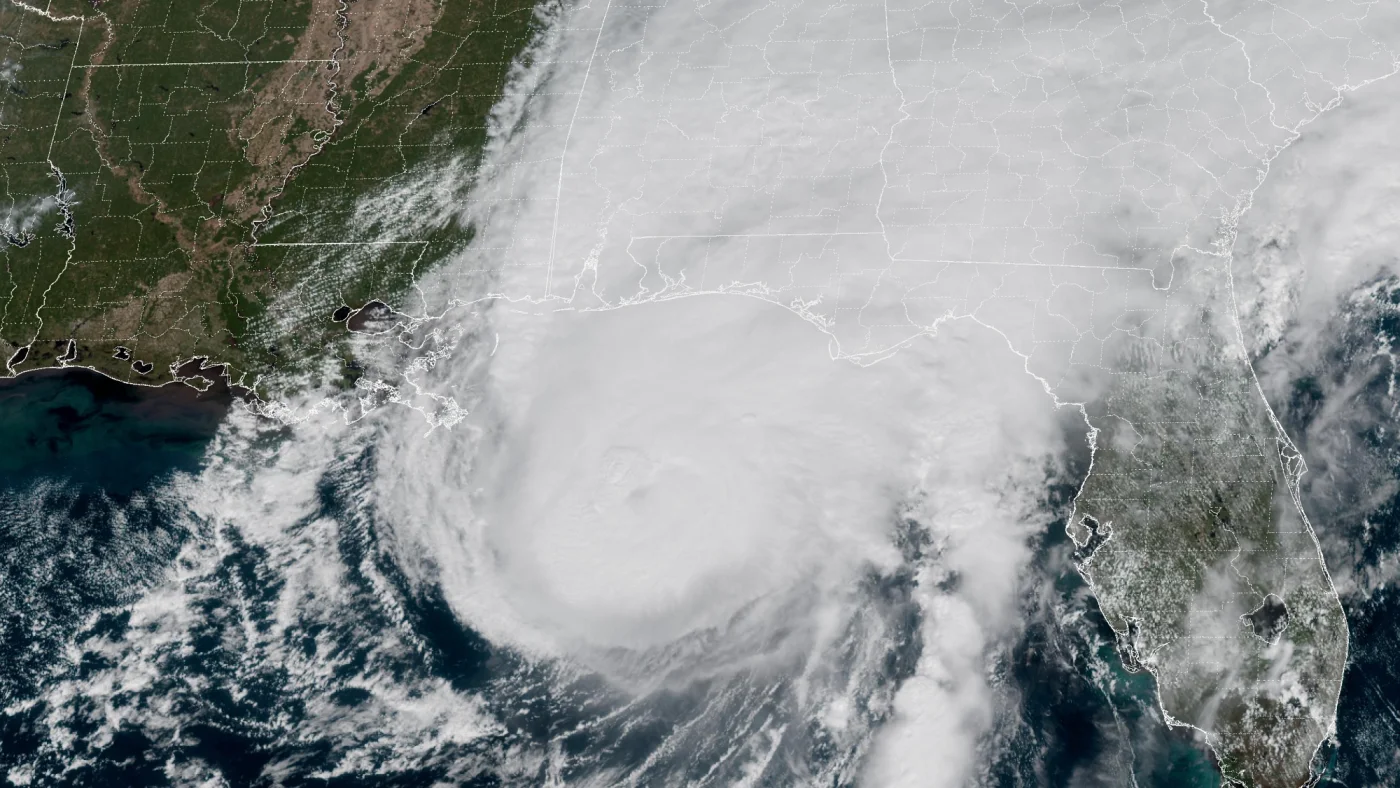
Artificial intelligence is changing how forecasters track hurricanes. In early October, Google DeepMind’s AI model correctly predicted that Hurricane Isaias would strike Florida’s western Panhandle, near Destin. Several conventional models initially projected a landfall farther west, toward southeastern Louisiana.
That strong performance has drawn attention from meteorologists. But AI is not replacing traditional forecasting methods—or the people who interpret them. For now, its value comes from adding another powerful tool to a broader forecast process.
How AI models see a storm
Traditional hurricane models use current observations, including temperature, humidity, air pressure and wind. Satellites and aircraft collect much of that information. The models then apply equations that describe atmospheric physics to estimate a storm’s path and strength.
AI models take a different route. They learn patterns from large collections of past storms and atmospheric data, then use those patterns to produce forecasts. Rather than relying on the same physical equations, they draw heavily on what history suggests may happen next.
That approach can deliver impressive results. The National Hurricane Center began incorporating Google DeepMind’s model into its official forecasts last year. By the end of the 2025 Atlantic hurricane season, it was already among the strongest performers at predicting storm tracks and intensity, according to a University of Miami hurricane researcher.
The pace of improvement is also striking. Traditional forecasting systems may receive major updates annually or less often. AI systems can be refined in weeks or months. That faster development cycle could help forecasters improve predictions on a much shorter timeline.
Still, a model that excels at one task may struggle with another. During Hurricane Isaias, Google DeepMind performed especially well on the storm’s path. It did not predict the storm’s intensity as well as the National Hurricane Center’s blended forecast. Knowing where a hurricane will go and how powerful it will become are separate forecasting challenges.
Why people still matter
AI forecasts can be difficult to interpret. A neural network—a computer system trained to identify patterns—may produce a useful answer without showing clearly why it reached that result. That uncertainty matters when emergency managers and residents need to make decisions based on forecasts.
AI systems also do not all perform equally well. Forecasters say that some weather AI models remain unproven. Google DeepMind’s system and a model developed by the European Centre for Medium-Range Weather Forecasts are among the AI tools that have shown strong results so far, but each has limitations.
At the National Hurricane Center, forecasters compare several established models, including both AI and physics-based systems. They use a blended approach because each storm presents different challenges. The models inform the forecast; human experts decide how to interpret their results and communicate them.
That human role is especially important when model predictions shift sharply between updates. During an active hurricane, the center issues updates every six hours. Forecasters assess changing guidance and turn it into practical information about hazards—what people need to know to protect themselves and respond.
The broader history of hurricane forecasting shows why combining tools can matter. Better observations from satellites and aircraft, along with advances in models, have helped reduce errors in storm-intensity forecasts. The National Hurricane Center says those errors are about half what they were around the time of Hurricane Katrina.
AI could accelerate further gains, but its performance will need continued evaluation. Forecasters are already sharing feedback with developers to improve results, including weaknesses in intensity predictions. The most useful system is not necessarily the newest or most sophisticated one. It is the one that performs reliably, works alongside other evidence and helps experts give the public clear guidance.
For hurricane forecasting, AI’s promise is speed and pattern recognition at scale. Its limits are just as important: It can be hard to explain, and it can miss the mark. The current approach is not to hand forecasts over to a machine. It is to combine AI with established models, better observations and human judgment.
Stay Ahead with the Latest Tech Trends
Stay informed on the revolutionary breakthroughs in Quantum Computing research.
Explore past and present digital transformations on the Internet Archive.
Space
