

Quick Takeaways
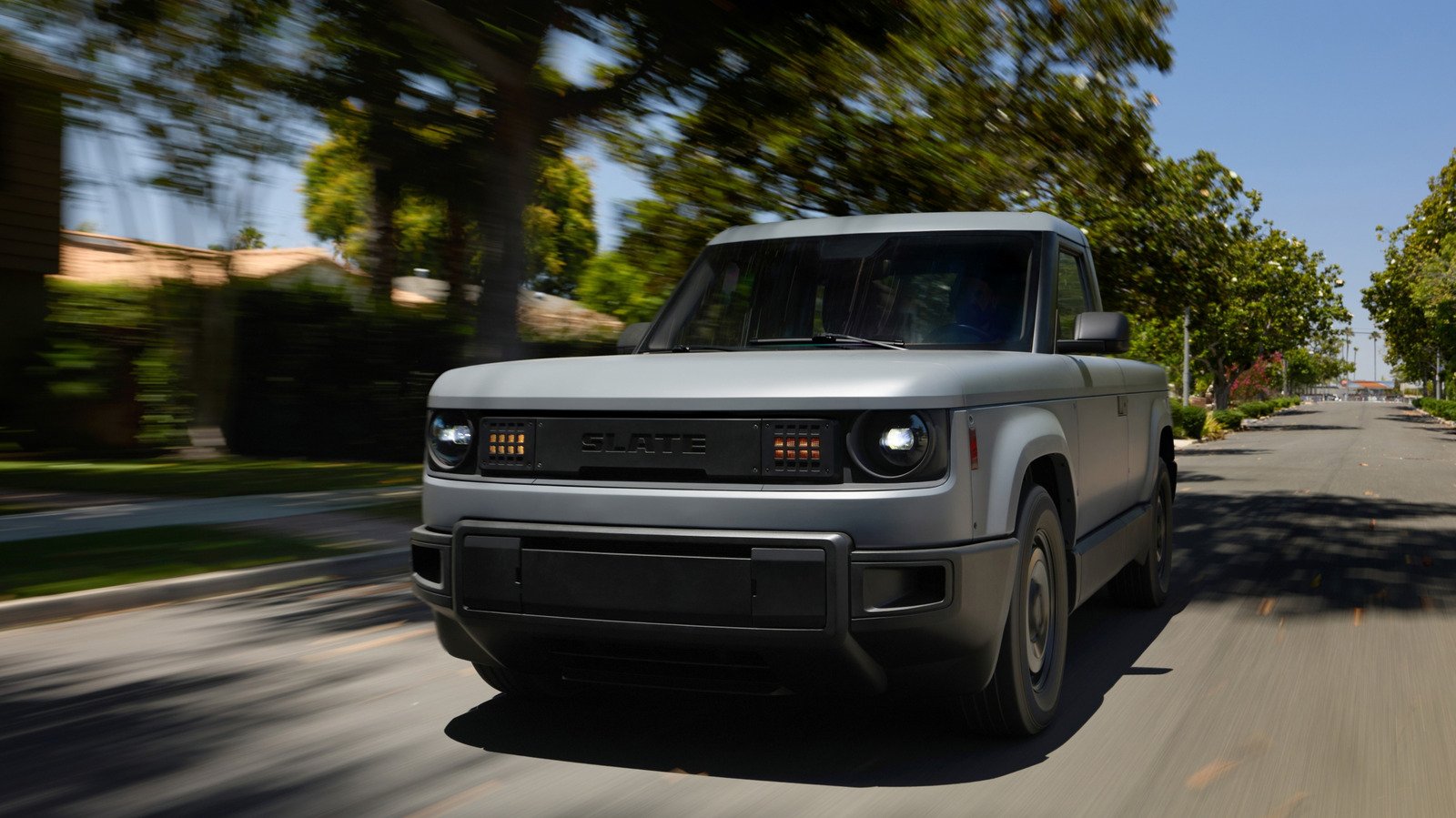
1. Slate’s $24,950 electric truck offers 181 horsepower, 2,000 pounds of towing capacity and an estimated 205-mile range.
2. Its biggest drawback for truck enthusiasts: launch models will come only with rear-wheel drive.
3. Slate says AWD may arrive in a future version, but the company hasn’t confirmed the plan.
4. Preorders are open with a $300 deposit; deliveries are expected to begin in late 2026.
This One Missing Feature From the Slate Truck Might Be a Dealbreaker for Truck Enthusiasts
Slate wants to make electric trucks more affordable. Its first model starts at $24,950 before a $1,450 destination fee. It also skips familiar comforts, including speakers and power windows, to keep the price down.
That minimalist approach could appeal to drivers who want a practical vehicle they can customize over time. But one omission matters more than a missing convenience feature: Slate currently offers only rear-wheel drive.
For truck shoppers who face snow, mud or rough job sites, that choice could decide whether the Slate belongs on their shortlist.
A low-cost electric truck with a clear trade-off
Slate’s pitch centers on choice and affordability. Buyers can pick a truck or an SUV-style configuration, then add accessories and vinyl wraps as their needs change. The company offers more than 200 accessories, so owners do not have to outfit the vehicle all at once.
The truck also brings useful performance numbers. Its 135-kilowatt motor produces 181 horsepower and 195 pound-feet of torque. Slate lists towing capacity at 2,000 pounds, while the stated range reaches 205 miles. Those figures put the truck in everyday-utility territory, rather than the heavy-duty class.
That distinction matters. Slate describes the vehicle as a practical companion for small trailers, motorcycles, yard equipment, kayaks and camping setups. It does not present the truck as a dedicated off-roader or a long-haul towing machine.
Still, a 205-mile range may require careful planning, especially when a driver adds cargo or tows a trailer. EVs can deliver strong torque at low speeds, which helps with pulling. However, sustained towing creates heat. The vehicle must manage that heat to protect its battery and drive components.
Why all-wheel drive matters—and why Slate skips it
All-wheel drive sends power to all four wheels. Four-wheel drive systems can also improve traction, though they work differently and often suit more demanding terrain. Both options can help drivers maintain control on slippery roads, loose surfaces or uneven work sites.
For truck enthusiasts, that added grip can mean more than weekend trail access. It can matter when a driveway turns icy, a job site gets muddy or a loaded trailer crosses an unpaved road. Rear-wheel drive can handle many daily tasks, but it gives drivers fewer options when traction gets tough.
Slate’s current choice also makes sense from a cost and efficiency standpoint. Adding a second drive motor and related components can raise a vehicle’s price. More hardware can also bring additional maintenance needs. And powering more wheels may reduce range, a particular concern for a truck with a 205-mile stated range.
Rear-wheel drive can also support Slate’s goals for towing performance and energy use. The company says its setup balances range, towing, traction, stability and heat limits. That balance may suit drivers who mainly commute, run errands and haul light equipment.
An email shared on a Slate fan forum says the company has all-wheel drive in its plans for a future version. The post also recognizes demand from drivers in snowy climates and on job sites. However, Slate has not confirmed that option publicly. Until it does, buyers should treat AWD as a possibility, not a promised feature.
Who should consider the Slate?
The Slate could make sense for shoppers who want an affordable electric vehicle with a truck bed and room to personalize. Its lower starting price, flexible accessories and everyday focus give it a distinct place in a market where electric trucks often cost far more.
It may also suit drivers who rarely deal with deep snow, steep trails or muddy work areas. For routine hauling, small trailers and weekend gear, rear-wheel drive could prove sufficient. The simpler setup may help Slate protect its price and range.
On the other hand, buyers who regularly drive in harsh weather or rough terrain should think carefully. They may prefer a truck with all-wheel drive or four-wheel drive from the start. A future Slate version could answer that need, but the company has not confirmed a launch date or specifications.
Slate has opened preorders with a $300 deposit. It expects first deliveries in late 2026, while new orders may begin shipping from its Warsaw, Indiana, factory as early as July 2027. Buyers can use the company’s online design tool to explore the truck, SUV configurations and available add-ons.
The Slate’s missing drivetrain option does not erase its appeal. Instead, it draws a clear line around the vehicle’s intended role. For city drivers and light-duty users, that focus may feel refreshingly practical. For truck enthusiasts who need traction in all conditions, rear-wheel drive may be the one compromise they cannot accept.
Discover More Technology Insights
Learn how the Internet of Things (IoT) is transforming everyday life.
Discover archived knowledge and digital history on the Internet Archive.
CellphonesV1
