

Essential Insights
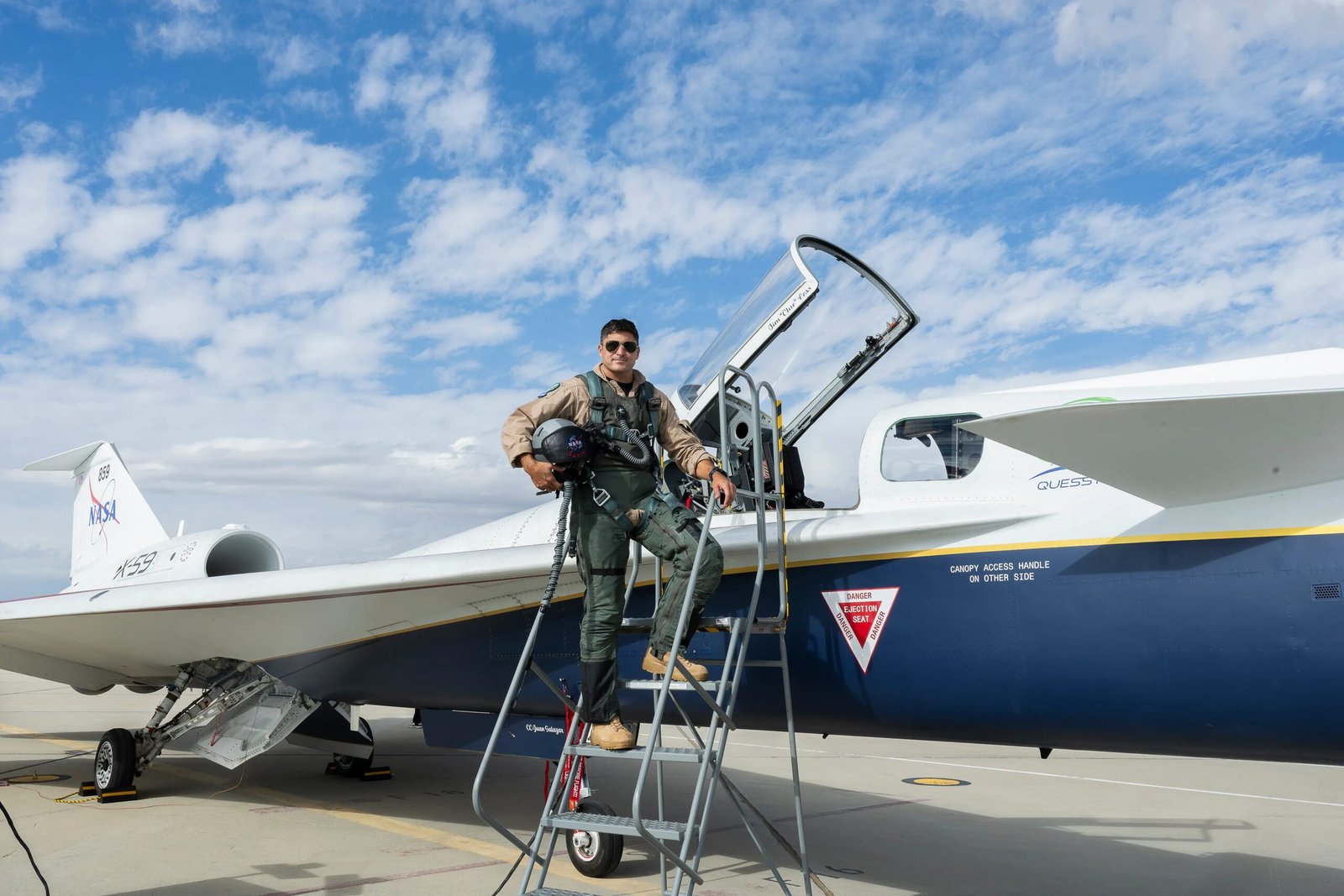
NASA test pilot Mike Lippert flew the X-59 for the first time October 21, 2026.
He took off from Armstrong in California and landed one hour later.
The flight followed maintenance and systems reviews after the aircraft’s busiest testing week.
The X-59 first flew November 2025 and went supersonic June 5, 2026.
NASA’s X-59 and the Pilot Behind Its Latest Test Flight
NASA test pilot Mike Lippert flew the agency’s X-59 quiet supersonic research aircraft for the first time on Oct. 21, 2026. He took off from NASA’s Armstrong Flight Research Center in Edwards, California, and landed about an hour later.
The flight followed scheduled maintenance and a review of the aircraft’s systems. Those checks came after the X-59’s busiest week of testing to date. The Oct. 21 flight marked another step in a program designed to examine whether aircraft can travel faster than sound with a less disruptive sonic boom.
A different approach to supersonic flight
When an aircraft passes the speed of sound, it creates shock waves that can reach the ground as a sonic boom. Those booms have limited routine supersonic flight over land in the United States. The X-59 aims to change the sound people hear by shaping and managing the shock waves its design produces.
The aircraft is a research platform, not a passenger jet. NASA plans to use it to gather information about the sound of its flights and how people on the ground respond. That data could help regulators assess whether future rules should allow some forms of commercial supersonic travel over land.
The possibility has clear appeal: faster travel could shorten long journeys. But quieter flight alone would not settle questions about cost, fuel use, safety, noise exposure or where supersonic aircraft could operate. The X-59’s purpose is to provide evidence for that broader discussion, not to guarantee a change in regulations or the arrival of new passenger service.
What Lippert’s flight represents
The X-59 made its inaugural flight in November 2025 and completed its first supersonic flight on June 5, 2026. Since then, NASA has continued testing the aircraft. Lippert’s first flight in the X-59 added another pilot’s experience to that effort.
Test flights help teams assess how an aircraft and its systems perform under real operating conditions. They also allow pilots to report what they observe in the cockpit. NASA has not provided specific results from Lippert’s Oct. 21 flight, so the flight itself should not be treated as proof that the aircraft has met its research goals.
That distinction matters. A successful flight is a necessary part of testing, but a single flight cannot establish how well the X-59 will reduce noise across different conditions or how people will perceive its sound. Those questions require continued flights, careful measurement and public feedback.
The X-59’s progress is therefore both technical and practical. Its design must work in the air, and its quieter sound must matter on the ground. NASA’s testing will help determine how far the concept can go.
NASA test pilot Mike Lippert poses ahead of his first flight in the X-59 on Oct. 21, 2026. Image credit: NASA/Carla Escamilla.
Expand Your Tech Knowledge
Learn how the Internet of Things (IoT) is transforming everyday life.
Stay inspired by the vast knowledge available on Wikipedia.
Space
