

Essential Insights
- CMF cut the price to $279—$100 below the Nothing Phone 3a—while keeping its 6.77-inch 120Hz AMOLED display and 5,000mAh battery.
- It trimmed performance and polish: the processor is weaker, cameras lack optical stabilization, charging is slower, water resistance is lower, and there’s only one speaker.
- For everyday use, it still delivers strong value, with three rear cameras, expandable storage, and long-term software and security updates.
- A similarly affordable successor is uncertain: rising memory costs have made a meaningful upgrade difficult, and CMF won’t release one in 2026.
What Made Nothing’s CMF Phone 2 Pro So Much Cheaper Than Others?
CMF protected the features people notice first
A lower-priced phone usually announces its compromises right away. The screen looks dimmer. The battery drains sooner. The camera feels like an afterthought. The CMF Phone 2 Pro took a different route.
Through Nothing’s now-ended U.S. Beta Program, the base model cost $279. The Nothing Phone 3a, by comparison, cost $379. Yet the two phones share headline features that many people notice every day: a 6.77-inch FHD+ AMOLED display, a 120Hz refresh rate and a 5,000 mAh battery.
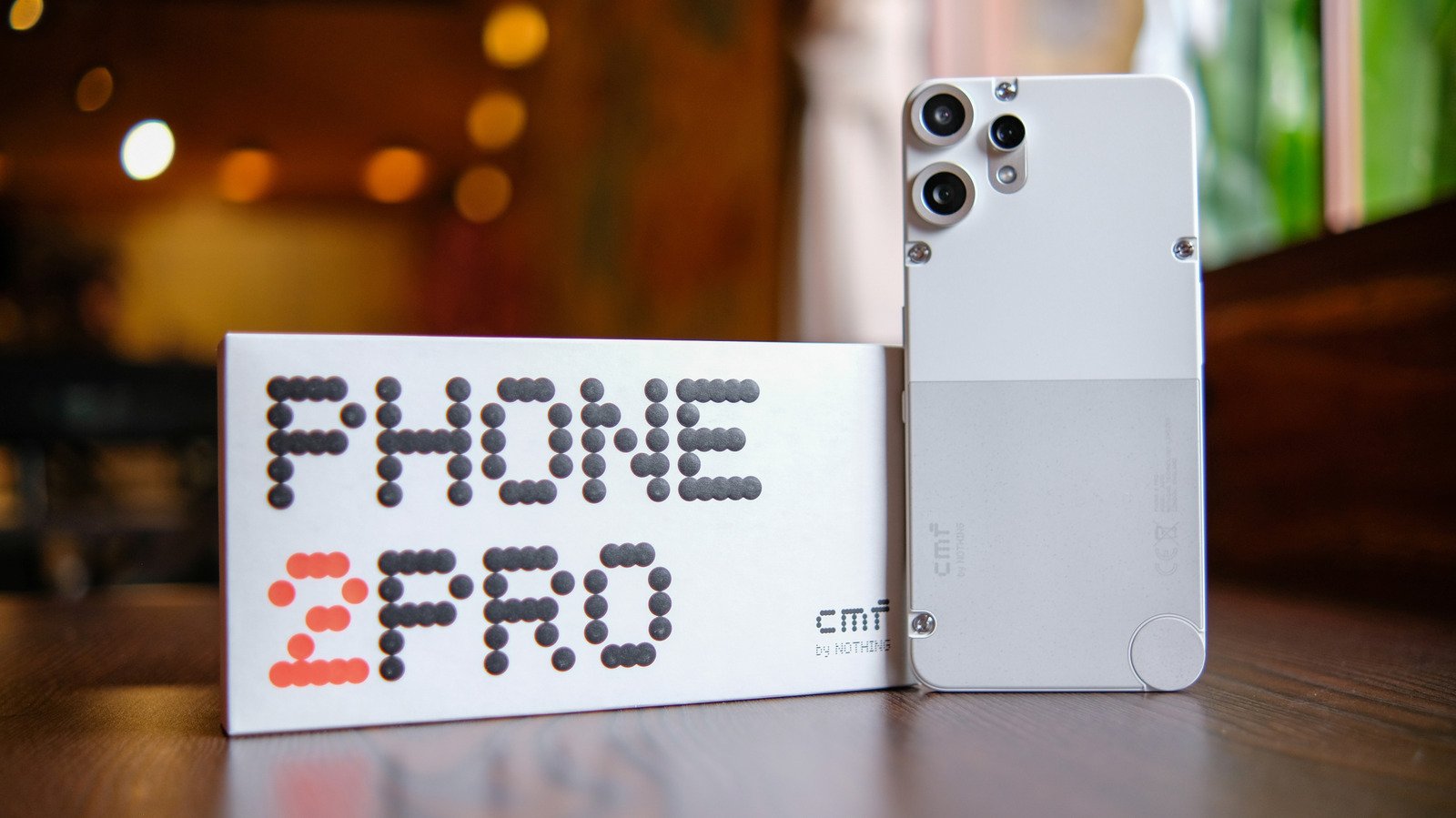
CMF also gave the Phone 2 Pro three rear cameras. They include a 50-megapixel main camera, a 50-megapixel 2x telephoto camera and an 8-megapixel ultrawide camera. That setup offers more flexibility than a basic camera system with only one useful lens.
Those choices make the phone feel less like a budget model during ordinary use. Scrolling, watching videos and checking messages don’t demand a top-tier processor. And a large screen or long-lasting battery can matter more to many owners than a faster chipset.
Still, Nothing has not published a part-by-part cost breakdown. So no one can say exactly how much each component saved. But the differences between the phones show where CMF made room for the lower price.
The savings came with practical trade-offs
The Phone 2 Pro runs on MediaTek’s Dimensity 7300 Pro. The Nothing Phone 3a uses Qualcomm’s Snapdragon 7s Gen 3. Both can handle everyday tasks, but the performance gap matters more when a phone faces demanding work.
For messaging, maps, social media and web browsing, the CMF should feel responsive. Long gaming sessions tell a different story. A game such as Genshin Impact may challenge the phone at high graphics settings. In other words, CMF saved money in a place that casual users may rarely notice, but power users may feel.
The cameras show another compromise. The Phone 2 Pro uses electronic image stabilization on its main and telephoto cameras. The Phone 3a adds optical image stabilization to its main camera. That hardware helps steady a shot, especially in low light or when someone’s hands shake. The CMF can still take useful photos. However, it may struggle to match steadier results in difficult conditions.
CMF also cut back on features that rarely dominate a product listing. The Phone 2 Pro has one speaker, not a stereo pair. It charges at up to 33 watts, compared with 50 watts for the Phone 3a. And its IP54 rating offers less protection from dust and water than the Phone 3a’s IP64 rating.
None of those cuts automatically makes the phone a poor choice. Instead, they define who gets the most from it. Someone who rarely plays demanding games, shoots in dark settings or rushes to recharge may barely care. Someone who does those things often may prefer to spend more.
Useful extras made the value easier to live with
CMF did not simply remove features. It also kept a few that can reduce frustration over time. The Phone 2 Pro supports microSD cards up to 2TB. That lets owners add storage without buying a higher-capacity version. NFC also works in certain regions, though availability varies.
The company promised three years of Android updates and six years of security updates. Those commitments give buyers a longer runway than a bargain price alone might suggest. A phone that lasts longer can offer better value, even if it lacks premium hardware.
For everyday users, the appeal is straightforward. The bright display handles video well. The large battery supports a full day for many people. The cameras offer several framing options. And the phone keeps the price down by trimming features that some buyers use only occasionally.
Yet repeating this formula has become harder. Nothing co-founder Akis Evangelidis said the team had worked on a successor but could not make it feel like a real step forward at a price that made sense for CMF. He pointed to rising memory costs. TrendForce estimated in February 2026 that memory represented about 30% to 40% of a smartphone’s bill of materials.
Nothing has not announced a replacement date, and it will not release a Phone 2 Pro successor in 2026. That leaves the original as a clear example of careful budgeting: CMF kept the screen, battery and camera variety, then accepted slower charging, simpler sound and less demanding performance. For buyers whose daily habits fit those choices, the phone’s lower price was not a mystery. It was a set of trade-offs, made in places many people could live with.
Continue Your Tech Journey
Learn how the Internet of Things (IoT) is transforming everyday life.
Access comprehensive resources on technology by visiting Wikipedia.
CellphonesV1
