

Essential Insights
In 2015, Super Strypi spun out of control shortly after Hawaiian liftoff.
A likely first-stage motor failure destroyed thirteen satellites, including the primary payload.
It promised rapid-response launches of 300-kilogram payloads for $15 million.
Rocket Lab later demonstrated rapid-response launch capability with only 17 hours’ notice.
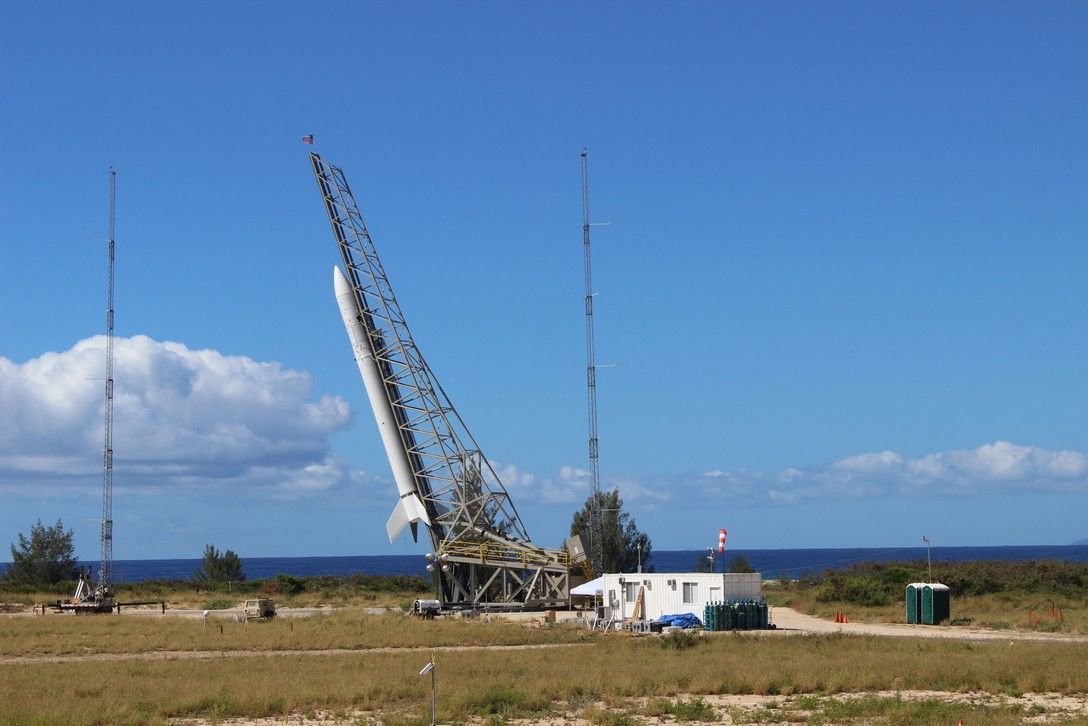
On this day in space! Nov. 4, 2015: A rail-launched Super Strypi rocket carrying 13 small satellites failed during its debut
The U.S. Air Force’s experimental Super Strypi rocket rose from a launch rail in Hawaii, then veered out of control and crashed less than a minute into its first flight. The failure destroyed all 13 satellites aboard.
The launch took place at the Pacific Missile Range Facility on Kauai. It lifted off at about 9:45 p.m. local time on Nov. 3, 2015 — Nov. 4 in Coordinated Universal Time, the basis for the anniversary date. The cause was not immediately confirmed, but a problem with the rocket’s first-stage motor was considered a likely explanation.
A different route to orbit
Super Strypi was designed to give the Air Force a relatively quick and affordable way to send small payloads into orbit. It drew on the design of Strypi, a sounding rocket developed in the 1960s for tests involving reentry vehicles and missile targets. Unlike most sounding rockets, which fly on suborbital paths, Super Strypi was built to reach orbit.
The three-stage rocket used solid-fuel motors made by Aerojet Rocketdyne. It also relied on a launch rail to help guide it at liftoff. That approach was part of a broader effort to create a launch system suited to smaller satellites and responsive missions.
The Air Force’s goal was ambitious: carry payloads weighing up to 300 kilograms to orbit for about $15 million per mission. A small, less expensive launcher could give the military more flexibility than missions that depend on larger rockets and longer planning timelines. But a low price and a compact design matter only if the system can launch reliably.
Thirteen satellites lost
The main payload was ORS-4, short for Operationally Responsive Space 4. University of Hawaii engineers built the satellite and nicknamed it HiakaSat. It was intended to capture images of Earth and monitor the environment during a planned year in orbit.
Twelve secondary payloads rode along. Eight were CubeSats for NASA’s Edison Demonstration of Smallsat Networks mission. Four more came from universities. CubeSats are small, relatively inexpensive spacecraft, and they can be deployed in groups to test technologies or carry out coordinated observations. Their low cost can make space more accessible, but it does not make a lost launch inconsequential: A failed rocket can erase years of development and deprive researchers of valuable flight data.
Super Strypi never flew again. The Air Force did not attempt another launch, and the program did not recover from its debut failure. The rocket’s promise — a dedicated, responsive option for small satellites — remained, but the vehicle did not prove it could deliver.
The U.S. Space Force has since pursued quick-turnaround launch capabilities with commercial providers. In June, it teamed up with Rocket Lab for the Victus Haze mission, which was designed to demonstrate a rapid response after only 17 hours’ notice. The shift reflects a practical trade-off: Developing a new government rocket offers control over a purpose-built system, while working with commercial launch companies can draw on vehicles and operations already in service.
Super Strypi’s failed flight did not end the push for responsive access to space. It did show how difficult that goal is. Small satellites may be inexpensive compared with larger spacecraft, but getting them safely to orbit still depends on a launch system that works.
Continue Your Tech Journey
Explore the future of technology with our detailed insights on Artificial Intelligence.
Stay inspired by the vast knowledge available on Wikipedia.
Space
