

Top Highlights
- The 1966 Leonid storm produced an astonishing 40 meteors per second.
- Witnesses remembered breathtaking skies, sleepless nights, and unforgettable family experiences.
- Earth’s passage through comet Tempel-Tuttle’s debris creates the annual Leonid shower.
- Possible 2033–34 displays may exceed 1,000 meteors hourly, but forecasts remain uncertain.
‘It looked like every star in the sky was falling’: Eyewitnesses remember the great Leonid meteor storm of 1966
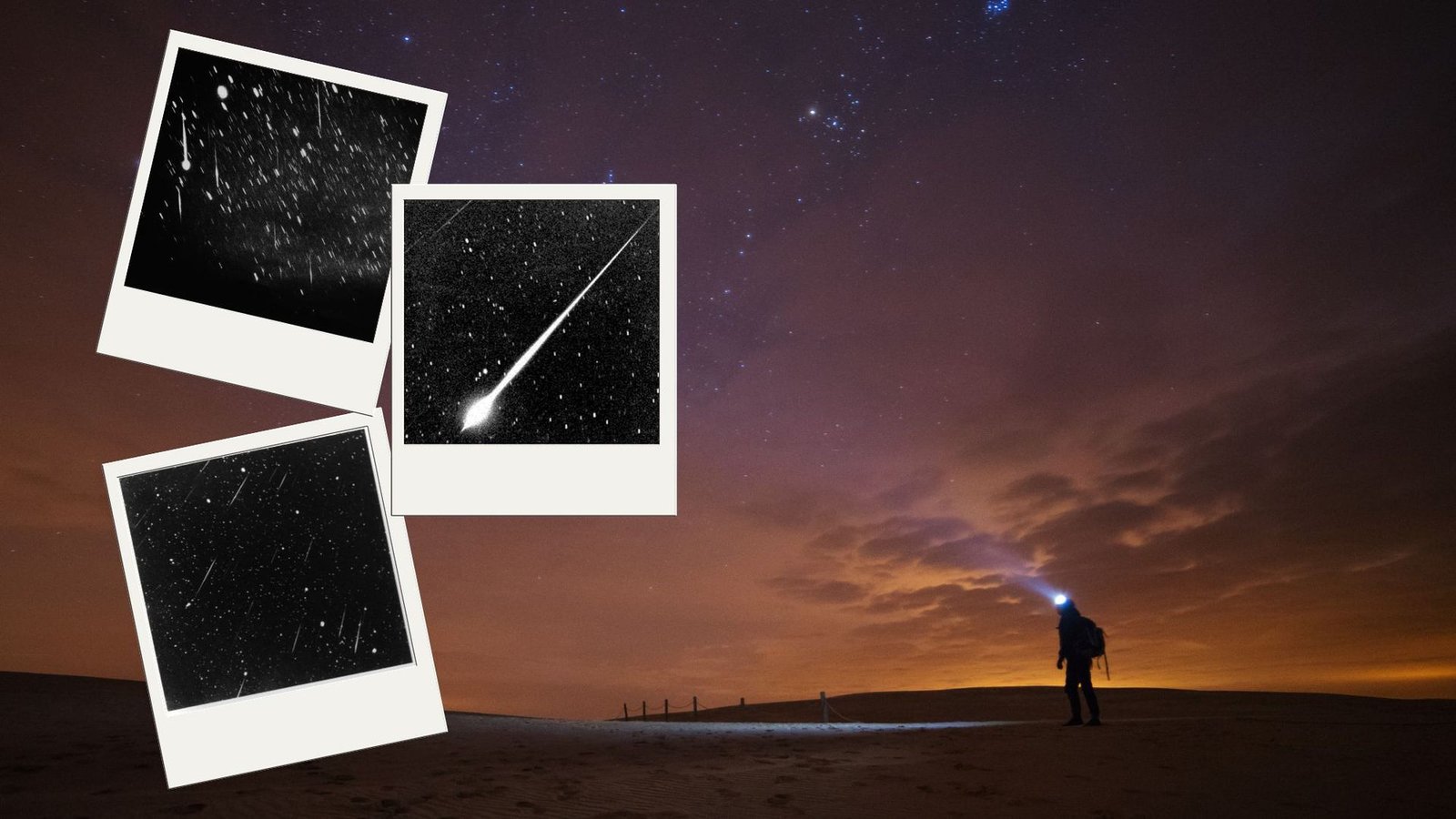
Overnight Nov. 17-18, 1966, the Leonid meteor shower became a storm. For a short time, observers saw meteors cross the sky so rapidly that the display seemed almost continuous.
At Kitt Peak National Observatory in Arizona, observers estimated a peak rate of about 40 meteors per second. That would amount to roughly 2,400 per minute. The rate did not last all night, but even a brief burst at that intensity made the event extraordinary. Many astronomers and skywatchers still regard it as one of the most spectacular meteor displays on record.
The storm left lasting memories for people who watched from backyards, campsites and open fields. Some were children, bundled against the cold or stretched out beside family members. Decades later, they still recall a sky that seemed to be in motion.
A night that stayed with its witnesses
One observer, then about 9 years old, watched from a rural area near Roxie, Mississippi. With little artificial light nearby, the sky offered a clear view. The child and cousins had been outside late when the display caught their attention.
“I looked up and the sky was filled with streaks of ‘shooting stars,’” the witness recalled. The children lay on their backs for hours, watching the meteors flash overhead. The observer also remembered small whistling or zipping sounds. Those sounds are part of the personal account, though they are not a standard feature of meteor showers: meteors occur high in the atmosphere, and ordinary sound takes too long to travel to a viewer for it to arrive alongside the light.
An astronomy lab assistant at Southwestern College in Winfield, Kansas, also remembers a community drawn outdoors. A physics professor had expected a strong display, and students and faculty roused others to watch. People settled on an open grassy area to see as much of the sky as possible. The observer likened the spectacle to a huge fireworks display and said it continued as dawn approached.
In El Paso, Texas, an 18-year-old watched from a backyard. “It looked like every star in the sky was falling,” the witness said. A 14-year-old in Brooklyn Center, Minnesota, recalled a sky that was “full” and a sight that “took your breath away.”
Other accounts carry the intimacy of a family memory. A 9-year-old camping with a father in California’s western mountains watched meteors through the night. A 3-year-old in Troy, Alabama, remembered lying on a car hood with a father, feeling warmth from the engine on a chilly night. The child grew tired before the storm reached its peak, but the early display became a lasting memory.
Not everyone saw the show. In the Throggs Neck section of the Bronx, clouds covered the sky. A young observer and his grandfather waited outside, but the stars remained hidden. The grandfather’s quiet verdict: “Too bad.”
The contrast is a reminder that a predicted celestial event is never a guarantee of a clear view. Weather, light pollution and timing all matter. A dark location can help, but it cannot move clouds.
Why the Leonids can become a storm
The Leonids return each November as Earth passes through debris shed by comet 55P/Tempel-Tuttle. The comet circles the sun about once every 33 years. Its small particles enter Earth’s atmosphere at roughly 44 miles per second, or 71 kilometers per second. Friction with the atmosphere heats the particles and surrounding air, producing the streaks of light called meteors.
In an ordinary year, under dark skies, the Leonids may produce about 10 to 15 meteors per hour. A storm happens when Earth crosses a particularly dense part of the comet’s debris stream. The 1966 event was an exceptional encounter, not the typical November show. That difference matters for anyone planning to watch: a meteor shower forecast can indicate a good chance of activity, but it cannot promise a repeat of a historic storm.
The Leonids have produced other major displays. Storms were recorded in 1833 and 1866, and the shower reached storm levels again in 1999, 2001 and 2002. Those later events brought impressive bursts, but they did not recreate the extraordinary peak witnessed in 1966.
Comet 55P/Tempel-Tuttle is expected to return in 2031, prompting renewed interest in the Leonids that follow. A study released in August 2026 forecast potentially strong displays in 2033 and 2034, with peak rates above 1,000 meteors per hour. Such estimates depend on the structure of the debris stream and Earth’s path through it. They remain forecasts, not guarantees—and those projected rates would still fall well short of the 1966 peak estimate.
For viewers, the practical approach is simple: find a safe, dark spot with a broad view of the sky, allow time for eyes to adjust, and dress for the weather. Phones and other bright screens can make it harder to see faint meteors, so keeping them dim or putting them away helps. No telescope is needed; the shower can cover the whole sky, making unaided viewing more useful than magnification.
The 1966 witnesses did not need specialized equipment. They needed clear skies, a place to look up and, in many cases, someone beside them to share the view. Their recollections preserve the scale of a rare event—and the uncertainty that comes with waiting for the next one.
Continue Your Tech Journey
Dive deeper into the world of Cryptocurrency and its impact on global finance.
Explore past and present digital transformations on the Internet Archive.
Space
