

Summary Points
NASA JPL hosts a November 19 discussion about Voyager spacecraft status and discoveries.
Mission leaders will discuss interstellar science, spacecraft longevity challenges, and answer audience questions.
The event previews a NASA+ documentary planned for Voyager’s 50th anniversary in 2027.
Audiences can share light-day signal photos or videos, tagging @NASA online.
NASA Invites Media, Public to Join Voyager 1 One-Light-Day Activities
Voyager 1 is so far from Earth that a radio signal traveling at the speed of light takes about a day to reach it. NASA is inviting the public to mark that extraordinary distance by capturing photos or videos of their light-day signal and sharing them on social media. Participants should tag @NASA.
The activity offers a visible way to connect with a mission that has spent decades exploring far beyond the planets. It also points to a practical reality of deep-space operations: messages cannot arrive instantly. Teams must plan around long delays as they communicate with the spacecraft and manage their limited capabilities.
A public event at NASA’s Jet Propulsion Laboratory
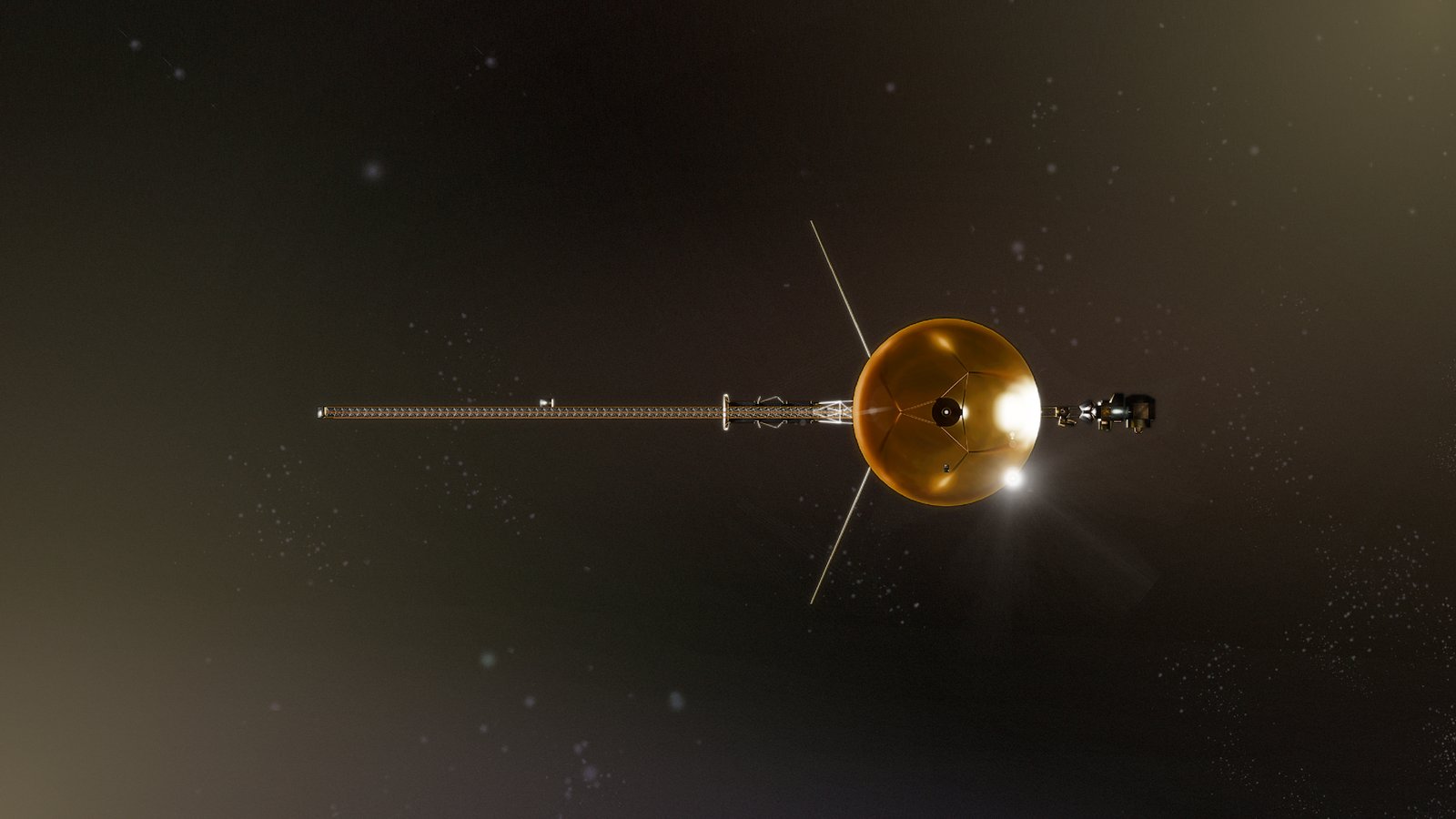
On Nov. 19 at 12 p.m. EST (9 a.m. PST), NASA’s Jet Propulsion Laboratory in Southern California will host a moderated discussion about Voyager 1 and Voyager 2. Mission members and NASA leaders will discuss the spacecraft’s status, the science they continue to collect in interstellar space, and the challenges of operating probes over such vast distances.
A question-and-answer session with media and other audience members will follow. The event will also include a preview of an upcoming NASA+ documentary about Voyager. The documentary is planned for release in 2027, marking the mission’s 50th anniversary.
The gathering will take place in JPL’s von Kármán Auditorium, where the laboratory hosted Voyager briefings during the probes’ grand tour of the outer planets. The location links the mission’s historic planetary encounters with its ongoing work beyond the known planetary frontier.
Participants include Nicky Fox, associate administrator of NASA’s Science Mission Directorate in Washington; Jonathan Lunine, JPL’s chief scientist and a professor of planetary science at Caltech; Suzanne Dodd, Voyager project manager at JPL; Linda Spilker, Voyager project scientist at JPL; Kareem Badaruddin, Voyager mission manager at JPL; and Jamie Rankin, Voyager deputy project scientist at Princeton University.
Why a one-light-day signal matters
A light-day is the distance light travels in one day. For Voyager 1, that distance has a direct effect on how the mission operates. Even a message sent at light speed takes roughly a day to cross the gap in one direction. A reply would require additional time to return.
That delay makes careful planning essential. Engineers and scientists cannot treat Voyager like a nearby spacecraft that responds quickly to instructions. They must work within the limits of aging equipment, long communication times, and the difficulty of supporting a mission far beyond the planets. The probes’ continuing observations also offer rare opportunities to study interstellar space directly.
The public activity does not change those operational limits. Instead, it gives people a way to reflect on the scale of the mission and share that perspective. NASA encourages everyone to post photos or videos of their light-day signal on social platforms and tag @NASA.
Discover More Technology Insights
Learn how the Internet of Things (IoT) is transforming everyday life.
Explore past and present digital transformations on the Internet Archive.
Space
