

Top Highlights
NASA’s documentary premieres November 23 on NASA platforms; YouTube release is forthcoming.
Europa Clipper reflects decades of teamwork, science, and engineering, launching in 2024.
It journeys toward Jupiter, studying Europa’s ocean world for potential habitability.
Mission teams overcame radiation, pandemic, hurricane, and tornado challenges, building on discoveries.
NASA+ Documentary Captures Europa Clipper’s Journey Into Deep Space
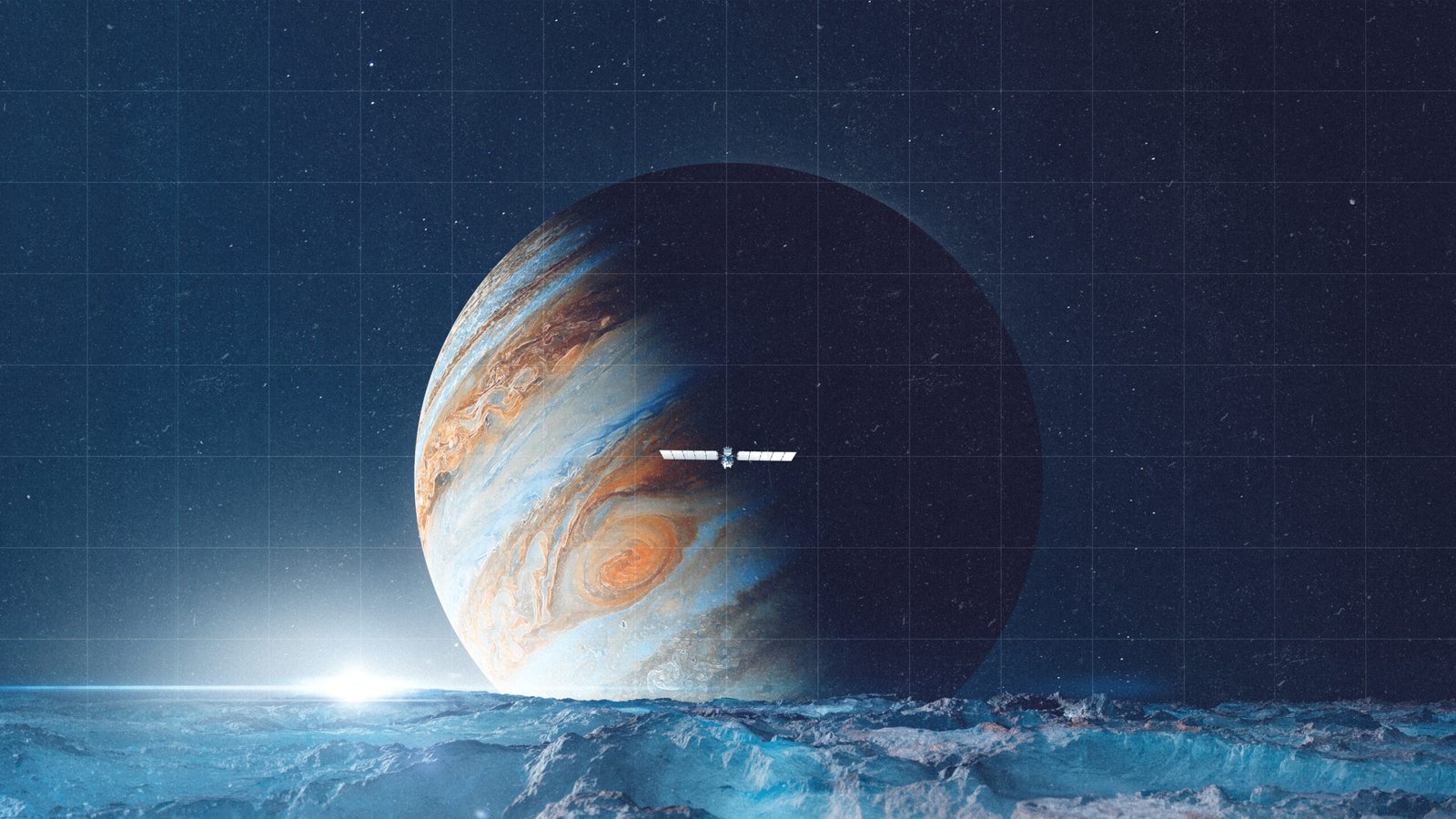
NASA is inviting viewers behind the scenes of one of its most ambitious planetary missions. Its new documentary, “The Europa Concept,” follows Europa Clipper from an early scientific idea to a spacecraft built for a demanding journey to Jupiter.
The documentary will be available on NASA+, the NASA app and NASA’s website starting Monday, Nov. 23. It is coming soon to YouTube. The film traces the people, engineering choices and setbacks behind a mission designed to investigate whether Europa has conditions that could support life.
From a distant idea to a spacecraft
Europa has fascinated observers since Galileo Galilei discovered the moon in 1610. But for centuries, it remained a distant point of light. NASA’s Pioneer 10 and Pioneer 11 missions collected early data in the 1970s. Voyager 1 provided humanity’s first detailed view during a flyby in 1979. Later observations from Voyager 2, Galileo, Cassini and Juno added to the picture and helped shape the case for a dedicated mission.
That case became a formal effort at NASA’s Jet Propulsion Laboratory in Southern California in 2013. The team had 11 years to develop Europa Clipper and its nine science instruments, then prepare the spacecraft for a launch window set by the alignment of the planets. The work demanded more than advanced hardware. It took scientific research, careful planning and sustained effort from thousands of people.
The team also faced disruptions that no mission plan could fully control. A global pandemic affected the work. Then, just before the spacecraft launched from NASA’s Kennedy Space Center in Florida on Oct. 14, 2024, a Category 5 hurricane and tornadoes threatened the area.
Europa Clipper is now two years into a five-year journey of about 1.8 billion miles (2.9 billion kilometers) to the Jupiter system. It is the largest spacecraft NASA has sent into deep space. Rather than orbit Europa, the spacecraft will orbit Jupiter and make repeated flybys of the moon. That approach lets it collect close-up measurements while limiting the time it spends in Europa’s intense radiation environment.
What the mission can—and cannot—tell us
Jupiter’s powerful magnetic field creates the radiation that makes the region hazardous for spacecraft. That same radiation may also have helped shape Europa’s environment. Beneath the moon’s icy surface, scientists think a vast ocean may exist. Europa Clipper will study the moon’s surface, interior and surrounding environment to assess whether conditions there could be suitable for life.
The distinction matters: The mission is not designed to detect life directly. Its instruments will gather evidence about Europa and its potential habitability. Those findings can guide future research, but they will not settle every question about what might exist beneath the ice.
That measured goal is part of the mission’s significance. A sophisticated spacecraft can extend what scientists know, but it cannot remove uncertainty or make exploration simple. Europa’s radiation poses a real engineering challenge, and a flyby mission must collect useful data during limited encounters. The value of the technology depends on how well its instruments work together and what the evidence ultimately supports.
Curt Niebur, program scientist in NASA’s Planetary Science Division, said he hopes the mission’s discoveries will inspire further exploration. “The things we will learn from Europa Clipper will be so sensational, so fantastic, that everyone will be screaming for the next mission,” he said. For him, the point is to learn enough to want to explore another world.
“The Europa Concept” brings that long effort into view. It follows the scientists and engineers who turned a far-off vision into a working spacecraft—and shows how exploration depends on persistence as much as invention.
Continue Your Tech Journey
Stay informed on the revolutionary breakthroughs in Quantum Computing research.
Access comprehensive resources on technology by visiting Wikipedia.
Space
