

Top Highlights
- NASA seeks industry partners to develop the Moon’s first nuclear electricity reactor.
- LR-1 will generate 20 kilowatts, powering habitats, rovers, communications, and science.
- Continuous nuclear power works through lunar nights; launch readiness targets 2030.
- NASA and DOE advance Mars nuclear propulsion, expanding future deep-space exploration.
NASA Seeks Partners to Design First Nuclear Reactor for the Moon
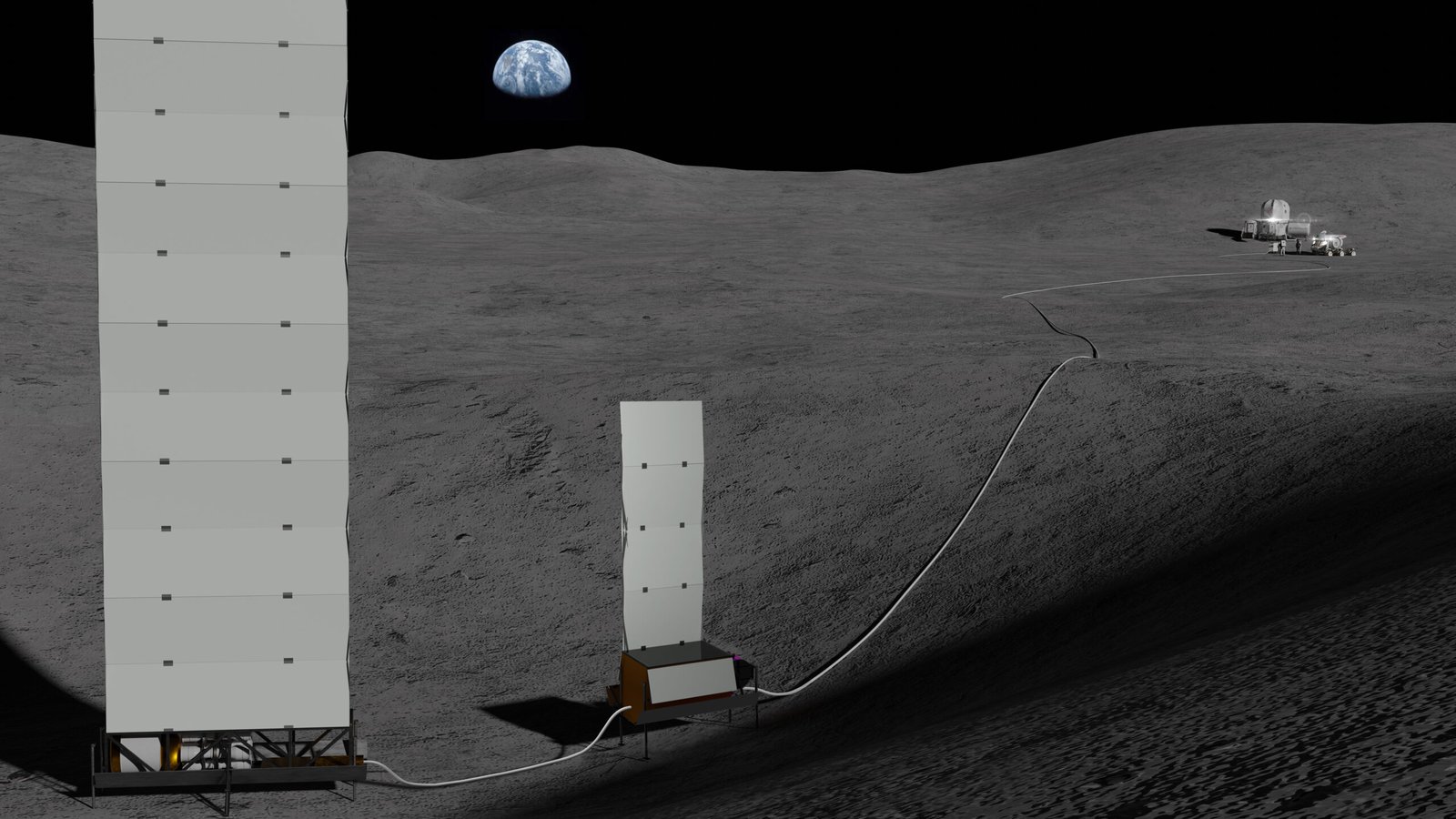
NASA is seeking industry partners to develop and test a nuclear reactor intended to supply electricity on the Moon. The project, called Lunar Reactor-1, or LR-1, is part of the agency’s effort to support a sustained human presence beyond Earth.
NASA wants a launch-ready system by 2030. After deployment, the reactor would operate on the lunar surface for at least five years. Those targets set an ambitious schedule for a technology that must be designed, tested and prepared to function far from Earth.
Power through the lunar night
LR-1 is planned as a small fission power system with an output of 20 kilowatts. That is roughly the amount of electricity used by 16 average U.S. households over a year. On the Moon, the power could support habitats, communications, rovers, scientific instruments and other infrastructure.
The system’s central advantage is consistency. A lunar night lasts about 14 Earth days, leaving solar panels without direct sunlight for an extended period. A reactor could keep producing electricity through that darkness, as well as in places where sunlight is limited.
That reliability could make nuclear power useful for future missions, but it does not make the system simple or risk-free. NASA and its partners will need to show that the reactor can meet strict safety requirements and work as intended after launch and deployment. The equipment must also function in a remote environment where repairs may be difficult. NASA’s proposal requires the reactor to meet Department of Energy safety standards for nuclear operations.
The technology is one part of a broader effort to prepare for longer stays on the Moon. A dependable power supply could help mission planners choose sites based on scientific or operational value rather than sunlight alone. Still, a 20-kilowatt system would be one component of a lunar power network, not a complete solution for every future base. Actual needs will depend on the scale of operations and the equipment that crews and robots use.
“This request for proposals represents an important step forward as NASA partners with industry to establish an enduring human presence on the lunar surface,” said Brian Giblin, NASA’s Lunar Reactor-1 program manager. He said reliable power will be vital for exploration on the Moon and Mars, where solar energy may not be available when needed.
From proposal to flight system
NASA’s Space Power and Reactor Capabilities Request for Proposals reflects feedback from industry. The agency released a draft proposal in August and held an industry day in September at the Ohio Aerospace Institute in Cleveland. Proposals are due Dec. 21.
The solicitation focuses on advancing LR-1’s technology, testing and flight design. NASA may also issue additional task orders to support other space nuclear power systems. That could give the agency and its partners a way to apply lessons from the lunar project to future missions.
The case for nuclear power extends beyond the Moon. Dust storms on Mars can block sunlight for months, while solar power becomes less effective as spacecraft travel farther from the Sun. Nuclear systems could provide electricity in those conditions. Their value will depend on whether developers can deliver systems that are safe, dependable and practical to launch and operate.
NASA’s Space Reactors Division is managing LR-1 in partnership with the Department of Energy. The division is also developing Space Reactor-1 Freedom, or SR-1 Freedom, which is scheduled to launch in 2028. The mission is planned to deliver three SkyFall helicopters to Mars and demonstrate nuclear electric propulsion. In that approach, electricity from a reactor powers a spacecraft’s propulsion system.
Nuclear electric propulsion could support longer or more demanding deep-space missions than conventional propulsion allows. But SR-1 Freedom and LR-1 serve different purposes: one is intended to demonstrate propulsion in space, while the other is designed to provide electricity on the lunar surface.
Together, the projects represent a long-term investment in space power and propulsion. LR-1’s development will test whether a compact reactor can provide steady electricity in a challenging environment. Its success could expand the options available to future explorers; its design and operation must first meet demanding technical and safety requirements.
Continue Your Tech Journey
Stay informed on the revolutionary breakthroughs in Quantum Computing research.
Access comprehensive resources on technology by visiting Wikipedia.
Space
