

Quick Takeaways
El Niño has triggered severe, prolonged Amazon rainforest fires due to drought.
Satellite data shows increasing fire activity, smoke, and poor air quality.
Fires are part of a tropical cascade, worsening across Indonesia and the Amazon.
Continued drought and human activity threaten ecosystems and increase fire risk.
Fires Arrive in the Amazon Rainforest
The Amazon rainforest, often called the “lungs of the Earth,” is facing a new threat this year. Unlike sudden storms or tornadoes, the fires spreading through this vast jungle develop over months. A combination of drought and weather patterns linked to El Niño has created ideal conditions for extensive wildfires. Scientists warn that this marks the start of a long, severe fire season in the region.
Satellite Monitoring Shows Increasing Fire Activity
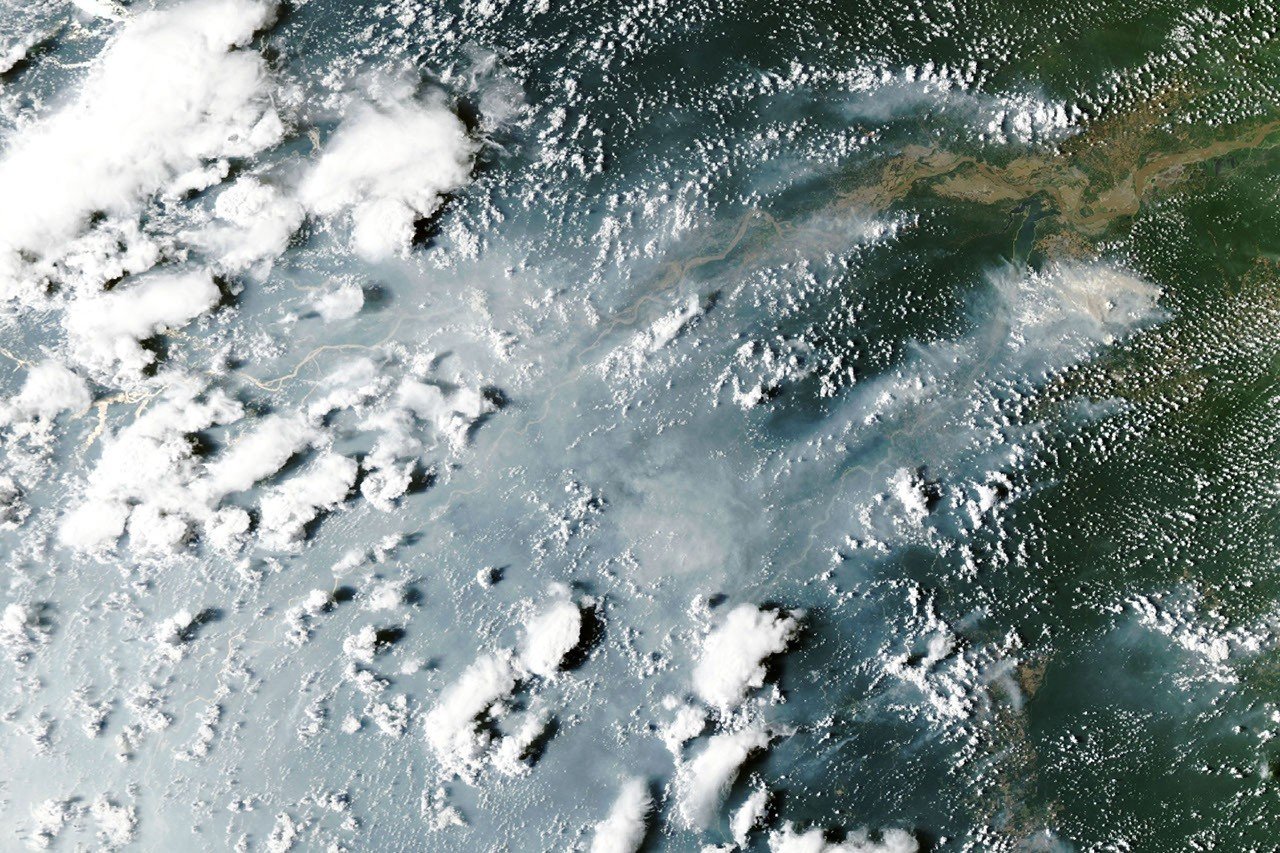
Starting in September 2026, satellite data revealed sharp rises in fire activity across the central and eastern Amazon. Organizations like NASA’s Fire Information for Resource Management System (FIRMS), the Global Fire Emissions Database (GFED), and NASA Worldview all show evidence of smoke and flames. The fires are concentrated around major cities like Manaus and Santarém, stretching near the mouth of the Amazon River.
On October 12, 2026, NASA’s MODIS instrument on the Aqua satellite captured a striking image of smoke streaming over the forest. Heavy smoke blanketed Manaus, a city with more than 2 million residents. Air quality measurements skyrocketed, with fine particles (PM2.5) exploding above 135 micrograms per cubic meter. The smoke disrupted daily life: schools closed, outdoor events canceled, and residents warned of dangerous air. This illustrates how fires not only destroy forests but also impact human health directly.
A Pattern of Fire Sparked by Climate Disruptions
Experts note this fire outbreak is part of a pattern driven by El Niño, a climate phenomenon that alters rainfall worldwide. Douglas Morton, a NASA scientist, explains that droughts and fires start along the equator, from Indonesia to the Amazon, in a “cascade” of events. In Indonesia, drought and peat fires have burned since August, destroying hundreds of homes and filling the air with smoke.
Now, the Amazon is experiencing its turn. Morton and colleagues have studied this pattern before, linking El Niño years with increased fire activity. Their research shows fires often move northward as drought worsens in different regions, creating a domino effect.
In 2026, the Amazon fires follow this pattern. Experts expect the region to face continued fire risks through December, with more areas affected in northern Brazil, Venezuela, Guyana, and Suriname. By late summer or early fall of 2027, the drought and fire danger will likely shift southward to Brazil’s southern forests and Paraguay.
The Role of Human Activity and Climate Change
While lightning rarely starts fires in the wet Amazon—less than 1 percent—human activity ignites most fires. Many began as management fires, used for land clearing or agriculture. Worsening drought conditions have turned these fires into uncontrolled blazes that spread deep into the forest.
Satellite analysis shows that in the Santarém region alone, 50 to 70 fires burn uncontrolled. Additionally, researchers like Shane Coffield are using advanced satellite data to track fires that standard systems miss. They find that actual fire numbers may be 40 percent higher than reported, especially during smoke-heavy days where sensors have trouble detecting low-intensity flames.
These fires leave lasting damage. The charred remains weaken the forest’s ability to recover, making future fires more likely and more intense. Many species are not adapted to fire and can suffer long-term ecological harm if fires become more frequent.
As the rainy season approaches in December and January, the fires in southern regions are expected to lessen. However, experts stress the importance of avoiding any new burning this year. The combination of drought, climate change, and human activity creates a dangerous environment for the Amazon rainforest, with consequences that reach far beyond its borders.
Continue Your Tech Journey
Learn how the Internet of Things (IoT) is transforming everyday life.
Stay inspired by the vast knowledge available on Wikipedia.
Space
