

Fast Facts
- NASA accelerates Artemis missions to explore Moon and Mars long-term.
- Tom Percy manages system engineering for NASA’s Human Landing System program.
- Percy collaborates with SpaceX and Blue Origin on crewed lunar landers.
- Artemis aims to expand lunar exploration, scientific discovery, and prepare for Mars.
Tom Percy: Leading NASA’s Human Landing System for Artemis
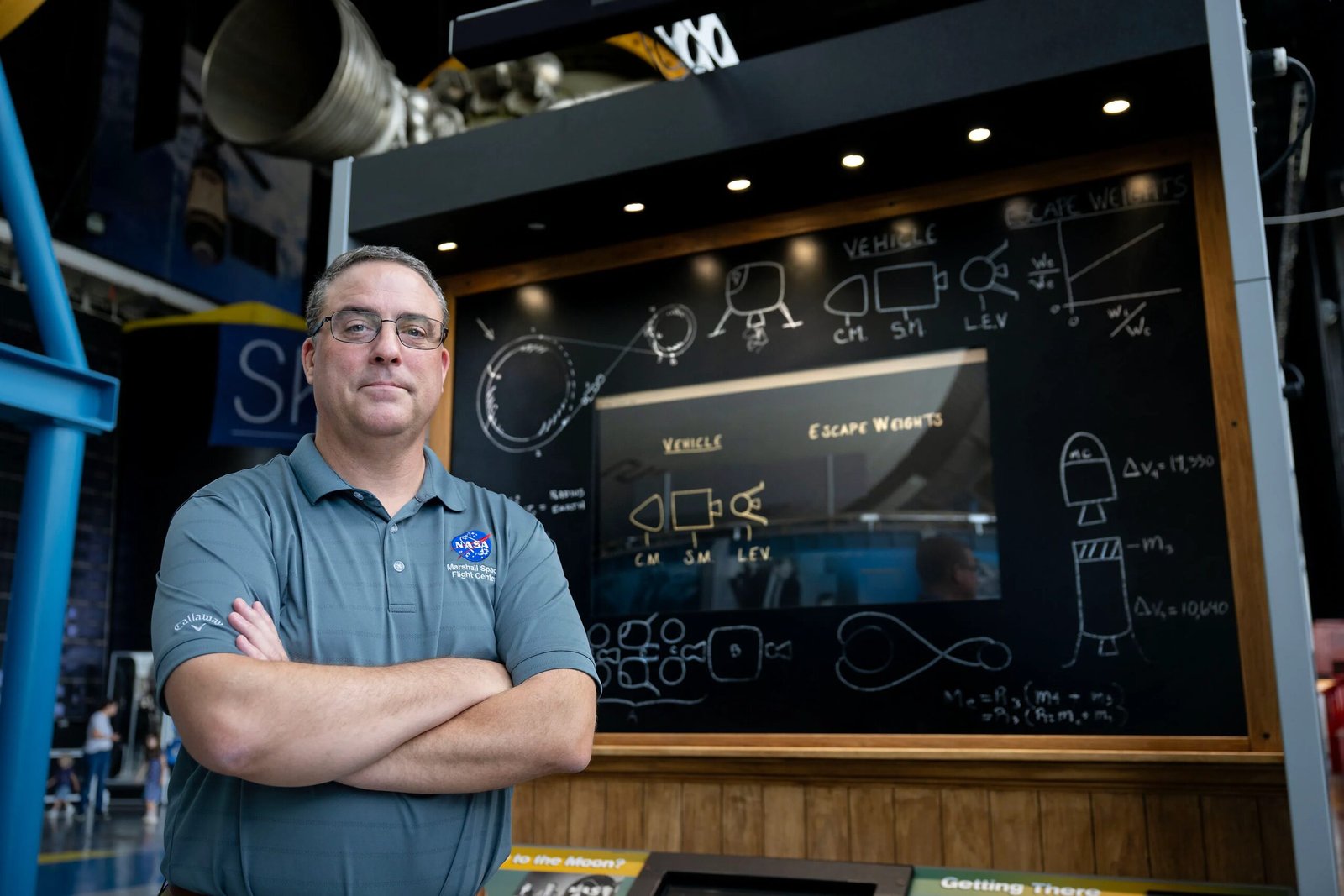
As NASA prepares for its next big step in space exploration, Tom Percy plays a vital role in making it happen. He is the manager of systems engineering and integration for the agency’s Human Landing System (HLS) Program. Percy works closely with private companies SpaceX and Blue Origin to develop crewed lunar landers. These landers are essential for NASA’s Artemis missions, which aim to return humans to the Moon and pave the way for future trips to Mars.
Percy’s job is to ensure that the landers are safe, reliable, and compatible with other NASA spacecraft and systems. He oversees the design, manufacturing, testing, and certification processes. With a talented team, Percy manages all integration work related to the human landing systems. His role is critical to helping NASA meet its goal of landing astronauts on the Moon’s surface and establishing a sustainable presence there.
From North Easton to NASA: Percy’s Path to the Stars
Tom Percy was born in North Easton, Massachusetts. He studied mechanical engineering at the Rochester Institute of Technology. During college, he gained hands-on experience working with designs related to NASA’s lunar plans. Percy also led his student chapter of the American Society of Mechanical Engineers and participated in the Human Exploration Rover Challenge, previously called the Moonbuggy Race. This competition was held annually at NASA’s Marshall Space Flight Center in Huntsville, Alabama. Percy’s team built a lunar rover and traveled to Alabama to compete.
This experience introduced Percy to Marshall Space Flight Center. He learned about NASA’s diverse projects and realized he wanted to work there someday. He then earned a master’s degree in aerospace engineering from Georgia Tech in Atlanta. His research focused on advanced propulsion and space systems design. Percy also worked with engineers at Marshall during this time.
Since 2003, Percy has been based at Marshall. His work has involved exploring transportation options for deep space missions, including landing astronauts on the Moon and Mars. He also specializes in propulsion technology, spacecraft design, and trajectory analysis. Percy later earned a doctorate in aerospace systems engineering from the University of Alabama in Huntsville, further expanding his expertise.
Through his extensive experience, Percy now leads NASA’s efforts to develop human landing systems. As the Artemis program advances, his role is to help ensure all aspects of lunar transportation are well-designed, tested, and ready for future crewed missions. NASA’s Artemis program aims to explore the Moon for science, economic growth, and to build a foundation for human missions to Mars. Percy’s work supports the agency’s long-term exploration goals, bringing humanity closer to deep space exploration.
Discover More Technology Insights
Learn how the Internet of Things (IoT) is transforming everyday life.
Access comprehensive resources on technology by visiting Wikipedia.
Space
