

Quick Takeaways
- Operations manager Allison Mjoen helped prepare Artemis ground systems for lunar missions.
- Her 20-year Kennedy Space Center career spans Shuttle, station, and Artemis programs.
- She coordinates vehicle processing, integration plans, and booster and Orion operations.
- She hopes Artemis inspires a generation as humans return to the Moon.
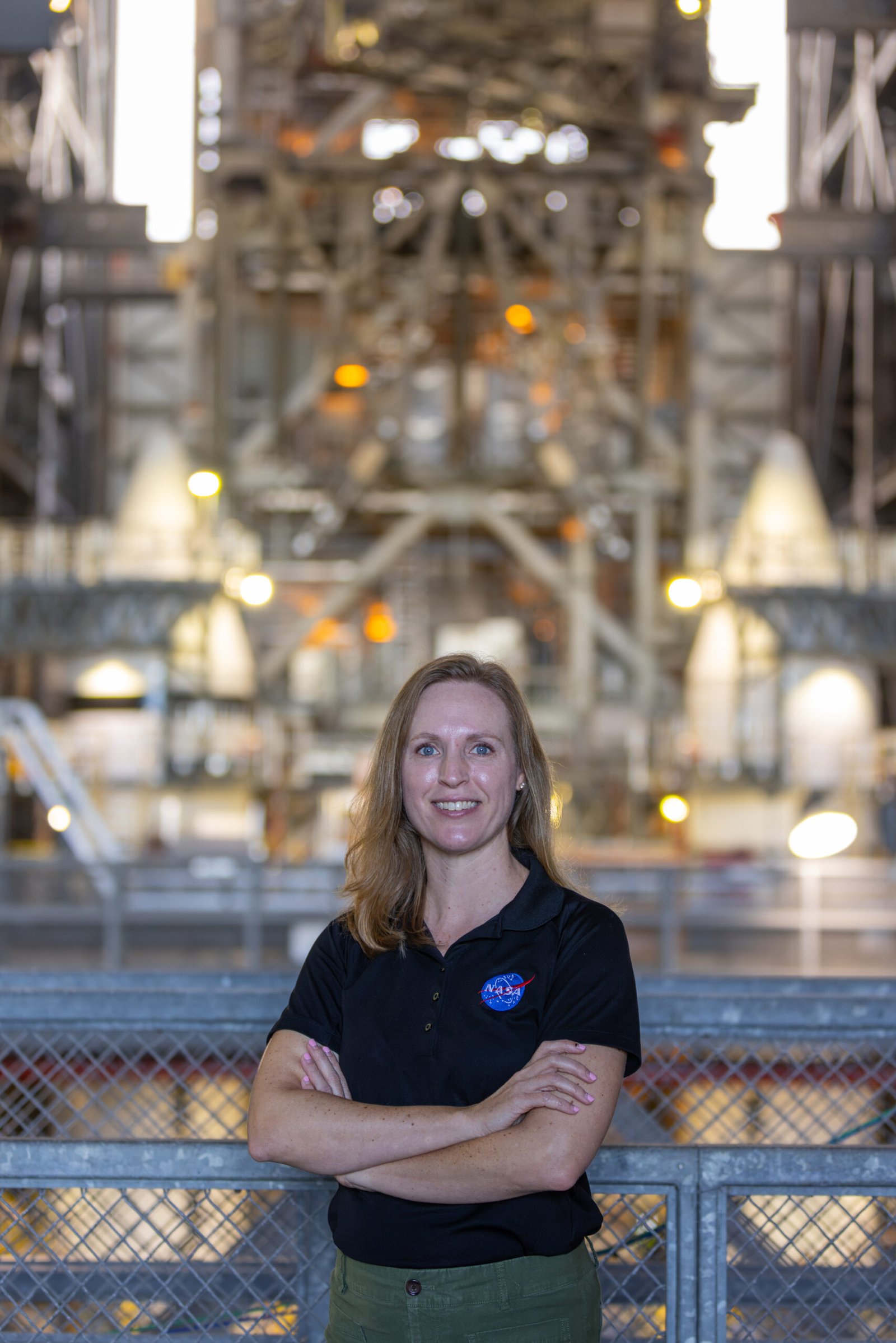
I Am Artemis: Allison Mjoen
A launch built on years of ground work
As supercooled propellant flowed into the core stage and NASA’s Space Launch System rocket roared to life, Allison Mjoen watched with her family. The launch was a public spectacle, but it also marked the visible result of years of preparation. Mjoen, an operations manager with NASA’s Exploration Ground Systems Program, helps develop the systems and plans that support Artemis vehicle processing and future human missions to the Moon.
April 1, 2026, brought bright, clear skies to Florida’s Space Coast. Mjoen and her children joined the crowd for the countdown. As the voices around them rose, the SLS rocket’s rumble grew stronger beneath their feet. Her children could watch a mission their mother had helped prepare for. Mjoen saw the moment as the culmination of work carried out by many teams, often far from public view.
Her job begins well before a launch. As spacecraft offline operations manager, Mjoen coordinates work that takes place outside real-time launch operations. She supports Matt Czech, the ground systems senior vehicle operations manager, by developing integration plans and overseeing ground operations for Artemis vehicle processing. Her focus includes booster and Orion spacecraft operations.
That work depends on technology, but technology alone cannot make a launch ready. Teams must integrate vehicles, ground equipment and procedures, then coordinate their work carefully. The process requires planning and clear communication. It also has practical limits: complex systems need time, testing and disciplined operations to function as intended.
Mjoen’s experience in integrated firing room operations gave her a direct view of those demands. During Artemis I, she served as a certified operations project engineer. Earning the certification was a milestone; applying it during live operations brought a different level of responsibility.
“Every decision and communication directly supported the integrated team’s ability to execute safely and properly implement the test procedure,” Mjoen said.
Working at the integration console reinforced the value of preparation, collaboration and trust. Those lessons inform her work coordinating teams today. A successful mission depends not only on advanced vehicles, but also on people who can use established procedures and respond together as operations unfold.
A career shaped by changing missions
Mjoen began her NASA career as a flight crew systems engineer with United Space Alliance, supporting the Space Shuttle Program. Her team prepared each shuttle’s cabin for its mission. That included arranging food, spacesuits, cargo and payloads — the equipment and supplies astronauts needed aboard.
After the shuttle program ended, Mjoen moved to the International Space Station Program as a payload integration engineer. She connected experiment investigators with the organizations developing their hardware. The role called for translating scientific needs into practical requirements for equipment that had to operate in space.
She later worked in the Project Office on the Test and Operations Support Contract. Then she joined NASA’s Operations Project Engineering Office, where she served as the Spacecraft Payloads Integration and Evolution Element lead for Artemis I. Each role added a different perspective on how mission plans, hardware and operations must fit together.
That range of experience now supports her work on Artemis. The program brings together new systems and established operational practices. Its ambitions are large, but its success depends on solving concrete problems: how to prepare vehicles, coordinate teams and carry out procedures safely. Mjoen’s career reflects that balance between pursuing new capabilities and making sure the systems work in practice.
For her, the importance of Artemis extends beyond the launch itself. She sees the program as a chance to create a shared experience for families and inspire a new generation. She also looks forward to the day astronauts return to the lunar surface.
“That single moment captured the imagination of people around the world and showed what is possible when we come together for a bold goal,” she said of the first Apollo Moon landing. “Artemis is creating that kind of moment for a whole new generation, and this time to stay.”
The launch her children watched made years of preparation visible for a few powerful minutes. The work continues afterward, across teams responsible for turning ambitious plans into safe, functioning operations.
Continue Your Tech Journey
Learn how the Internet of Things (IoT) is transforming everyday life.
Stay inspired by the vast knowledge available on Wikipedia.
Space
