

Summary Points
-
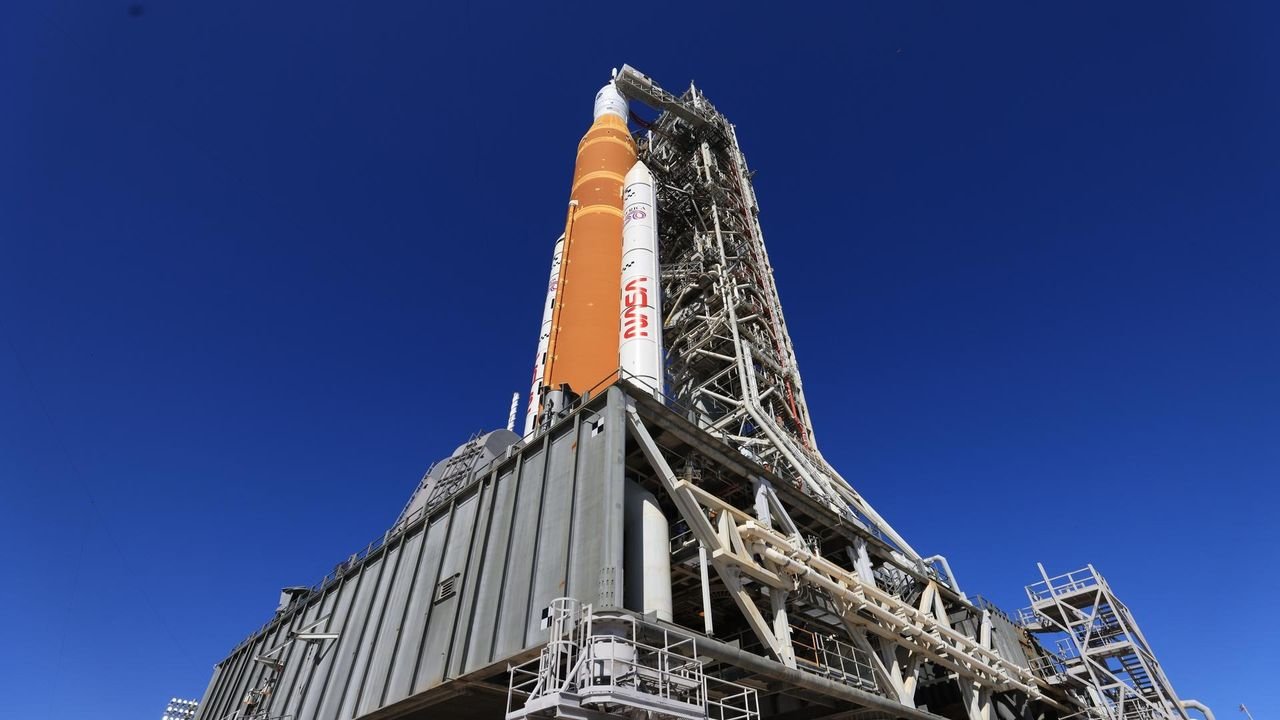
Launch Delay Likely: NASA has detected a helium-flow issue in the upper stage of the Artemis 2 SLS rocket, impacting the planned launch window from March 6-9.
-
Rollback Needed: The problem may necessitate a rollback to the Vehicle Assembly Building, which would almost certainly prevent a March launch.
-
Next Opportunities: If the mission misses the March window, the next potential launch dates are in early April, with April 1 and 3-6 highlighted.
-
Importance of Helium Flow: Proper helium flow is crucial for the functioning of the SLS upper stage, and troubleshooting is ongoing to determine the best course of action.
NASA’s Artemis 2 Moon Rocket Faces New Challenge
NASA’s Artemis 2 moon mission might face delays. On Saturday, the agency reported a problem with the Space Launch System (SLS) rocket. The issue involves an interruption in helium flow within the upper stage. This situation arose overnight from February 20 to 21 at Kennedy Space Center in Florida.
NASA Administrator Jared Isaacman announced that the rocket may need to be rolled back to the Vehicle Assembly Building (VAB). This rollback will almost certainly affect the planned launch window in March. The current window runs from March 6 through March 9, with an additional date on March 11. If Artemis 2 misses these dates, the next potential launch window would push back to late April.
NASA officials stated that a rollback would prevent a March launch. However, they remain hopeful that quick preparations could allow for an April launch. The findings from troubleshooting efforts will play a crucial role in setting the schedule.
Interestingly, this news came just a day after NASA announced March 6 as the target launch date. The announcement followed data from Artemis 2’s second wet dress rehearsal, which successfully completed fueling operations. This rehearsal is a significant step, marking progress since earlier issues with hydrogen leaks had delayed Artemis 1 in 2022.
Artemis 2 aims to send three NASA astronauts and one Canadian astronaut on a 10-day mission around the moon. The vehicle will use an Orion capsule for this historic flight, the first crewed mission beyond low Earth orbit since the Apollo era.
Despite the setback, NASA maintains a proactive approach. Teams are reviewing data and preparing for a rollback. They aim to address the helium flow issue swiftly, enabling further steps toward launch readiness. Proper helium flow is essential for engine operation, as it pressurizes the propellant tanks.
As engineers investigate the issue, the mission’s timeline remains in flux. The Artemis program continues to push the boundaries of space exploration technology while aiming to inspire future generations.
Expand Your Tech Knowledge
Explore the future of technology with our detailed insights on Artificial Intelligence.
Stay inspired by the vast knowledge available on Wikipedia.
SciV1
