
Close Menu
    Facebook X (Twitter) Instagram
    Monday, October 5
    Top Stories:
    • How a Single Chemical Change Triggered Life’s Origins
    • China’s Tech Giants Ration Employee Tokens to Gain Competitive Edge
    • Unlocking the Mind: How Memory Shapes Our Imagined Past
    Facebook X (Twitter) Instagram Pinterest Vimeo
    IO Tribune
    • Home
    • AI
    • Tech
      • Gadgets
      • Fashion Tech
    • Crypto
    • Smart Cities
      • IOT
    • Science
      • Space
      • Quantum
    • OPED
    IO Tribune
    Home » Revolutionizing Aviation Safety: Supercooled Droplet Testing Takes Flight
    Space

    Revolutionizing Aviation Safety: Supercooled Droplet Testing Takes Flight

    Staff ReporterBy Staff ReporterOctober 5, 2026No Comments3 Mins Read
    Share Facebook Twitter Pinterest LinkedIn Tumblr Reddit Telegram Email
    Share
    Facebook Twitter LinkedIn Pinterest Email

    Top Highlights

    1. NASA improves testing to address rare supercooled large droplet icing hazards.
    2. Large, cold water droplets can cause aircraft rapid, hidden ice buildup.
    3. New probes enable precise measurement of droplet sizes during simulated cloud tests.
    4. Results will enhance aircraft design tools and improve safety against uncommon icing conditions.

    NASA Testing Aims at Supercooled Large Droplet Aviation Safety

    NASA is using its expertise and advanced test facilities to address a rare but serious risk in aviation: icing caused by supercooled large water droplets. This type of ice can form when aircraft encounter unusually big, very cold water drops in clouds. These droplets stay liquid at temperatures below freezing, creating a hazard when they hit airplane surfaces. NASA’s efforts focus on better understanding and controlling this dangerous phenomenon.

    Understanding Supercooled Large Droplet Icing

    Supercooled water is common in clouds. It occurs when droplets fall below 32°F but don’t freeze because they lack a suitable particle to crystalize around. Usually, drops in clouds measure between 2 and 100 microns in diameter – a human hair is about 70 microns wide. But sometimes, clouds contain much larger drops, up to 2,000 microns. These bigger droplets are similar to freezing rain found at ground level.

    When aircraft fly through clouds with these large, supercooled drops, the water can splash or strike areas behind traditional ice protection systems. Because of their size and cold temperature, these droplets can freeze rapidly upon impact, forming dangerous ice sheets that are hard to detect and remove. Current aircraft design tools assume typical cloud conditions and may not fully account for how these large drops behave. This creates a need for better testing techniques and data.

    Advancing Testing Capabilities at Glenn Research Center

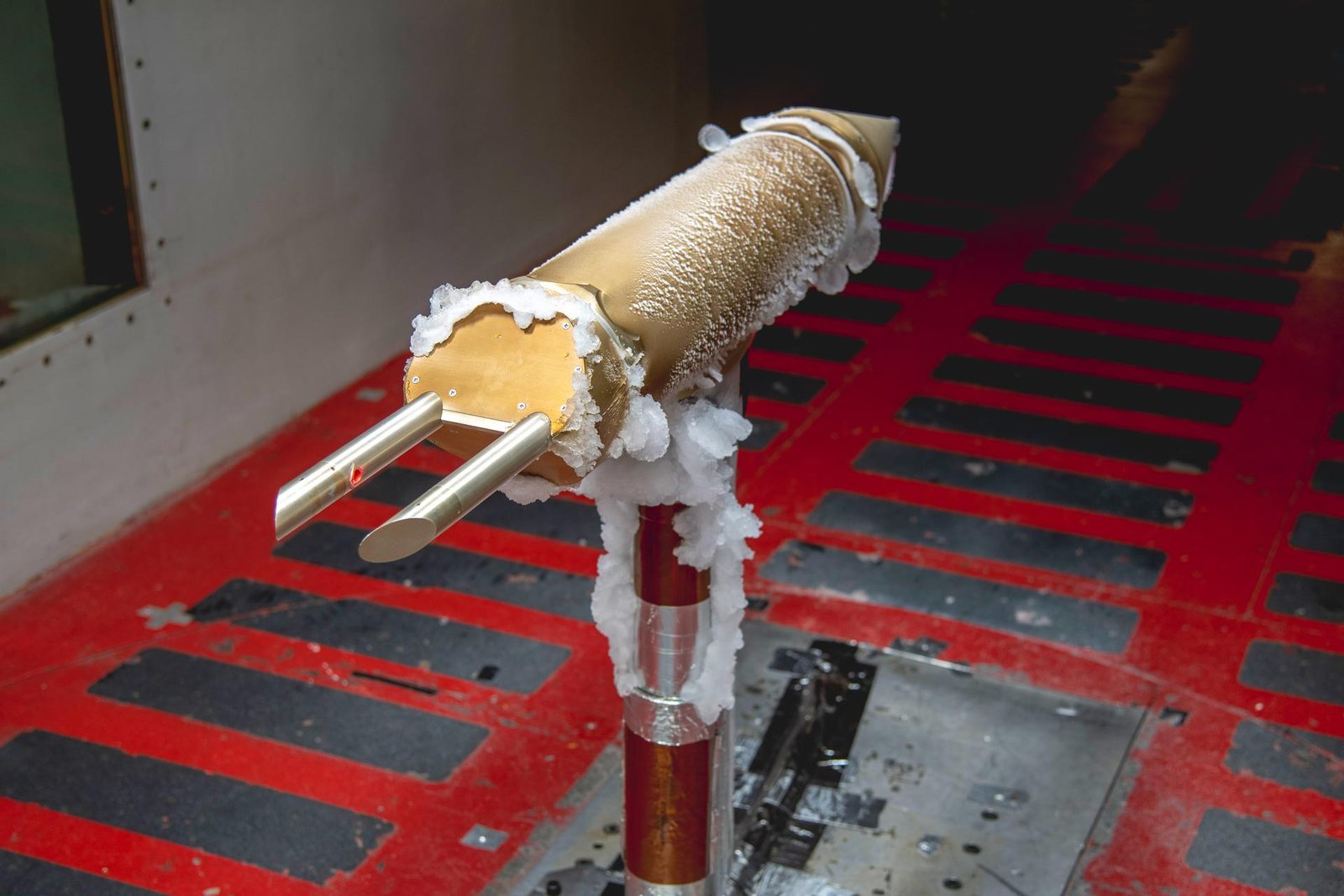
    To improve understanding, NASA is upgrading its testing capabilities at the Glenn Research Center in Cleveland. Researchers there use the Icing Research Tunnel, which simulates cloud conditions. This allows precise study of ice buildup under controlled environments.

    One focus is on developing new probes that can measure the size of water droplets in real time. These probes can detect drops larger than 45 microns and analyze their sizes while tests run. They help calibrate and validate the cloud conditions created inside the tunnel. NASA compares these real-time measurements with data from other probes that measure smaller droplets, ensuring complete knowledge of the droplet size spectrum.

    This campaign is a key milestone for NASA’s Subsonic Flight Demonstrator project, part of its broader research efforts. The data collected will help improve aircraft design and safety tools, ensuring they better account for the physics of supercooled large droplets. NASA plans to share the findings with the aerospace community once analysis is complete, contributing to safer flying in challenging icing conditions.

    Continue Your Tech Journey

    Explore the future of technology with our detailed insights on Artificial Intelligence.

    Access comprehensive resources on technology by visiting Wikipedia.

    Space

    Aeronautics Cosmos Glenn Research Center Integrated Aviation Systems Program NASA Space Subsonic Flight Demonstrator Ultra-Efficient Aviation VT1
    Share. Facebook Twitter Pinterest LinkedIn Tumblr Email
    Previous ArticleOura Ring 5 vs. Apple Watch Series 12: Which Wins?
    Next Article EmTech 2026: AI’s Bold Future Unveiled
    Avatar photo
    Staff Reporter
    • Website

    John Marcelli is a staff writer for IO Tribune, with a passion for exploring and writing about the ever-evolving world of technology. From emerging trends to in-depth reviews of the latest gadgets, John stays at the forefront of innovation, delivering engaging content that informs and inspires readers. When he's not writing, he enjoys experimenting with new tech tools and diving into the digital landscape.

    Related Posts

    AI

    EmTech 2026: AI’s Bold Future Unveiled

    October 5, 2026
    Gadgets

    Oura Ring 5 vs. Apple Watch Series 12: Which Wins?

    October 5, 2026
    AI

    Linking AI Agents with Enterprise Knowledge

    October 5, 2026
    Add A Comment

    Comments are closed.

    Must Read

    EmTech 2026: AI’s Bold Future Unveiled

    October 5, 2026

    Revolutionizing Aviation Safety: Supercooled Droplet Testing Takes Flight

    October 5, 2026

    Oura Ring 5 vs. Apple Watch Series 12: Which Wins?

    October 5, 2026

    Linking AI Agents with Enterprise Knowledge

    October 5, 2026

    How a Squid’s Body Acts as a Giant Ear

    October 5, 2026
    Categories
    • AI
    • Crypto
    • Fashion Tech
    • Gadgets
    • IOT
    • OPED
    • Quantum
    • Science
    • Smart Cities
    • Space
    • Tech
    Most Popular

    Ethereum Eyes $5K: Bullish Signal Spotted!

    August 7, 2025

    6 Must-See Features in the Rumored reMarkable Paper Pure

    March 21, 2026

    Exciting New Faces Join the MIT School of Architecture and Planning for 2025!

    August 6, 2025
    Our Picks

    Why Normal People Avoid AI Agents

    August 6, 2026

    Night Lights: The Silent Disruptor of Earth’s Carbon Balance

    November 15, 2025

    Unmasking the Dangers of Your Favorite Sleep Aid

    November 10, 2025
    Categories
    • AI
    • Crypto
    • Fashion Tech
    • Gadgets
    • IOT
    • OPED
    • Quantum
    • Science
    • Smart Cities
    • Space
    • Tech
    • Privacy Policy
    • Disclaimer
    • Terms and Conditions
    • About Us
    • Contact us
    Copyright © 2025 Iotribune.comAll Rights Reserved.

    Type above and press Enter to search. Press Esc to cancel.