

Top Highlights
- Honey bees exhibit precise navigation using consistent flight routes and landscape landmarks.
- Researchers used drones to track individual bees’ 3D flight paths accurately.
- Bees showed high precision, maintaining routes closely, especially near prominent features.
- Findings reveal inaccurate waggle dances stem from unfamiliarity, not poor navigation.
Precision in Flight: A New Understanding of Honey Bee Navigation
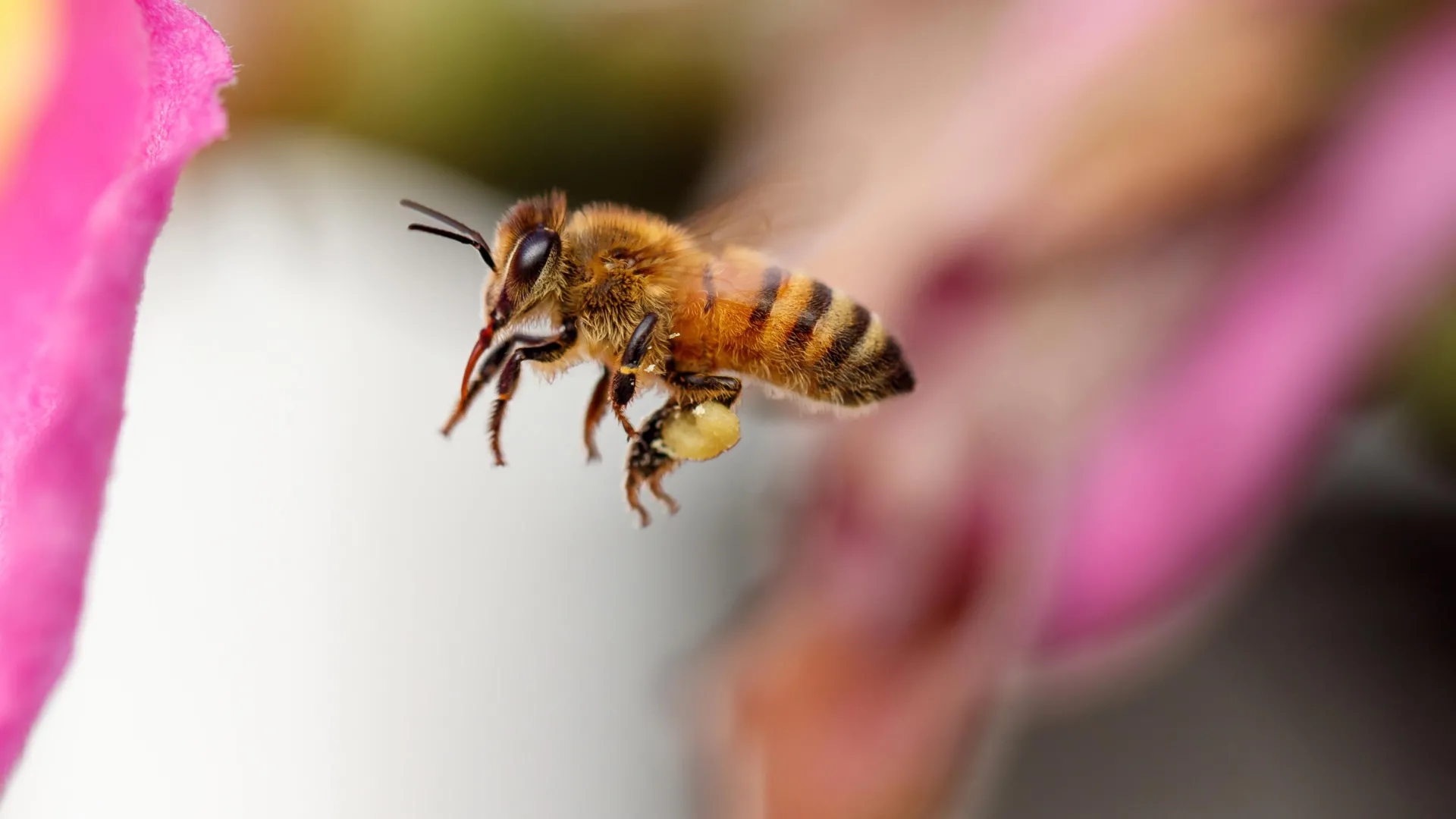
Honey bees possess remarkable navigation skills that exceed what scientists once believed. Recent research from the University of Freiburg highlights this expertise. Individual honey bees navigate their own personal flight paths with stunning precision. Using landmarks in the landscape, these insects maintain their routes, demonstrating a level of consistency that is truly impressive.
Researchers tracked honey bees flying between their hive and food sources using drones equipped with advanced technology. They applied a technique called Fast Lock-On (FLO) Tracking. This method allows for near-instantaneous tracking of bees by analyzing reflected light from tiny markers attached to each insect. The result? A detailed understanding of the precise ways bees travel in their natural surroundings.
Data from nearly 255 flight paths showed that honey bees repeat their routes almost exactly. They fly within a few centimeters of their previous paths. Prominent landscape features, like trees and hedges, significantly aid their navigation. In contrast, bees encounter more difficulty in visually uniform environments. These findings illustrate that bees are not just instinctual wanderers; they are calculated navigators.
The Role of Landmarks and the Waggle Dance
This research also brings important insights into the famous waggle dance. Bees use this behavior to communicate food locations to their hive mates. However, the directional accuracy of the waggle dance can vary significantly, often deviating up to 30 degrees for food sources about 100 meters away.
The new study reveals that this inaccuracy does not stem from poor navigation skills. Individual bees excel in navigating familiar routes. They maintain accuracy within just a few degrees, even when their flight paths vary. The research suggests that bees are spatially much more oriented than their dances might imply.
Understanding honey bee navigation has far-reaching implications. These small creatures not only support our ecosystems through pollination but also showcase intricate behaviors that could inspire advancements in robotics and aerial technology. As we unravel the complexities of their navigation, we gain valuable insights not just into honey bees, but also into the potential of precision navigation systems across various fields.
Expand Your Tech Knowledge
Explore the future of technology with our detailed insights on Artificial Intelligence.
Access comprehensive resources on technology by visiting Wikipedia.
TechV1
