

Top Highlights
- Manx shearwaters may experience jet lag during long Atlantic return flights.
- Their internal clocks desynchronize from the sun, causing slight navigation errors.
- GPS tracking found birds veered up to seven degrees off course.
- The deviation added roughly three miles over journeys exceeding 600 miles.
Research Shows Some Birds Experience Jet Lag
Jet lag is usually associated with people crossing time zones by plane. But new research suggests that Manx shearwaters, seabirds that travel long distances across the Atlantic, can also lose their navigational bearings when their internal clocks fall out of sync with the sun.
A study published in Science examined GPS records from the birds’ flights. The researchers found that shearwaters returning to their nests sometimes drifted slightly off course—a small but measurable effect that may reflect the challenges of navigating by the sun after a long journey.
A demanding trip from nest to sea and back
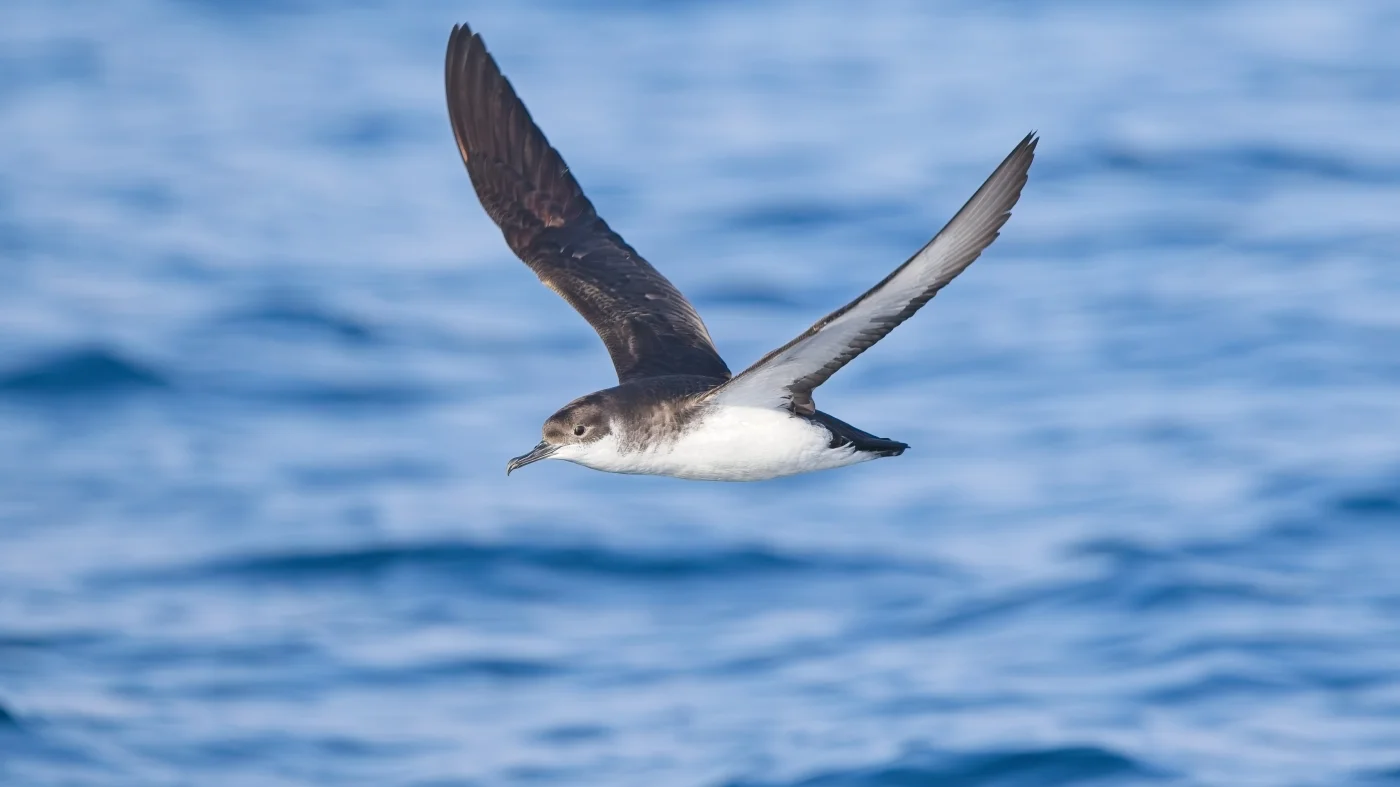
Manx shearwaters are common in the British Isles. They resemble gulls, but are more closely related to albatrosses. During breeding season, a pair lays one egg and takes turns caring for it. While one bird stays at the nest, its partner heads out to sea to hunt fish and squid.
A foraging trip can last up to two weeks and take a bird hundreds of miles from its colony. Once it has eaten, the shearwater makes a fast return journey, often reaching the nest in about a day. Its partner may be waiting to take over egg care.
That routine prompted a question: Could the birds experience a version of jet lag on the way home? The term is a comparison, not proof that birds feel the same symptoms people do. The study instead looked for a change in navigation that could be linked to a mismatch between the bird’s internal clock and the sun’s position.
Manx shearwaters are believed to use the sun as a compass. But the sun’s location changes throughout the day: It rises in the east, moves across the sky and sets in the west. To use it for direction, a bird also needs an accurate sense of time. If its internal clock is out of step with the sun, its navigation could be affected.
GPS reveals a small detour
The researchers analyzed GPS tracking data gathered over 20 years. The long-running records let them compare birds’ routes as they traveled out to sea and returned to their nests. On the homeward flights, some birds veered slightly from their expected course.
The largest observed deviation was about seven degrees. On a journey of roughly 600 miles, that could add about three miles to the route. The detour is modest, but it offers evidence that a bird’s timing may influence its navigation across a long flight.
GPS technology makes it possible to study animals far from people and research stations. In this case, tracking records helped reveal a subtle pattern across journeys that would be difficult to observe directly. Still, the data show flight paths, not what a bird experiences. Researchers cannot tell from GPS alone whether a shearwater feels disoriented or tired.
That distinction matters. Calling the effect “jet lag” makes the finding easy to understand, but it should not be taken as a claim that birds experience human jet lag in exactly the same way. The research points to a navigational consequence: A mismatch between internal time and the sun may lead to a small error in direction.
The finding also shows why tracking tools can be useful for studying wildlife. They offer a practical way to gather information about animals moving through remote environments, though the results depend on what devices can measure and how researchers interpret the records. In this case, a slight bend in a route became a clue to how a seabird may use the sky to find its way home.
Stay Ahead with the Latest Tech Trends
Dive deeper into the world of Cryptocurrency and its impact on global finance.
Explore past and present digital transformations on the Internet Archive.
Space
