

Quick Takeaways
-
Historic Flyby: NASA’s Artemis II crew achieved a historic milestone, becoming the first humans to observe parts of the moon no one has seen before, surpassing the Apollo 13 distance record of 248,655 miles.
-
Human Eye Observations: The astronauts provided unique insights into the moon’s features, emphasizing the value of human observations over satellite imagery, detailing topography and new craters with personal insights.
-
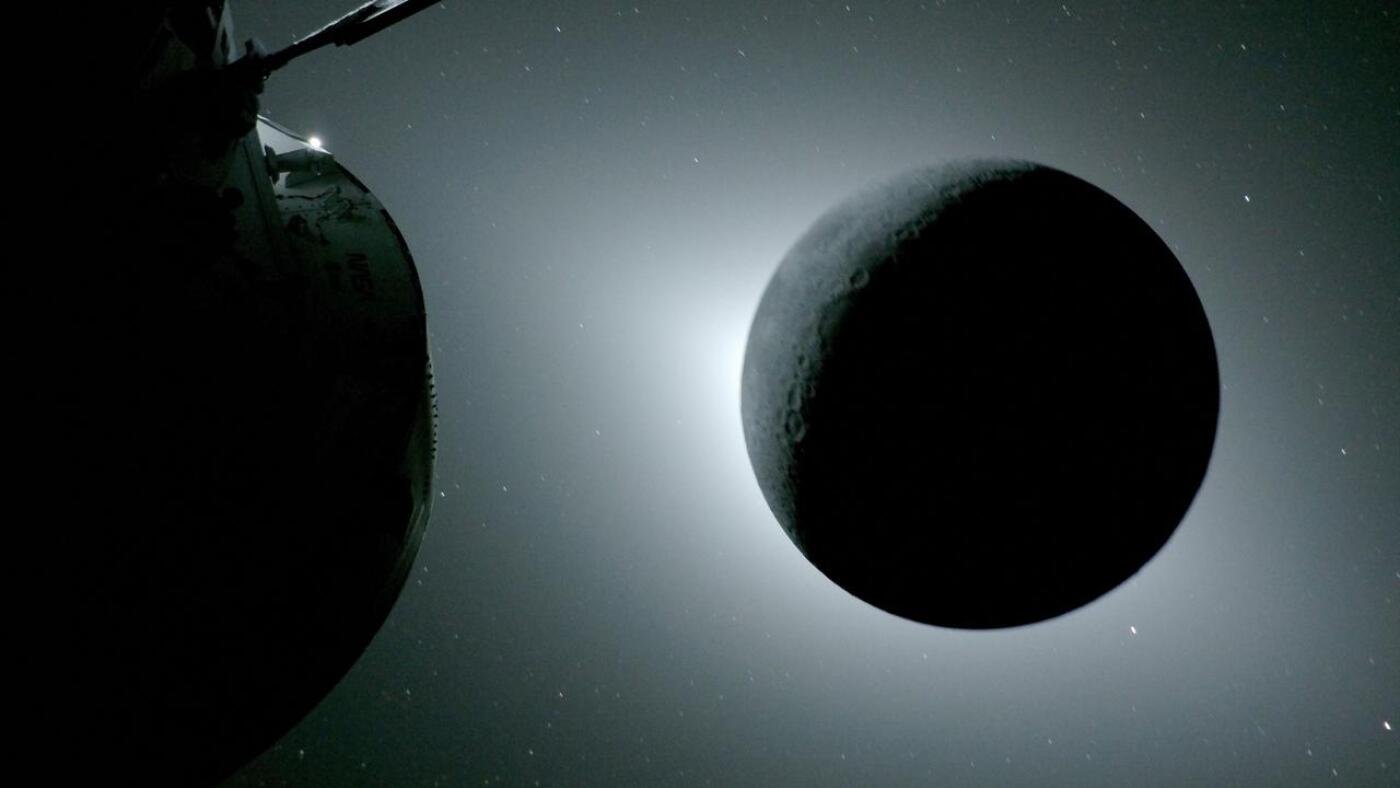
Solar Eclipse View: During their mission, the crew witnessed a solar eclipse from the moon’s perspective, describing it as a surreal experience and noting visibility of meteoric impacts on the lunar surface.
-
Call to Explore: Mission specialist Jeremy Hansen urged future generations to continue space exploration, framing the mission as a vital step in a comprehensive lunar science program and the broader journey into space.
Artemis II Astronauts Share Stunning Views from Space
On Monday, the astronauts of NASA’s Artemis II mission witnessed extraordinary sights during their historic lunar flyby. This mission marks the farthest humans have traveled into space, exceeding the Apollo 13 record distance of 248,655 miles. At 1:57 p.m., the crew broke that barrier, creating a moment of both pride and wonder.
The astronauts described observing parts of the moon that no one had seen before. They conveyed the significance of their findings in rich detail, providing Earth-bound scientists with valuable insights. Jeremy Hansen, a mission specialist, emphasized the role of human observation, saying it enriches our understanding of the lunar landscape.
During their flyby, the crew studied the moon’s varied topography. For instance, Mission Commander Reid Wiseman highlighted the Orientale basin, a massive crater that shows the moon’s ancient history. Wiseman noted its distinct annular ring, describing it as “very circular” and much clearer than expected from training images.
In addition to identifying new features, the astronauts suggested names for two craters, honoring their spacecraft and a lost loved one. Christina Koch, another mission specialist, articulated the beauty of the moon’s surface, comparing it to a “lampshade with tiny pinprick holes,” illuminating various craters.
The crew also made interesting comparisons between the moon and Earth, noting that Earth appeared brighter from space. This perspective underscored the visual contrasts between the two celestial bodies. They shared their awe when observing both planets simultaneously, remarking on the unique experience.
A key part of the mission centered on discerning color variations on the lunar surface. The astronauts’ trained eyes allowed them to spot nuanced differences, vital for understanding the moon’s composition and age. Mission pilot Victor Glover described one crater basin, noting its unique features and colors that remained unseen before.
The astronauts had the rare opportunity to witness a solar eclipse, observing the sun as it briefly vanished behind the moon. Glover described the spectacle as “wicked,” allowing the crew to study the solar corona. Such observations deepen our understanding of solar phenomena and the moon’s influence on Earth.
During the eclipse, they also saw flashes of meteors striking the lunar surface. These thrilling moments added excitement to an already historic journey. Observations like these not only intrigue scientists but also inspire future missions.
The Artemis II mission transcends mere exploration; it initiates a renewed focus on lunar science and technology development. By capturing unique observations and details, it lays the groundwork for future explorations and fosters a sense of wonder about the cosmos. The insights gained from this journey may one day improve our understanding of both the moon and our planet, enhancing life on Earth.
As they returned, the astronauts reminded us all of the importance of continued exploration. Their journey serves as a call to future generations to keep reaching for the stars.
Discover More Technology Insights
Stay informed on the revolutionary breakthroughs in Quantum Computing research.
Discover archived knowledge and digital history on the Internet Archive.
SciV1
