

Summary Points
- Connected irrigation systems combine timers, sensors, and software for smarter watering.
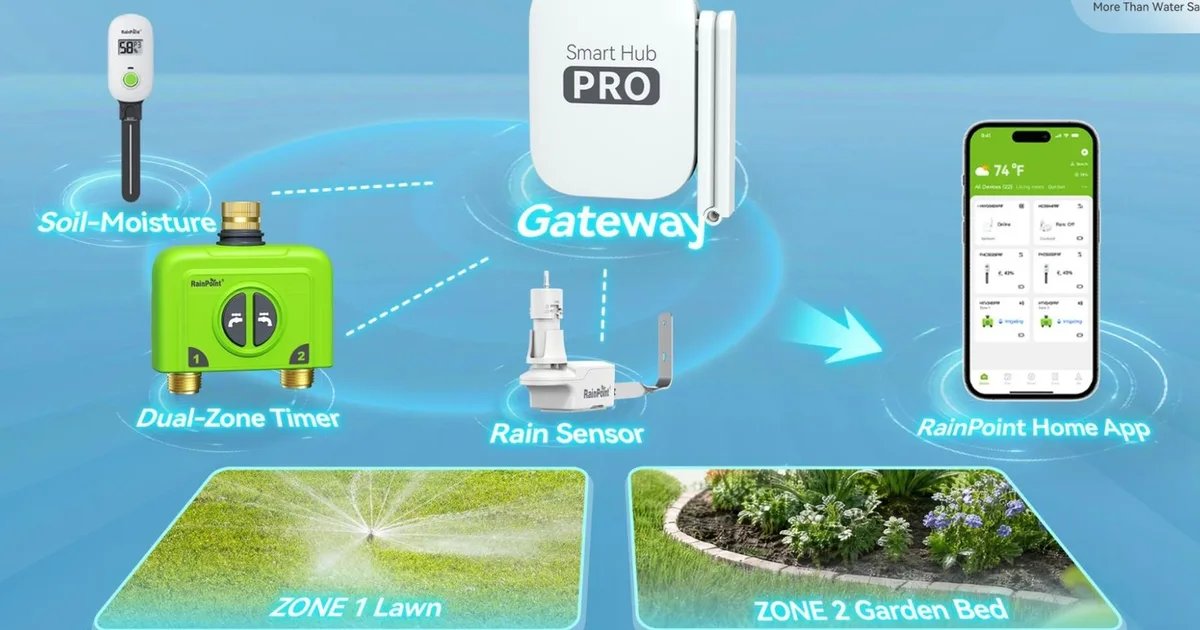
- RainPoint’s ecosystem uses a gateway to manage soil, rain sensors, and water timers seamlessly.
- Sensors enable zones to water separately, responding to real-time moisture and rainfall data.
- Outdoor tech faces challenges like weather, range, battery life, impacting long-term reliability.
The Evolution of Outdoor Watering: From Timers to Connected Systems
Watering lawns and gardens used to mean setting a timer and hoping for the best. This old method relies on schedules that may not match actual weather or soil conditions. Today, connected irrigation systems combine timers with environmental sensors and smart software. They aim to make outdoor watering more efficient, responsive, and helpful.
A good example is RainPoint’s smart garden system. It uses a gateway to connect a dual-zone water timer, soil moisture sensors, and rain sensors to a smartphone app. The gateway acts as the hub, collecting outdoor data and sharing it with the system. Once connected to Wi-Fi, users can pair sensors and timers through the app. They can then set automation rules that adjust watering based on real weather and soil conditions. This approach replaces fixed schedules with smarter, adaptive watering.
The system also manages different zones separately. For example, a lawn and a vegetable garden can have their own watering needs. Soil and rain sensors determine when watering should be paused or delayed. Additional features include viewing watering history, manual overrides, and voice control with Alexa or Google Assistant. These improvements show how connected systems aim to use data to water gardens more accurately.
Challenges and Opportunities in Outdoor Automation
Using smart devices outdoors is more challenging than indoors. Wireless signals can weaken or drop, especially with outdoor obstacles or weather changes. Sensors need batteries replaced periodically. Firmware and app updates are also necessary to keep the system working smoothly. RainPoint’s ecosystem, introduced at CES 2026, has earned an award for unifying multiple irrigation components. But long-term usefulness depends on reliability, sensor accuracy, and wireless stability across various environments and seasons.
Expanding smart home technology outside shows a trend: automation is no longer limited to indoor spaces. It now includes gardens, lawns, and other outdoor areas. For homeowners, practical factors matter. These include the number of zones, distance between devices, weather conditions, and Wi-Fi quality. A connected irrigation system must offer real improvements without too much setup or maintenance. Its success hinges on whether it can adapt to outdoor challenges and provide dependable, easy-to-use water management.
Stay Ahead with the Latest Tech Trends
Learn how the Internet of Things (IoT) is transforming everyday life.
Discover archived knowledge and digital history on the Internet Archive.
TechV1
