

Quick Takeaways
- Pheidippides ran barefoot to announce victory at the Battle of Marathon.
- Recent marathons saw record-breaking times aided by ultra-lightweight running shoes.
- Shoe innovation evolved from heavy materials to lightweight, cushioned designs.
- “Super shoes” use advanced foam and carbon plates for enhanced performance.
From Barefoot to Featherweight Innovation
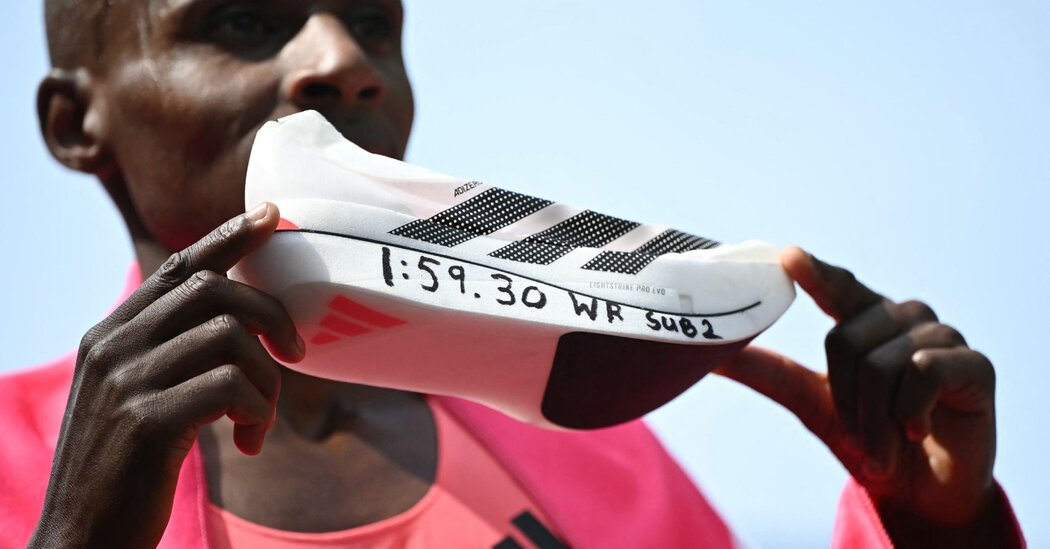
When Pheidippides ran from Marathon to Athens in the 5th century B.C., he did so without shoes. His remarkable feat recorded a victory, but not a time. Fast forward 2,500 years, and marathoners like Sebastian Sawe and Tigist Assefa set world records at the London Marathon, equipped with shoes that weigh less than a lunch sandwich. The Adidas Adizero Adios Pro Evo 3, at just 97 grams, marks a significant leap in running shoe technology. This journey from the bare feet of Pheidippides to today’s record-breaking footwear highlights an evolution driven by the relentless pursuit of speed.
Every gram counts when it comes to running shoes. Research confirms that heavier shoes slow runners down. A 2016 study showed that adding 100 grams per shoe can reduce speed by roughly 1 percent. Runners have discovered that lighter shoes provide a clear advantage. The introduction of lightweight materials changed the landscape of running footwear. Shoes made of rubber and canvas in the late 19th century paved the way for performance advancements, such as better traction and comfort. Innovations took root, leading from the iconic Converse All Star to J.W. Foster’s first metal spikes in the 1890s, which helped athletes reach new heights.
The Rise of Super Shoes
The modern era of running shoes unleashed a tidal wave of technology. Bill Bowerman’s creation of the Waffle Trainer in the 1970s set a new standard in traction and comfort. The introduction of EVA foam offered unprecedented cushioning, allowing runners to minimize impact. Yet, the innovation did not stop there. Nike’s Air Tailwind, Asics’ gel technology, and Reebok’s Instapump Fury all contributed to creating shoes tailored for performance.
Today, the phenomenon of “super shoes” has transformed marathon running again. These shoes merge advanced cushioning and carbon-fiber plates, creating a spring that boosts efficiency. However, this technological leap raises concerns about fairness. Critics question whether such advancements offer an ethical sporting edge, akin to performance-enhancing drugs.
The Adidas Adizero Adios Pro Evo 3 illustrates how far innovation has come. Its design mimics the natural motion of the human foot, getting runners closer to that bare-footed feeling. As technology continues to push the limits, one wonders where the journey will end. Will future runners, like Pheidippides, again run barefoot, or will the next breakthrough redefine our understanding of performance? The next marathon may reveal the answers, but for now, these shoes symbolize an extraordinary evolution in running history.
Discover More Technology Insights
Dive deeper into the world of Cryptocurrency and its impact on global finance.
Access comprehensive resources on technology by visiting Wikipedia.
TechV1
